THE COMPLETE
F-TYPE HISTORY
"The F-Type is a continuation of a sporting bloodline that stretches back over 75 years and encompasses some of the most beautiful, thrilling and desirable cars ever built by Jaguar"
Over the years there have been various models produced in the F-TYPE range, all of which come in coupe or convertible form. Each variant is distinguished by its engine and power output.
F-TYPE Concept X600 — 2000
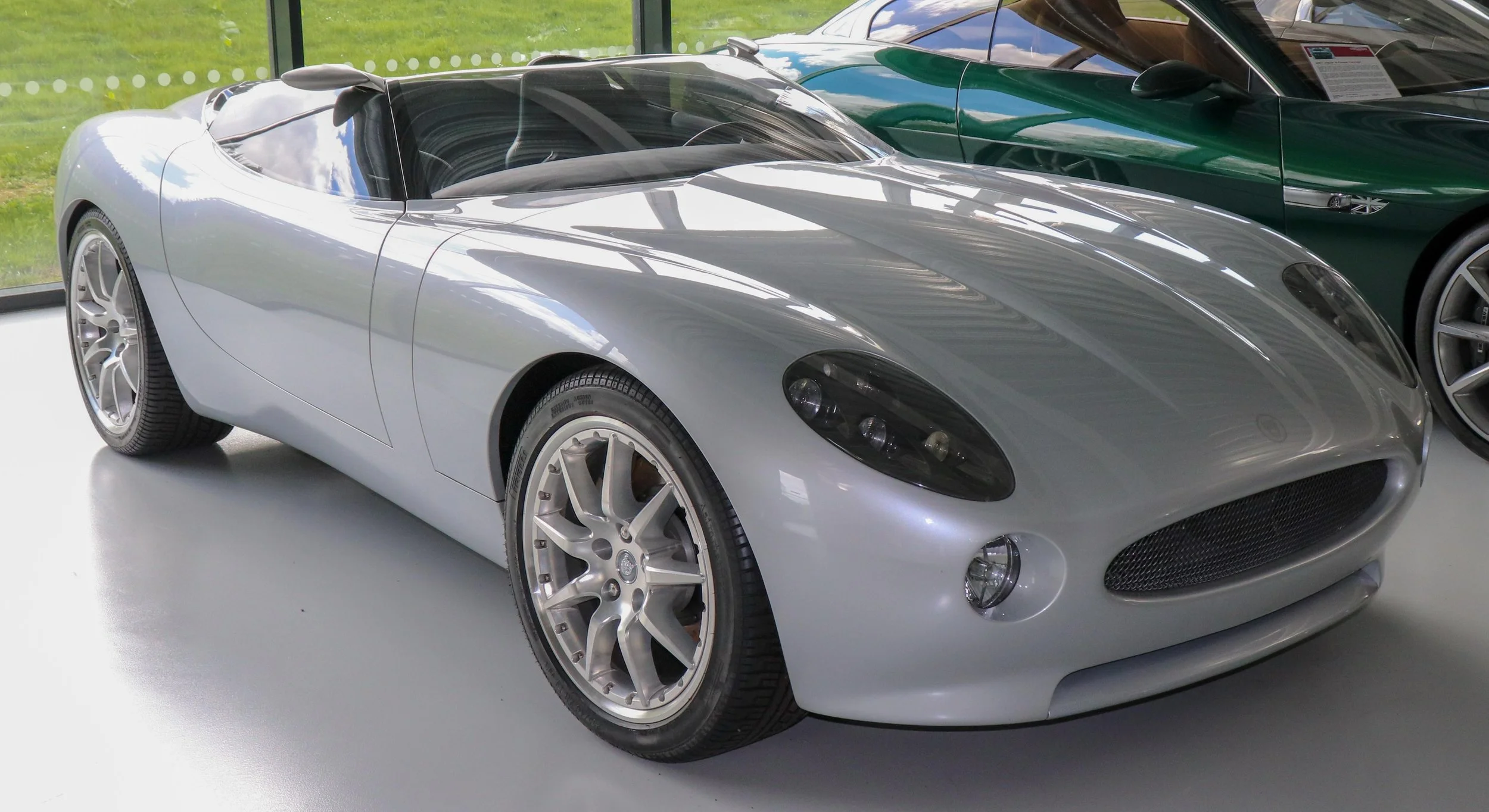
The story of the Jaguar F-TYPE actually begins in January 2000, when Jaguar unveiled an entirely new sports-car concept at the Detroit Motor Show. This car was called the F-TYPE Concept, and it was intended to explore the possibility of a smaller, lighter Jaguar sports car positioned beneath the XK.
This is where things become particularly interesting. Although the 2000 concept and the 2013 production F-TYPE share the same name, they are not the same project. The 2000 car was developed under Jaguar design director Geoff Lawson and was intended to revive the spirit of the E-TYPE with a compact two-seat roadster. Contemporary material shows that Jaguar even prepared dedicated F-TYPE press literature for the concept.
The concept generated enormous public interest. According to contemporary accounts, the reaction was strong enough that Jaguar announced plans to develop a production version. In 2001, Ford's Premier Automotive Group chairman Wolfgang Reitzle announced that the overwhelmingly positive response to the concept had convinced Jaguar to build the F-TYPE roadster.
However, the production project was subsequently cancelled around 2002. Consequently, the 2000 F-TYPE never became a production Jaguar.
This makes it an important but often overlooked part of the F-TYPE story. It was the first Jaguar to officially carry the F-TYPE name, but it wasn't the first production F-TYPE.
F-TYPE V6 340 — 2013
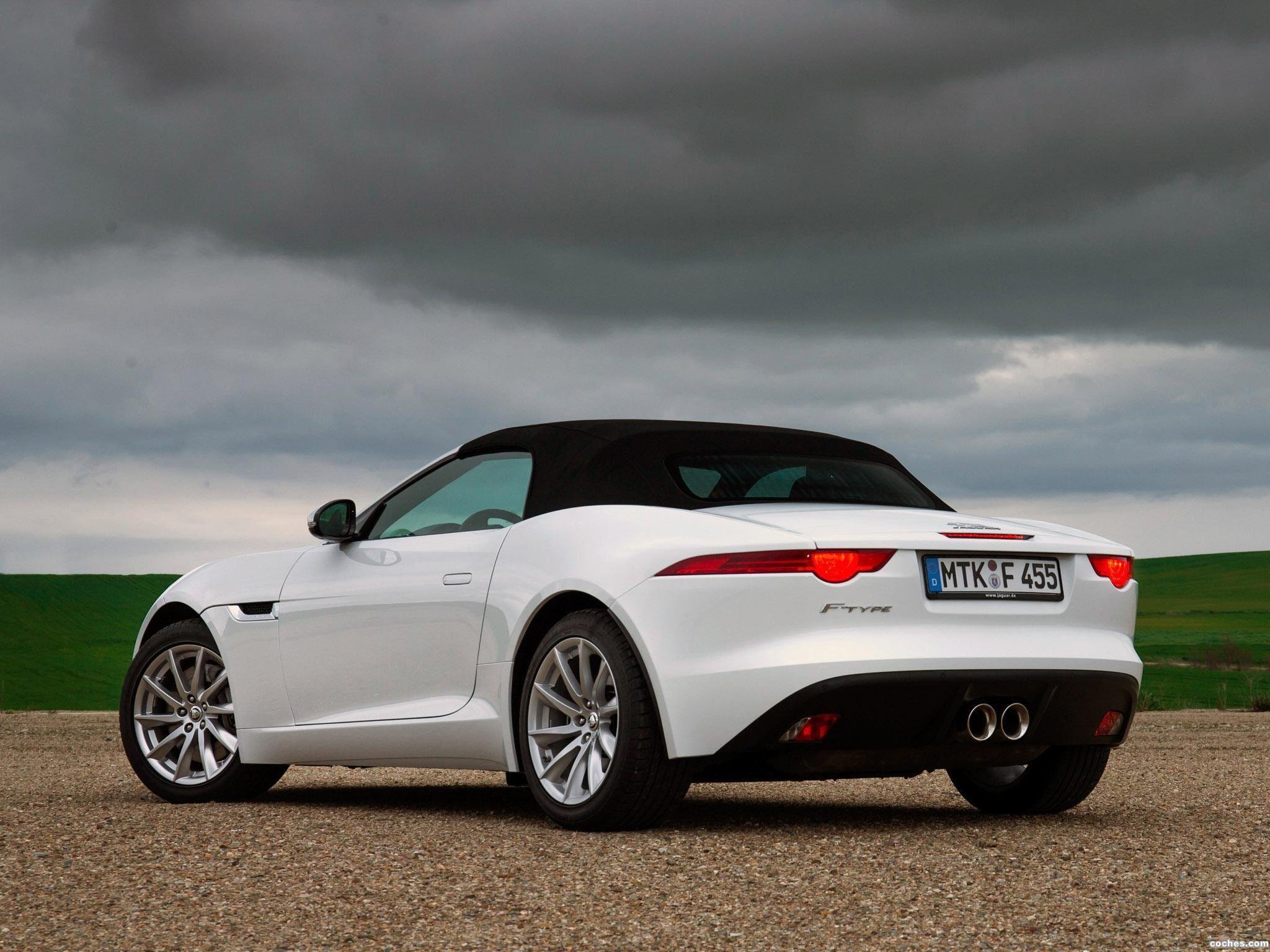
The F-TYPE V6 340 was the starting point for Jaguar's new two-seat sports car when it entered production in 2013. Powered by a 3.0-litre supercharged V6 producing 340PS and 450Nm, it was designed to deliver a combination of performance, refinement and everyday usability rather than simply chasing headline figures.
The supercharged engine used a water-cooled intercooler and sophisticated boost control, allowing torque to build strongly across the rev range. Jaguar quoted 0–60mph in 5.1 seconds with the automatic gearbox and 5.5 seconds with the manual, while top speed was 161mph.
The V6 340 established much of what would become characteristic of the F-TYPE: an aluminium two-seat structure, front-engine/rear-wheel-drive layout, dramatic proportions and an exhaust note that became a defining feature of the car.
It was available as both a Convertible and, once the Coupé joined the range, a fixed-roof F-TYPE. The 340 therefore represents the foundation upon which virtually the entire F-TYPE family was built.
F-TYPE V6 S 380 — 2013
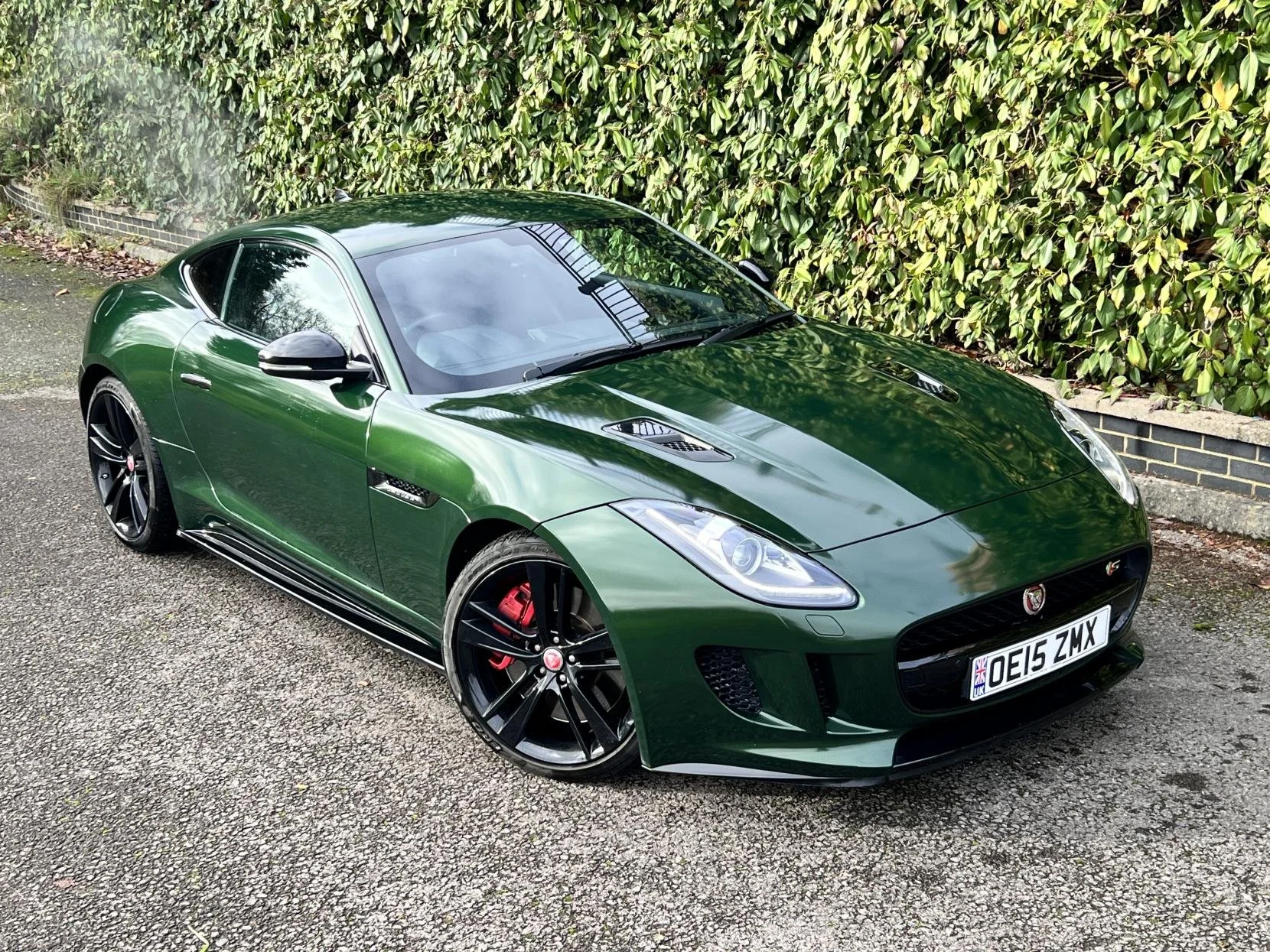
The V6 S took the basic 3.0-litre supercharged engine and increased output to 380PS and 460Nm. That additional power transformed the car into a considerably more serious sports machine, with Jaguar quoting a 0–60mph time of around 4.8 seconds and a 171mph top speed.
The S was more than an engine upgrade. Jaguar gave it a more performance-oriented specification, with additional chassis and dynamic technology designed to exploit the extra power. It became the V6 model for buyers who wanted considerably more involvement without moving to the larger V8.
The 380PS V6 subsequently became particularly important because it was the engine used for several later derivatives, including the all-wheel-drive F-TYPE S, British Design Edition and other special versions.
It also demonstrated how Jaguar intended the F-TYPE range to evolve: rather than offering one sports car with a single engine, Jaguar created a ladder stretching from an accessible V6 through to increasingly powerful and specialised versions.
F-TYPE V8 S 495 — 2013
The V8 S was the first F-TYPE to introduce Jaguar's supercharged 5.0-litre V8 to the range. Producing 495PS and 625Nm, it transformed the character of the car compared with the V6 models.
The engine's enormous torque was available from relatively low engine speeds, giving the V8 S effortless acceleration. Jaguar quoted 0–60mph in approximately 4.2 seconds and a top speed of 186mph.
The V8 also gave the F-TYPE the distinctive exhaust character that would become synonymous with the car. Jaguar deliberately engineered the exhaust system to make the V8's sound an important part of the driving experience.
The V8 S sat below the later 550PS F-TYPE R and provided a halfway point between the 380PS V6 S and the eventual flagship. It is historically significant because it established the supercharged V8 as one of the defining powertrains of the F-TYPE family.
F-TYPE R V8 550 — 2013/2014
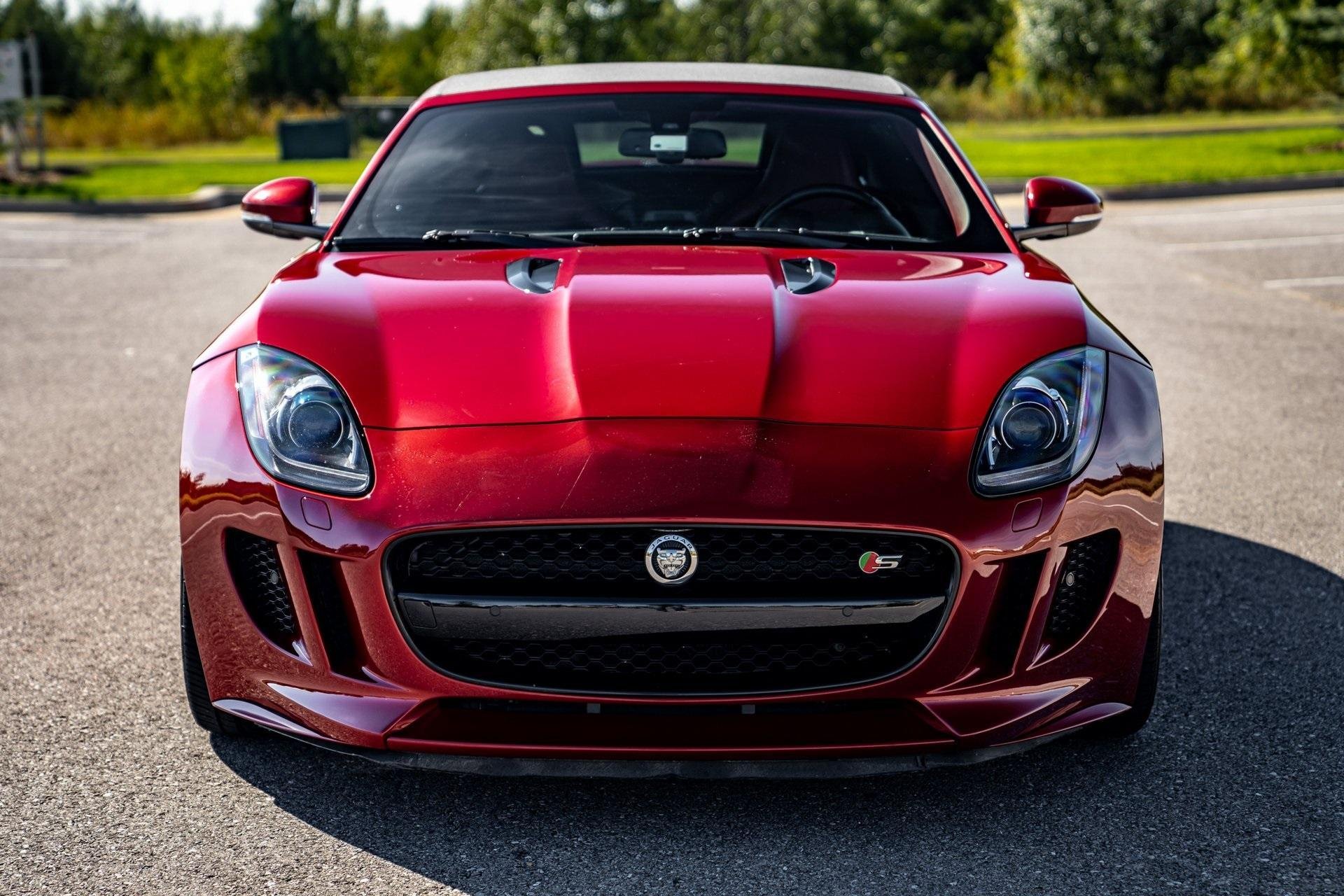
The F-TYPE R took the supercharged 5.0-litre V8 to 550PS and 680Nm, creating the first truly extreme production version of the F-TYPE.
Jaguar quoted a 0–60mph time of just 4.0 seconds and a top speed of 186mph. The combination of huge torque, rear-wheel drive and Jaguar's sophisticated electronic chassis systems gave the R a reputation for being both spectacular and demanding.
The R also introduced a much more aggressive visual identity, with larger air intakes, deeper aerodynamic treatments and quad exhaust outlets helping distinguish it from the V6 and V8 S cars.
When the F-TYPE Coupé arrived, the R became particularly significant because the fixed roof allowed Jaguar to push the car's performance character even further.
The 550PS R remained one of the central F-TYPE models for several years before Jaguar introduced the 575PS SVR and eventually replaced the 550PS engine with the 450PS and 575PS versions of the later facelifted car.
F-TYPE Manual — 2014
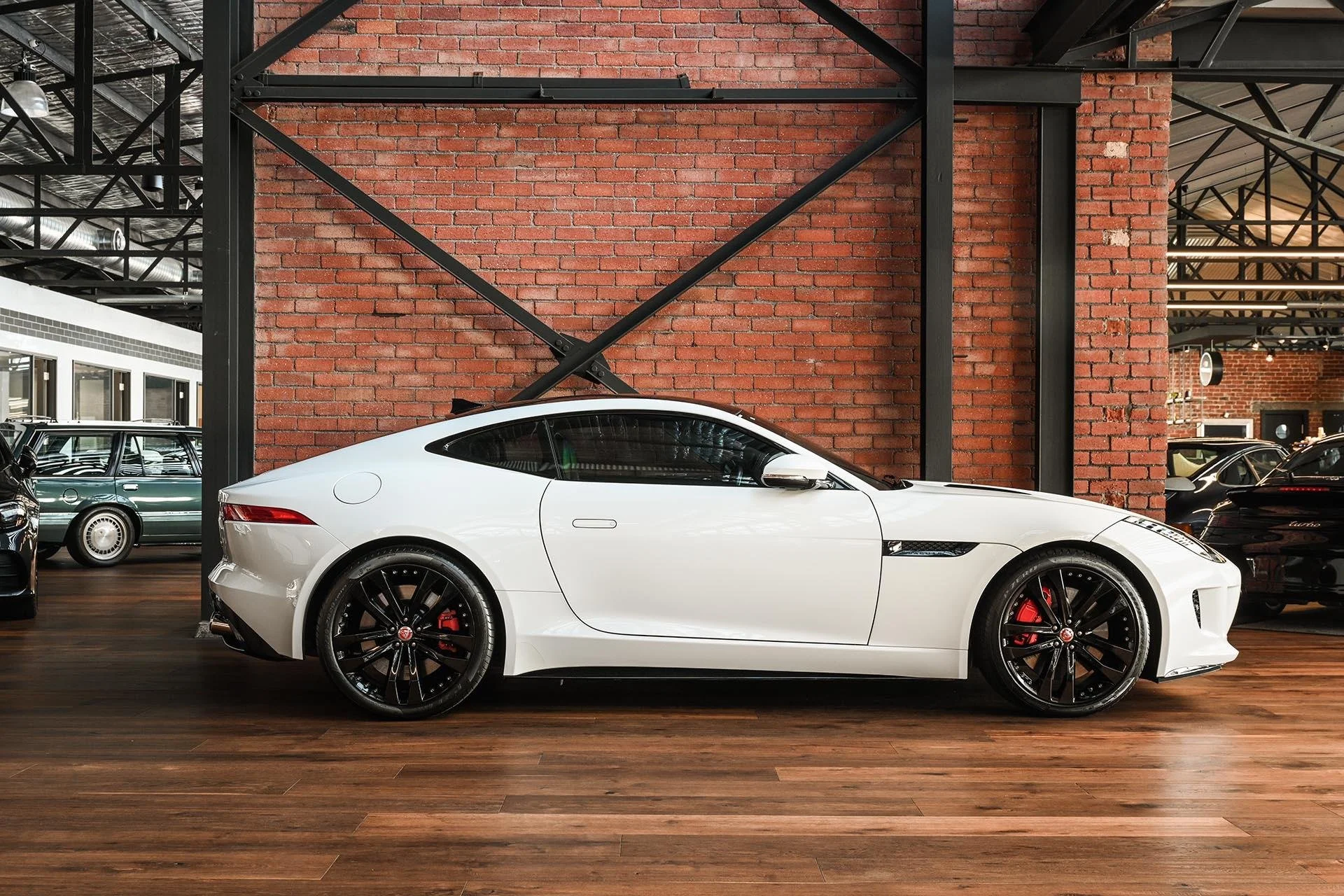
Jaguar's introduction of a six-speed manual gearbox created a version of the F-TYPE aimed specifically at enthusiasts who wanted maximum involvement from the driver.
The manual was offered with the supercharged V6 rather than the V8, allowing drivers to control gear selection themselves rather than relying on Jaguar's eight-speed Quickshift automatic.
The significance of the manual F-TYPE isn't really its outright acceleration. Instead, it changed the way the car was experienced. Drivers could choose their own shift points, exploit engine braking and interact more directly with the engine and rear-wheel-drive chassis.
Jaguar itself described the manual as the car for the “true driving experience”, and it became one of the more enthusiast-focused versions of the F-TYPE.
The manual option is particularly important historically because Jaguar was willing to give the F-TYPE a traditional sports-car transmission despite the increasing popularity of high-speed automatic gearboxes.
F-TYPE AWD — V6 S and V8 R
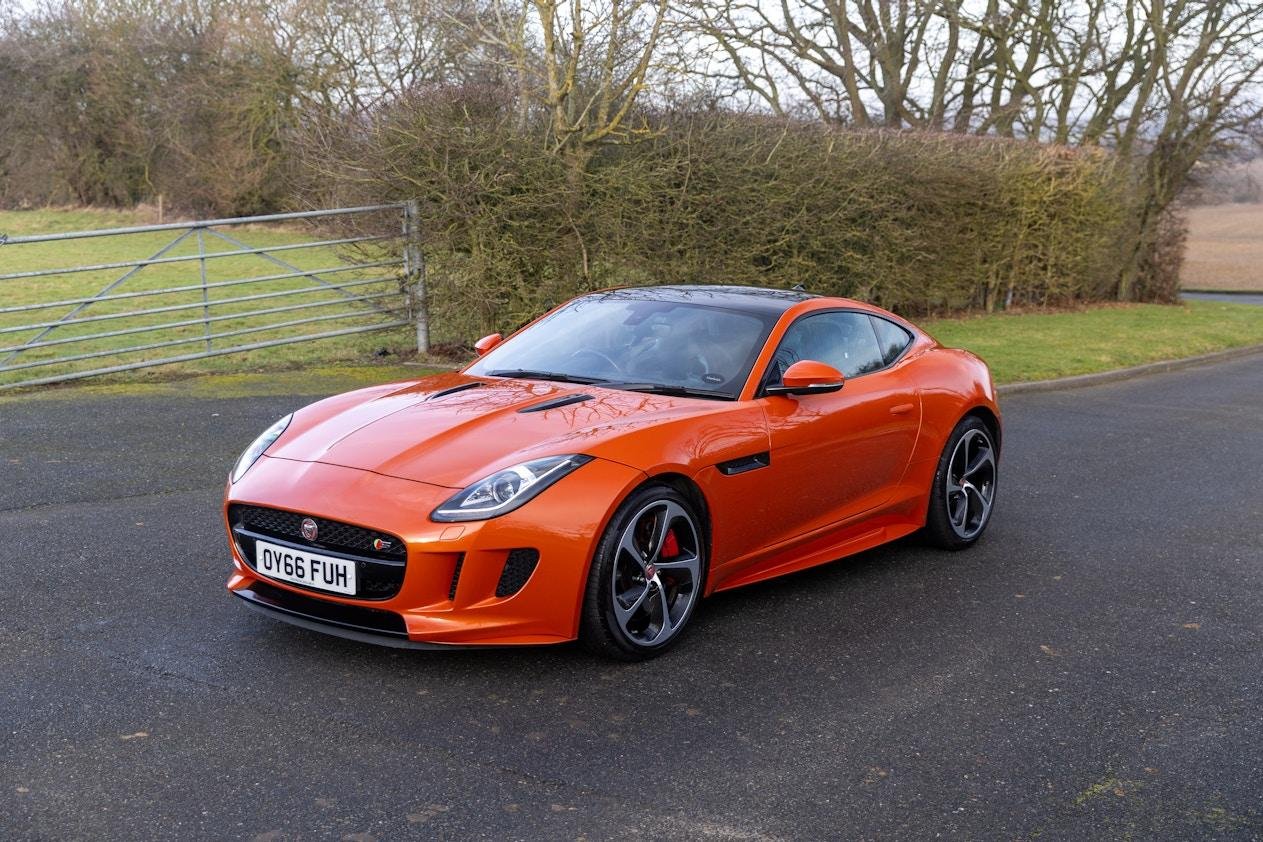
Jaguar subsequently introduced all-wheel drive to the F-TYPE, initially giving the 380PS V6 S and 550PS V8 R significantly greater traction.
The system was designed to retain the rear-wheel-drive character of the F-TYPE while sending torque to the front axle when additional traction was required. This allowed the cars to put their power down more effectively, particularly in poor weather and when accelerating out of corners.
The V6 S AWD produced 380PS and 460Nm, while the R AWD retained its 550PS and 680Nm V8. The R AWD could accelerate from 0–60mph in approximately 3.9 seconds.
AWD also broadened the F-TYPE's appeal. The original rear-wheel-drive cars were deliberately playful and driver-focused, whereas the AWD versions provided greater confidence in wet and cold conditions without abandoning the sports-car character.
This was a major development because AWD subsequently became the basis for several of the F-TYPE's most powerful versions, including the SVR, R 75 and ZP Edition.
F-TYPE Project 7 — 2015
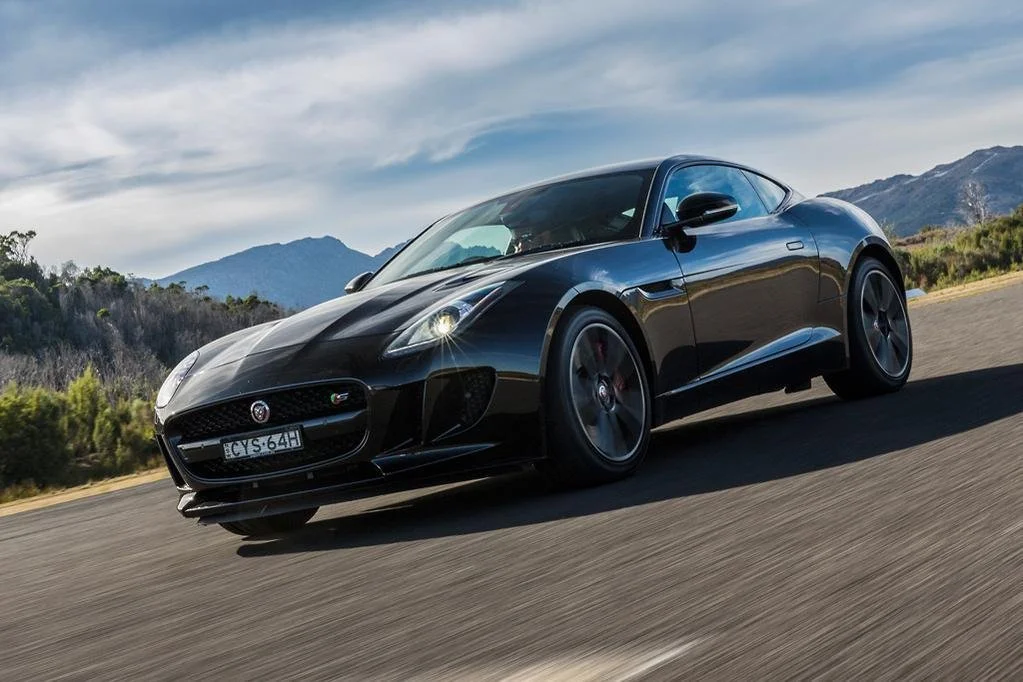
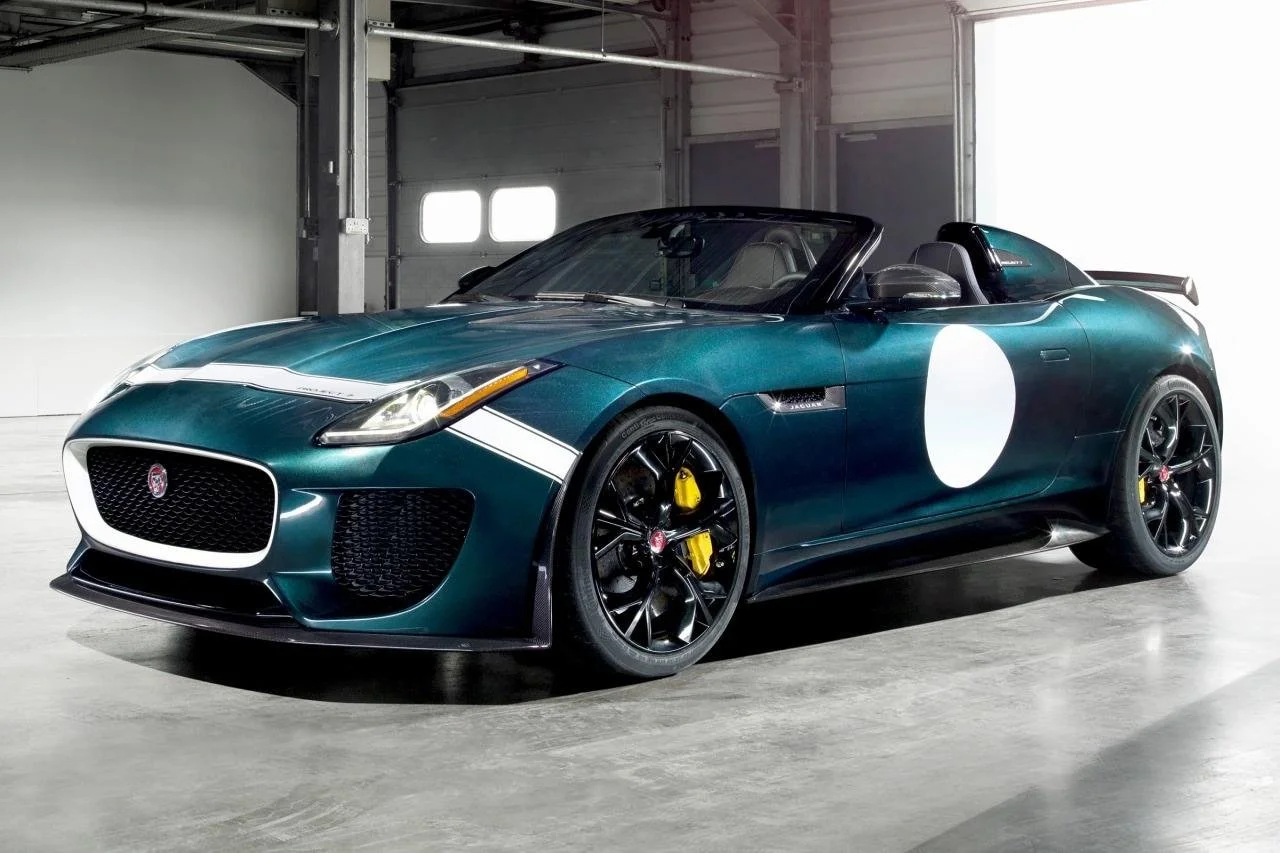
Project 7 was arguably the most dramatic F-TYPE created during the first half of the car's life. Developed by Jaguar Special Operations, it was inspired heavily by Jaguar's racing heritage, particularly the legendary D-Type.
Underneath its distinctive bodywork was a 5.0-litre supercharged V8 producing 575PS and 680Nm. It could reach 60mph in just 3.8 seconds.
Unlike the standard F-TYPE Convertible, Project 7 was a two-seat roadster with distinctive rear bodywork behind the driver, creating a visual reference to historic Jaguar racing cars.
Production was limited to 250 examples worldwide, with the cars hand-built by Jaguar Land Rover's Special Operations team.
Project 7 was much more than an appearance package. Its limited production, bespoke bodywork and 575PS engine made it a genuine collector's F-TYPE and established a pattern Jaguar would return to several times with later heritage editions.
The F-TYPE Enthusiasts Club describes it as a limited-edition model produced by Jaguar Special Operations, while Jaguar originally described it as its fastest and most powerful production model at the time.
British Design Edition — 2015
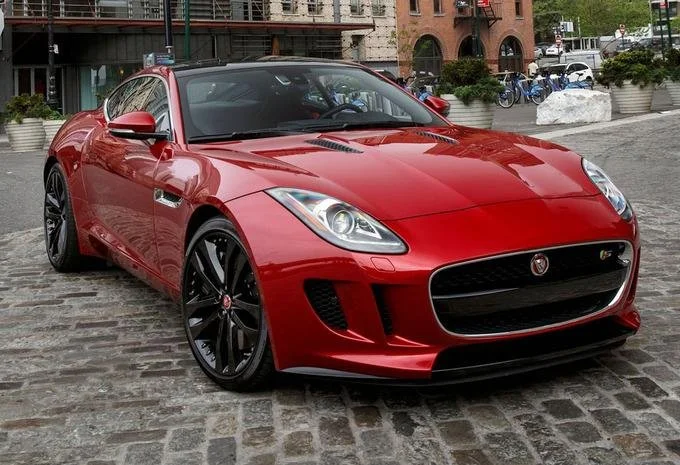
The British Design Edition was created to emphasise the F-TYPE's identity as a modern British sports car. Based on the 380PS V6 S, it combined all-wheel drive with an extensive visual and equipment upgrade.
Its colour palette included Caldera Red, Glacier White, Ultra Blue and Ultimate Black, while the exterior received the Sport Design Pack, special badging and 20-inch Cyclone wheels with Satin Grey finishes.
Inside, Jaguar used premium Jet leather with contrasting stitching and carbon-fibre detailing, while upgraded Meridian audio and Jaguar's InControl systems added to the luxury specification.
The edition wasn't intended to compete with Project 7 or the later SVR for outright performance. Instead, its purpose was to create a more distinctive, highly specified version of the standard F-TYPE.
It is therefore an important part of the F-TYPE story because it showed Jaguar beginning to use the car as a platform for increasingly specialised editions rather than relying solely on different engine outputs.
F-TYPE SVR — 2016
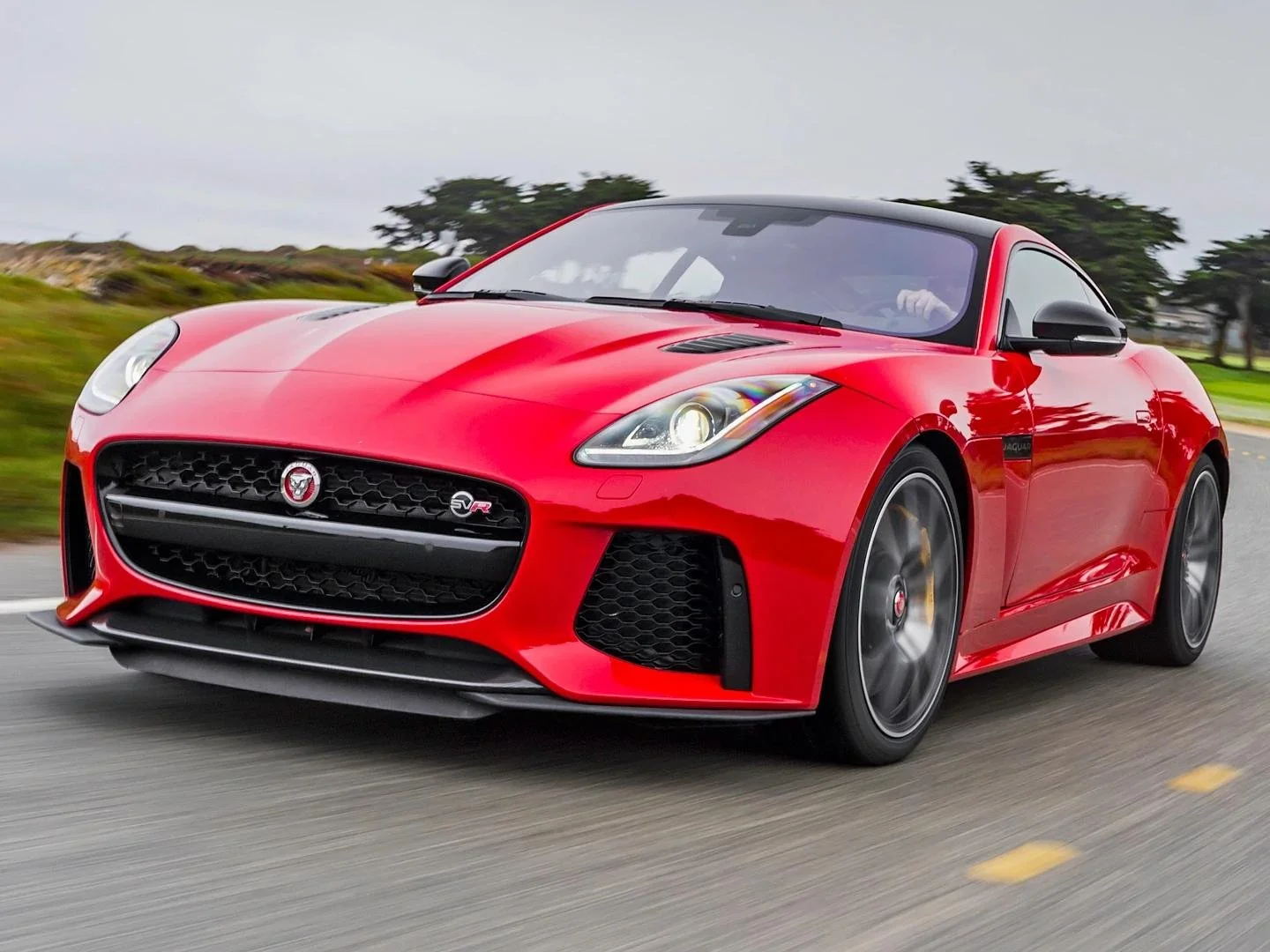
The SVR was the ultimate performance F-TYPE before the later-generation cars arrived. Developed by Jaguar's Special Vehicle Operations division, it used the 5.0-litre supercharged V8 producing 575PS and 700Nm.
Its headline achievement was a 200mph top speed, making it the first F-TYPE to reach that figure. Jaguar quoted approximately 3.5 seconds for 0–60mph.
The SVR was developed to be lighter, faster and more aerodynamic than the R. It received revised suspension, aerodynamic improvements, high-performance brakes and a titanium exhaust system.
Importantly, Jaguar retained the F-TYPE's everyday usability. It was available as both Coupé and Convertible, meaning customers could choose between maximum aerodynamic performance and the open-air experience.
The SVR became the benchmark against which later F-TYPE performance models would be measured. Jaguar described it as a 200mph all-weather supercar that could still be driven every day.
F-TYPE 400 SPORT — 2017/2018
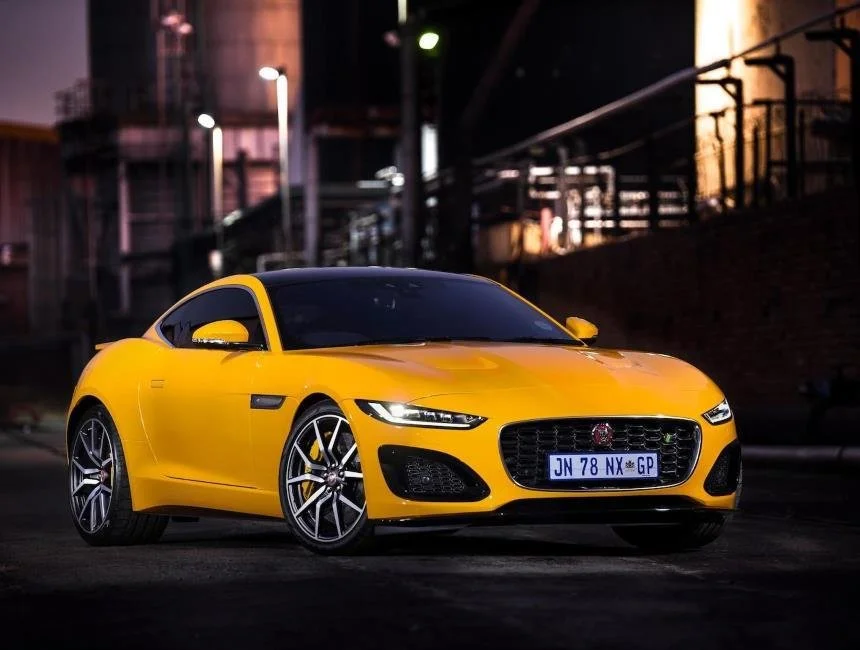
The 400 SPORT was created to introduce Jaguar's revised F-TYPE range and was available for one model year only. Its 3.0-litre supercharged V6 was upgraded to 400PS.
Customers could choose rear-wheel drive or all-wheel drive, with both using the eight-speed Quickshift automatic transmission and mechanical limited-slip differential.
Jaguar also gave the 400 SPORT an uprated chassis, larger brakes, unique 20-inch wheels and Configurable Dynamics, allowing the driver to alter the behaviour of the throttle, transmission, steering and dampers.
Its yellow and Dark Satin Grey detailing made the car instantly recognisable, while the interior received matching yellow stitching, Performance seats and 400 SPORT branding.
It was therefore a genuine performance-focused special edition rather than simply an appearance package.
Its one-model-year production period also makes the 400 SPORT an interesting collector's F-TYPE. Jaguar introduced it alongside the major 2018 facelift, which brought slimmer seats, redesigned front-end details, LED headlights and the new Touch Pro infotainment system.
F-TYPE 2.0 Ingenium P300 — 2017/2018
The four-cylinder F-TYPE was one of the biggest departures from the original car. Instead of the supercharged V6 or V8, Jaguar fitted a 2.0-litre turbocharged Ingenium petrol engine producing 300PS and 400Nm.
Despite having half the cylinder count of the V8, the P300 could reach 60mph in approximately 5.4 seconds and had a 155mph top speed.
The four-cylinder engine also reduced weight by around 52kg compared with the equivalent V6, with most of the saving occurring over the front axle. This improved the F-TYPE's weight distribution and gave it a different, more agile character.
Jaguar described it as having its own personality rather than simply being a cheaper version of the V6. The engine's 400Nm was available from 1,500rpm, giving the car strong low-speed response.
The P300 became particularly important because it remained in production throughout the later F-TYPE generations and was eventually the only four-cylinder F-TYPE offered in the final model year.
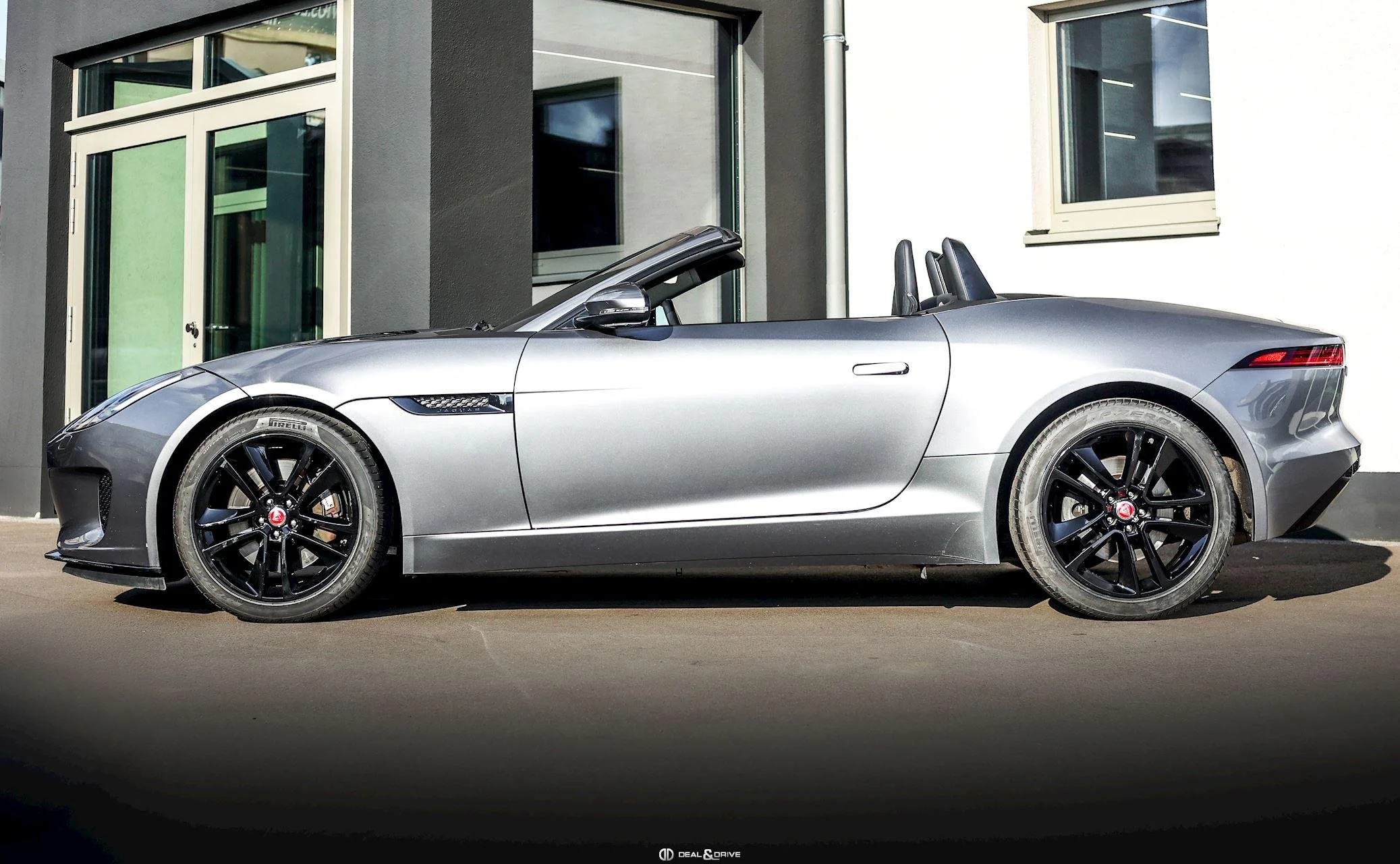
2018 F-TYPE R-Dynamic P340/P380
The 2018 model-year update substantially modernised the F-TYPE without changing its fundamental aluminium sports-car architecture.
The revised range included the 340PS and 380PS supercharged V6 engines, with the P380 available with either rear- or all-wheel drive. The cars also gained the new R-Dynamic specification, giving the F-TYPE a more aggressive visual treatment.
The facelift introduced slimmer full-LED headlights, redesigned bumpers, revised air intakes and lighter slimline seats. The interior became more sophisticated, while the Touch Pro infotainment system significantly improved connectivity.
The P340 and P380 effectively represented the evolution of the original V6 cars into the second major phase of F-TYPE development.
Jaguar's model range at this point stretched from the 300PS four-cylinder through the 340PS and 380PS V6s, 400 SPORT, 550PS R and 575PS SVR.
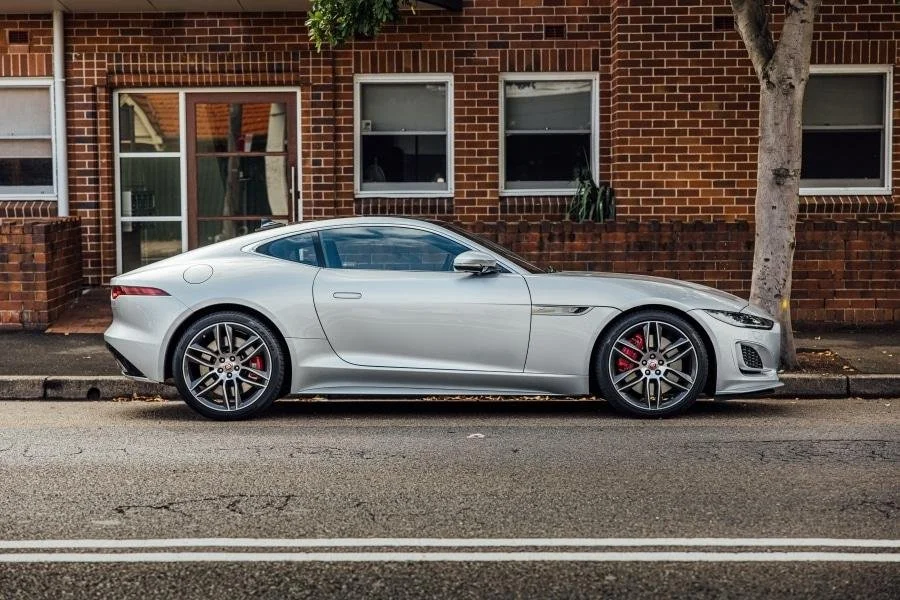
F-TYPE Chequered Flag Edition — 2018/2019
The Chequered Flag Edition celebrated 70 years of Jaguar sports cars, dating back to the XK 120 introduced in 1948.
Based on the R-Dynamic, it was available with the 300PS four-cylinder and 340PS or 380PS supercharged V6 engines. The 380PS version could also be specified with all-wheel drive.
The special edition received an Exterior Black Design Pack, unique 20-inch Gloss Black and Diamond Turned wheels, red brake calipers and Chequered Flag badging.
Inside, Jaguar fitted Windsor leather, Performance seats, an Ebony Suedecloth headliner and a Dark Brushed Aluminium centre console. The steering wheel also featured a red 12-o'clock marker, reinforcing the motorsport theme.
It was available as both Coupé and Convertible.
The Chequered Flag is significant because it sits between Jaguar's performance-focused derivatives and its later heritage editions: it used relatively familiar mechanical components but created a highly distinctive factory specification around Jaguar's motorsport identity.
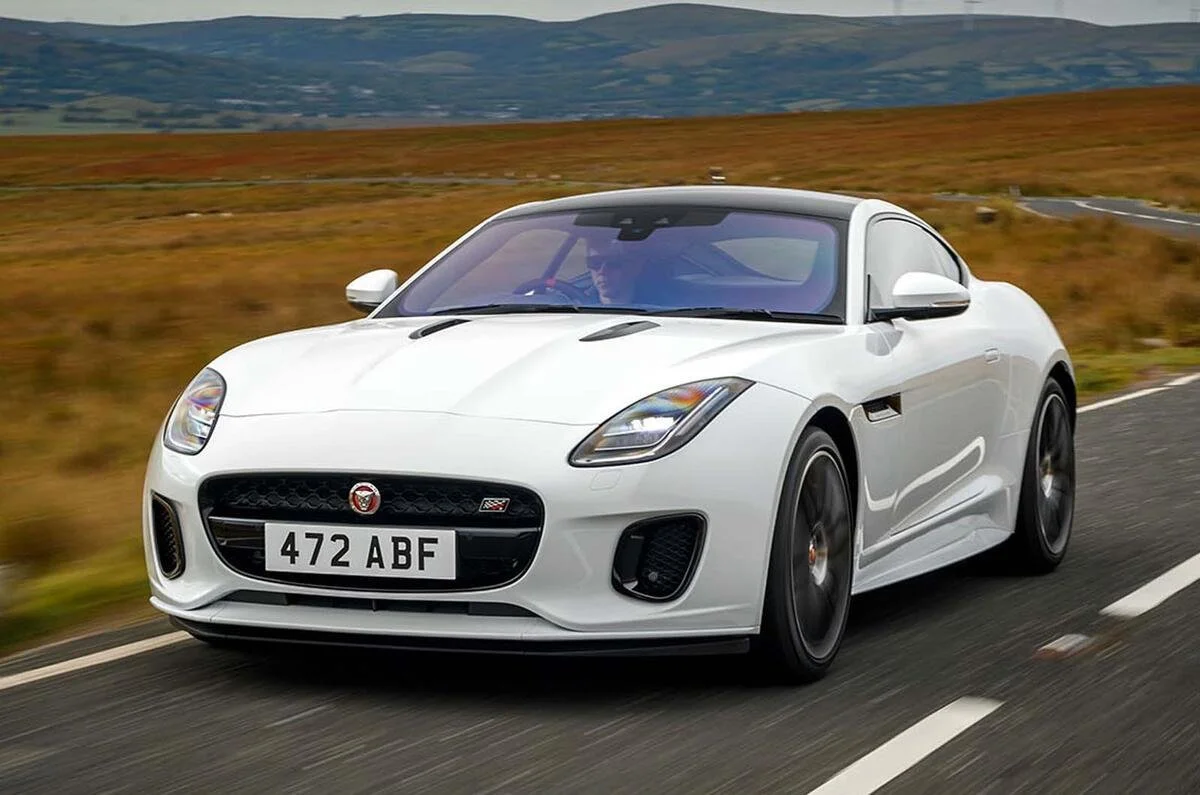
2020 Facelift — P300, P450 and P575
The 2020 model-year F-TYPE received the most significant visual redesign of its life. The front became wider and more aggressive, with slim horizontal headlights, a reshaped bonnet and revised air intakes. The rear was also subtly redesigned, while the cabin gained a 12.3-inch digital instrument display.
The powertrain range changed substantially. The entry-level P300 continued with the 2.0-litre turbocharged four-cylinder, while Jaguar introduced a new 450PS 5.0-litre supercharged V8, replacing the earlier 550PS V8 in the main range. At the top was the 575PS V8-powered F-TYPE R.
The new R delivered 575PS and 700Nm and used all-wheel drive, giving it a 0–60mph time of approximately 3.5 seconds and an electronically limited 186mph top speed.
This facelift effectively created the F-TYPE generation that carried the car through to its final years. Jaguar also introduced the First Edition, which was based around the P300 and featured a carefully selected combination of colours and equipment.
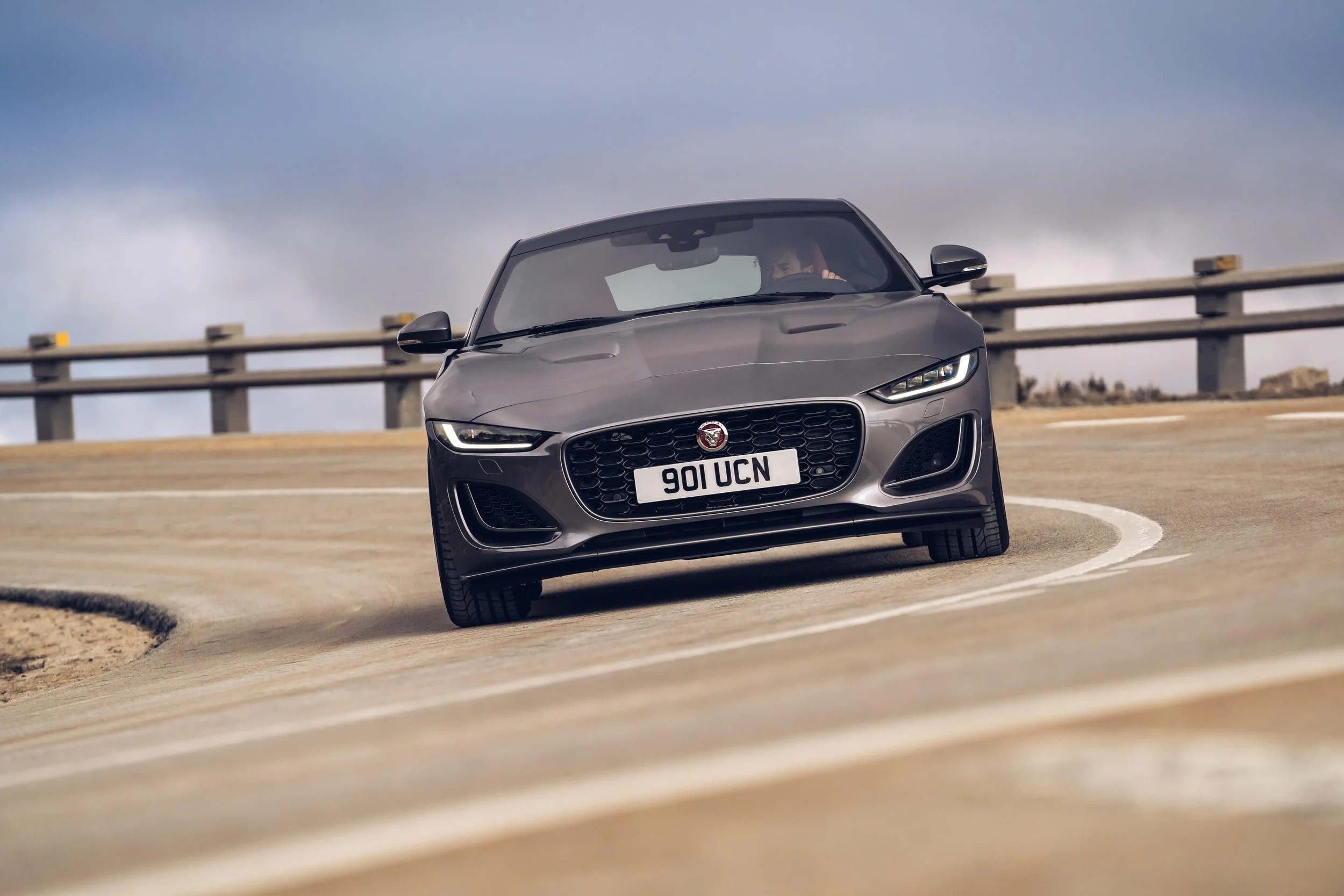
F-TYPE First Edition — 2020/2021
The First Edition accompanied the redesigned F-TYPE introduced for the 2020/2021 model years. It was intended to give early customers a highly specified version of the new-generation car without requiring them to select individual options.
The First Edition was based around the 300PS P300 four-cylinder in some markets, with a distinctive combination of exterior colours, interior materials and equipment.
Its importance is primarily historical: it marked the introduction of the extensively redesigned F-TYPE that would remain the basis of Jaguar's sports car until production ended.
The new generation retained the fundamental proportions of the original 2013 car but gave it a much more aggressive face, slimmer headlights, cleaner surfacing and a significantly more modern interior.
The First Edition therefore represents the transition between the original F-TYPE design and the final form of the car. Jaguar's 2021 range documentation confirms the First Edition alongside the P300, R-Dynamic P380 and R.
F-TYPE Heritage 60 Edition — 2021
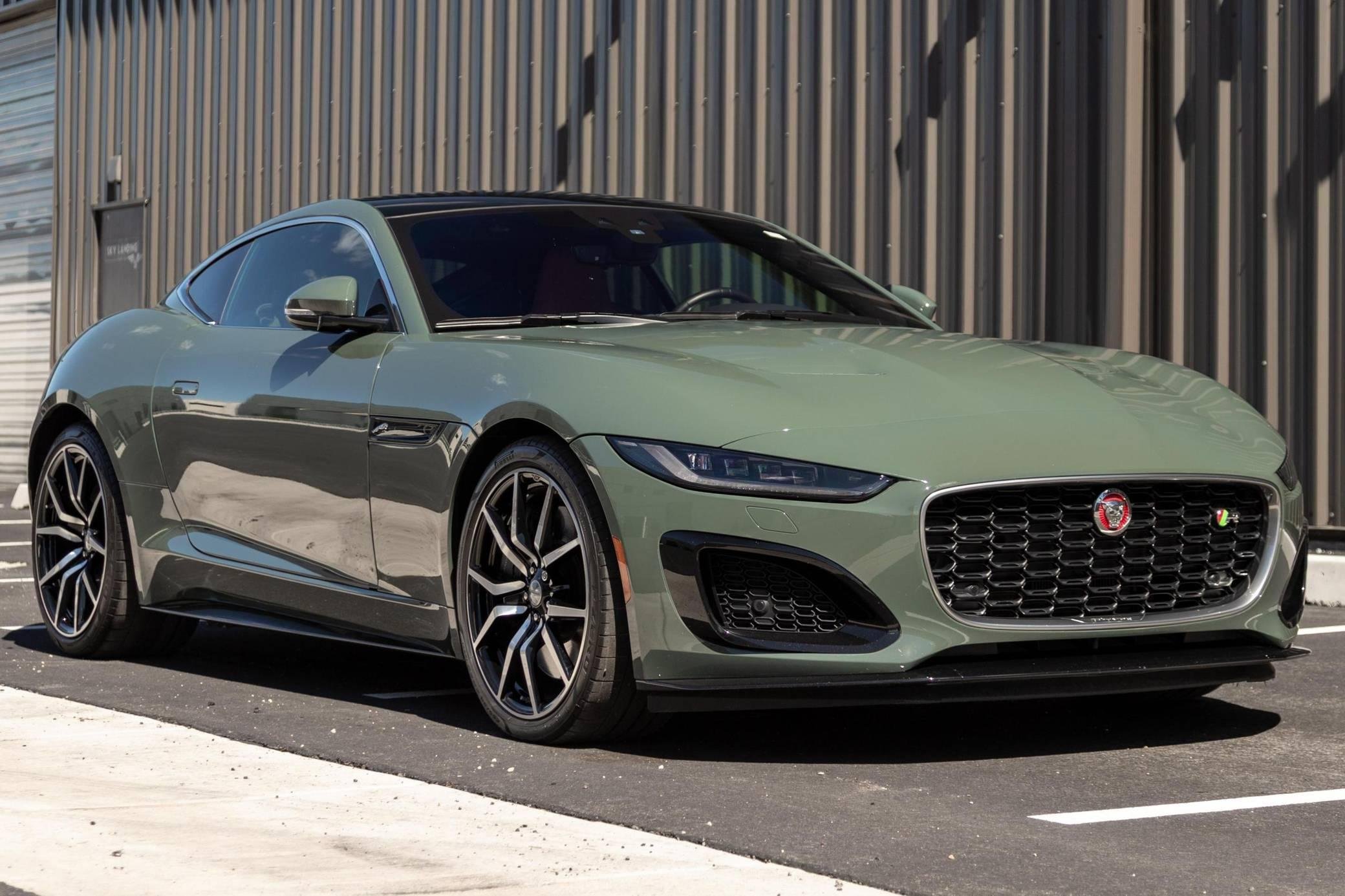
The Heritage 60 Edition was created to celebrate 60 years of the Jaguar E-TYPE and was one of the most significant collector-oriented F-TYPEs.
Only 60 examples were produced worldwide, each powered by the 575PS supercharged 5.0-litre V8 and equipped with all-wheel drive.
Its defining feature was Sherwood Green, an original E-TYPE colour that Jaguar had not offered on a new production car since the 1960s. The interior combined Caraway and Ebony Windsor leather, while special E-TYPE 60 badges, treadplates and SV Bespoke details completed the package.
The cars were built at Jaguar's Castle Bromwich plant and then finished by SV Bespoke.
The Heritage 60 therefore connected the F-TYPE directly to Jaguar's most famous sports car rather than simply celebrating the F-TYPE itself. With only 60 examples produced, it is also one of the rarest factory F-TYPE editions.
F-TYPE Reims Edition — 2021
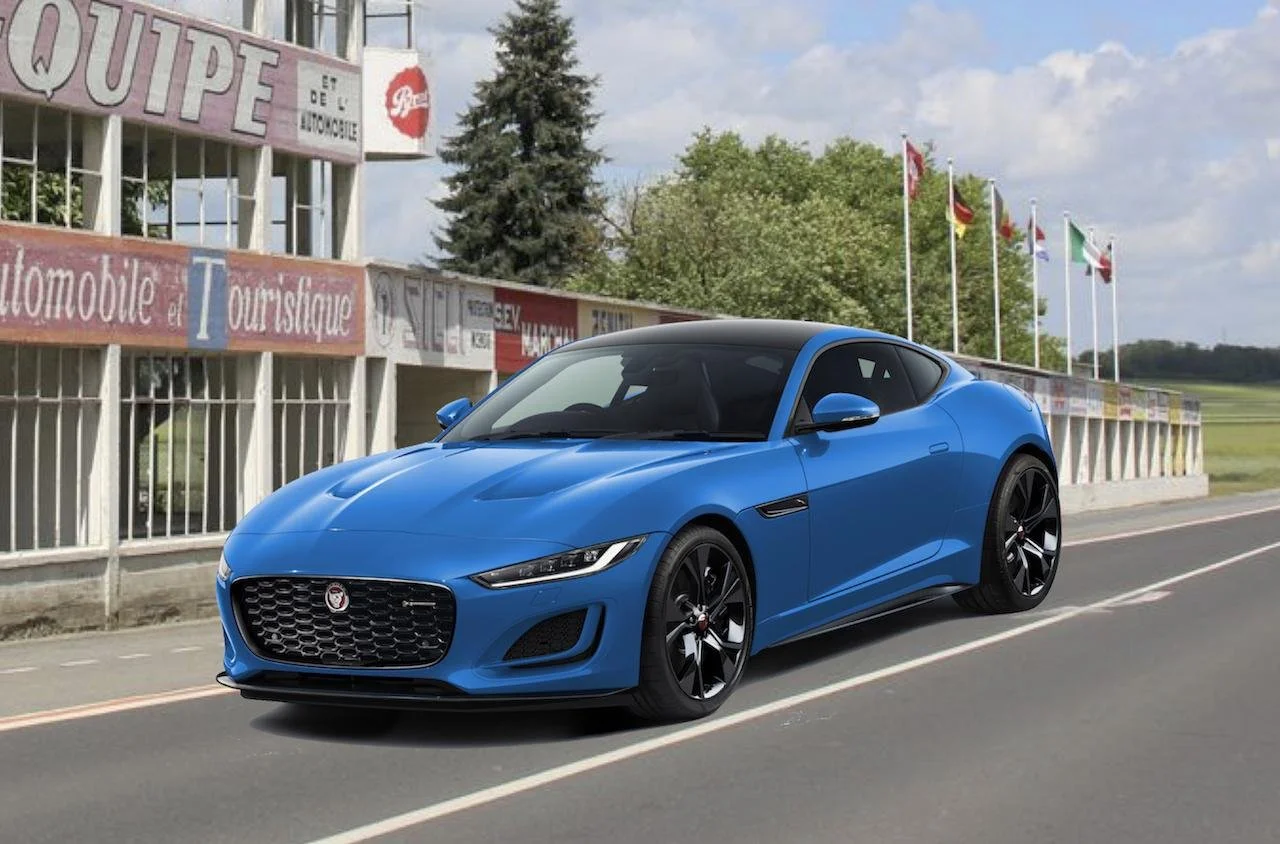
The Reims Edition was a UK-only special edition limited to 150 cars. It took its name from Jaguar's racing success at the 12 Hours of Reims, where the D-TYPE achieved a famous victory in 1954.
Every Reims Edition was finished in exclusive French Racing Blue, a colour reserved for this model. The cars also received an Exterior Black Pack, gloss-black 20-inch wheels and additional black detailing.
Inside, Jaguar specified an Ebony interior with the Interior Black Pack, while equipment such as the fixed panoramic roof, heated seats and Climate Pack was included.
The Reims was available with the P300 and P450 powertrains and, importantly, was offered as a Coupé rather than a Convertible.
It was therefore another example of Jaguar using historic racing references to create a limited collector-oriented F-TYPE without turning it into an entirely new mechanical derivative.
F-TYPE R-Dynamic Black — 2021
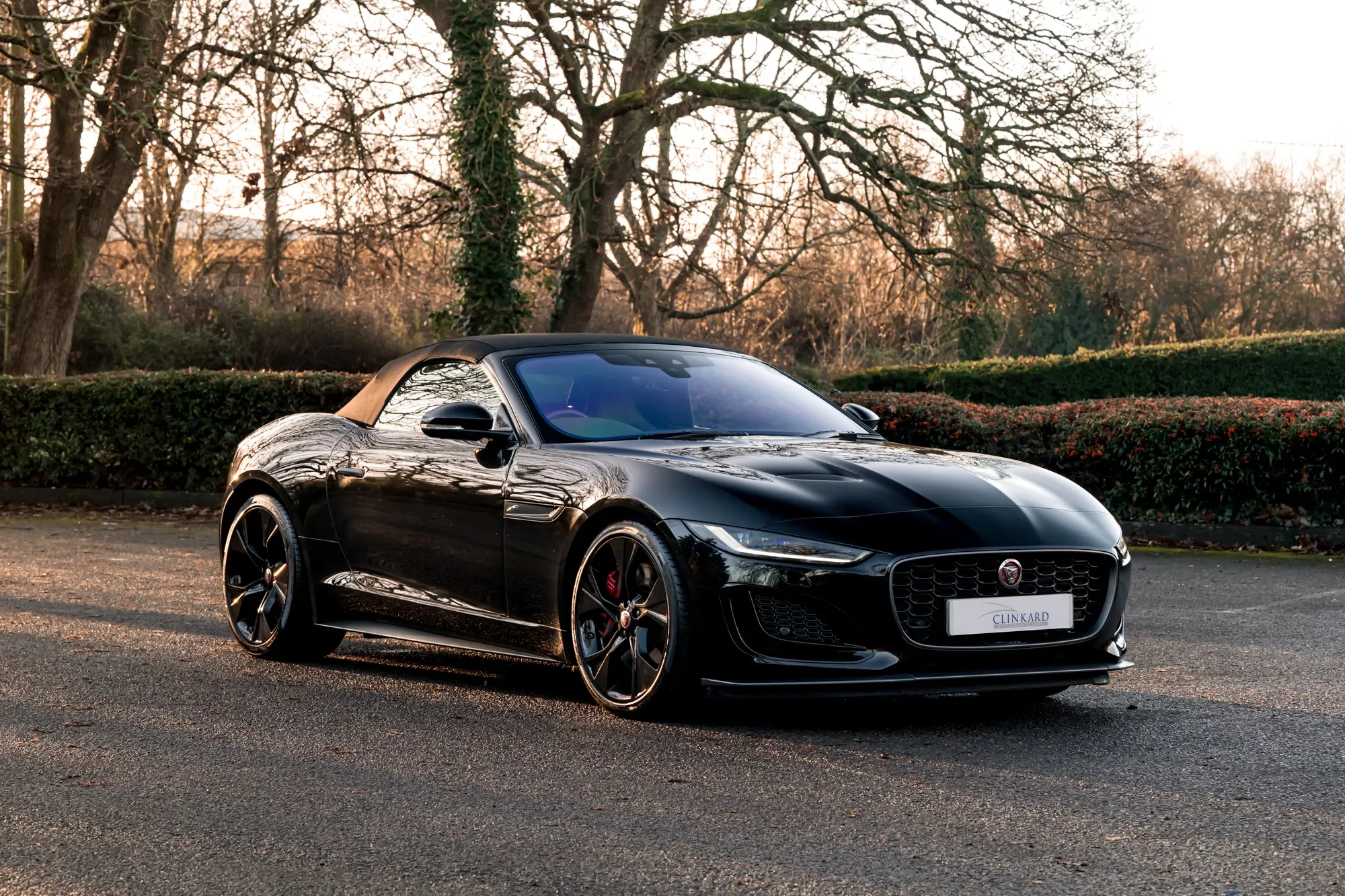
The R-Dynamic Black Edition was designed around appearance, equipment and luxury rather than maximum mechanical performance.
It was based on the R-Dynamic F-TYPE and offered with the 300PS four-cylinder and 450PS V8. The exterior received the Black Exterior Pack, unique 20-inch five-split-spoke wheels and a choice of Santorini Black, Eiger Grey or Firenze Red paint.
The interior was upgraded with Windsor leather Performance Climate Seats, suedecloth trim, distinctive stitching, illuminated treadplates and additional detailing.
The Black Edition is important because it represents the increasingly sophisticated end of the F-TYPE's model strategy. By this stage Jaguar had a relatively mature sports car and could create special editions primarily through specification and design rather than major engineering changes.
It was offered in both Coupé and Convertible forms.
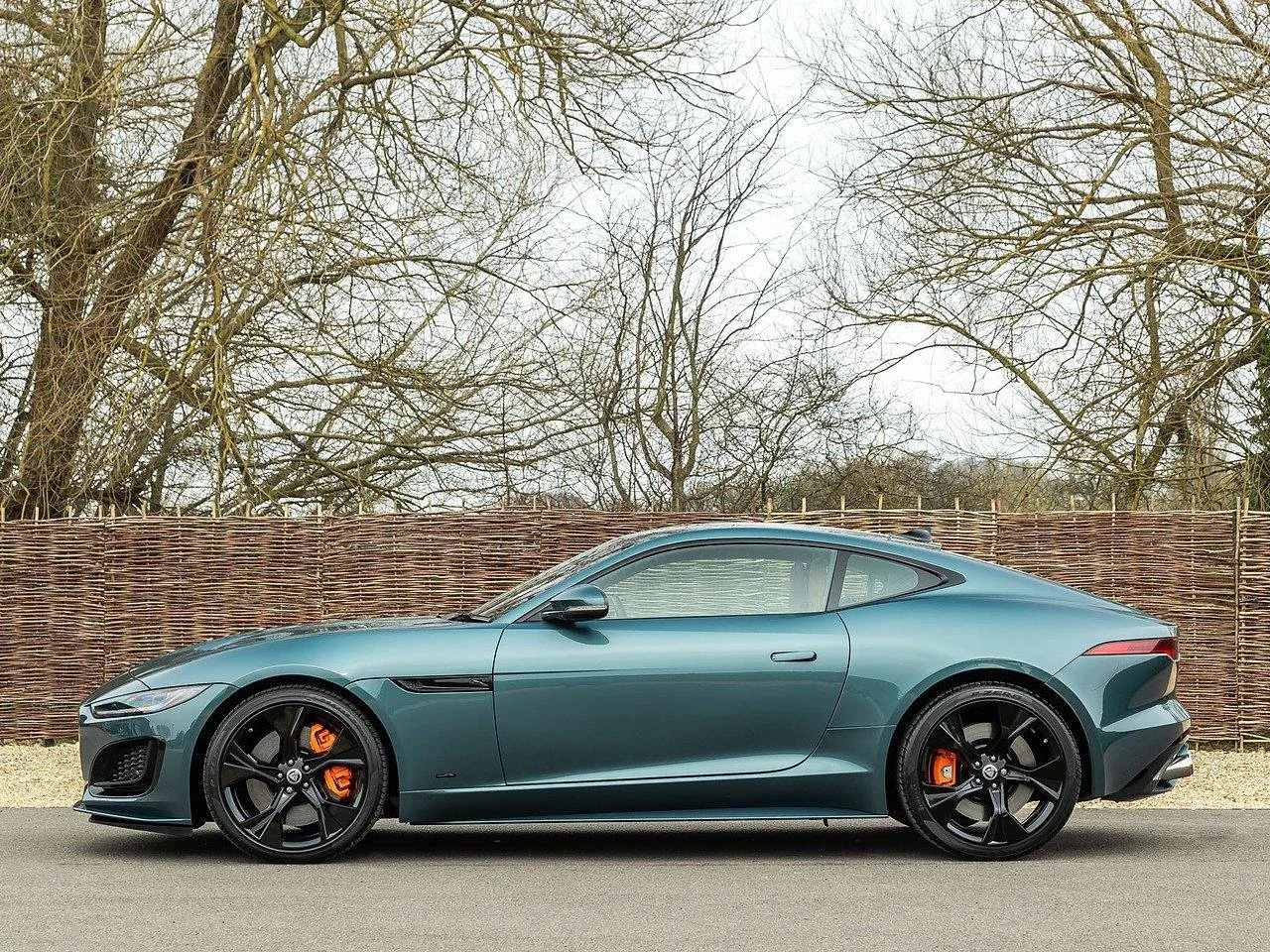
F-TYPE 75 — 2023/2024
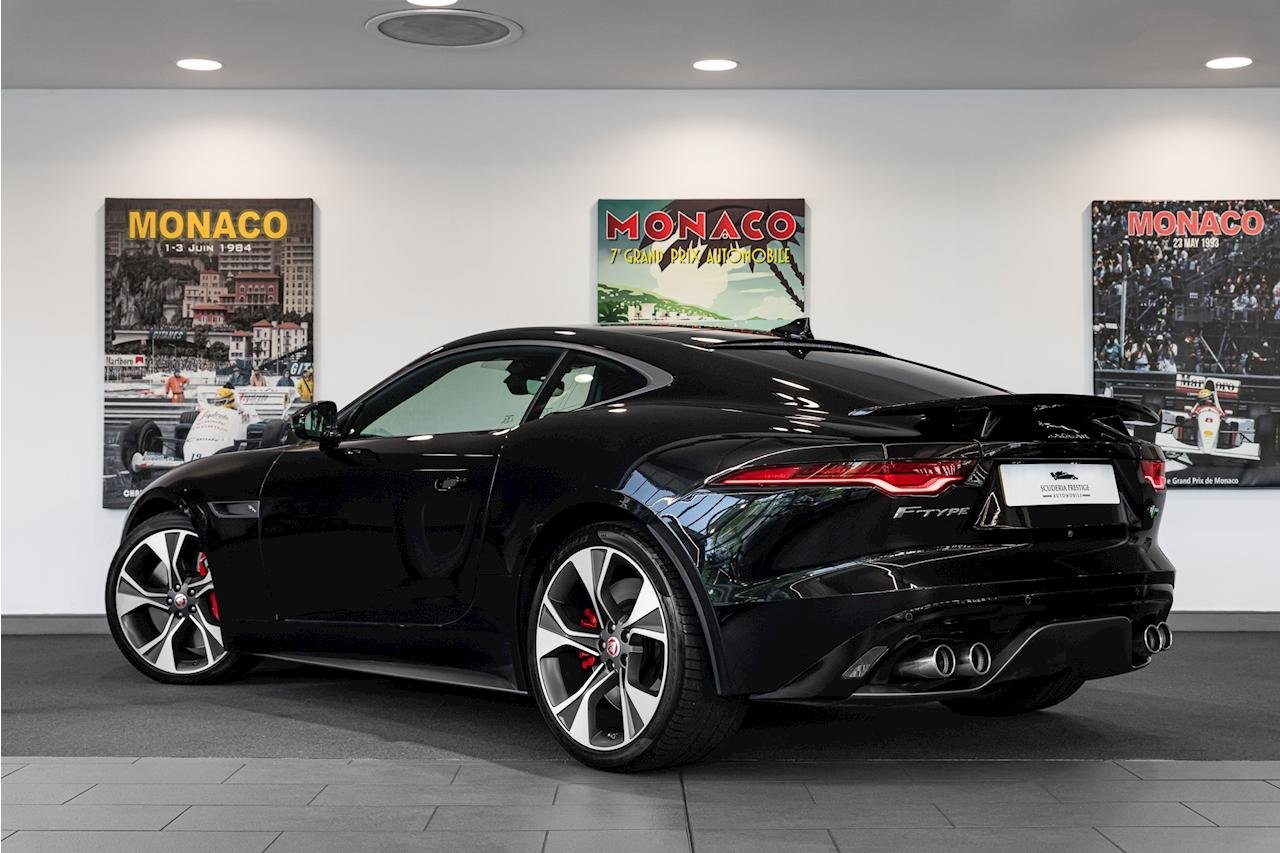
The F-TYPE 75 was created to celebrate 75 years of Jaguar sports cars and the final model year of the F-TYPE.
It used Jaguar's supercharged 5.0-litre V8 in 450PS form, producing 580Nm. Customers could choose rear-wheel drive or all-wheel drive, with 0–60mph taking approximately 4.4 seconds and top speed reaching 177mph.
The 75 received a unique specification including the new Giola Green metallic paint, special 20-inch wheels, Performance seats, Windsor leather, suedecloth headlining and bespoke 75 badging.
It was offered in both Coupé and Convertible form.
The 75 is particularly significant because Jaguar deliberately positioned it as a celebration of the end of the F-TYPE era. Jaguar stated that the final model year would celebrate 75 years of its sports-car heritage before the company's move towards an all-electric future.
F-TYPE R 75 — 2023/2024
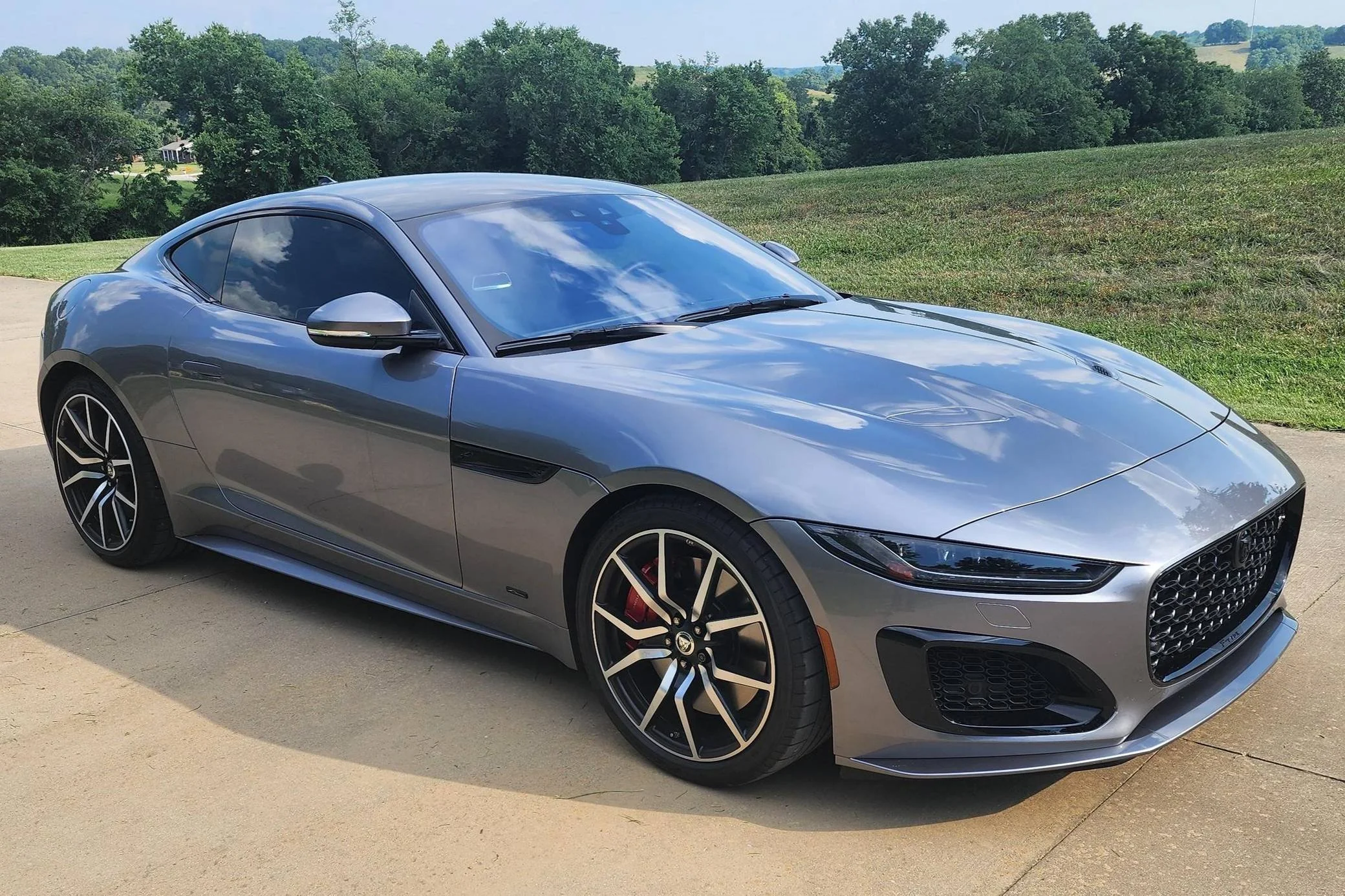
The R 75 was the ultimate mainstream production F-TYPE for the final model year.
It used the 5.0-litre supercharged V8 producing 575PS and 700Nm, with all-wheel drive as standard. Jaguar quoted 0–60mph in just 3.5 seconds and an electronically limited top speed of 186mph.
The R 75 received the most advanced chassis specification offered on the final F-TYPE, including Adaptive Dynamics, Configurable Dynamics and an electronic active rear differential. Wider Pirelli P Zero tyres improved grip, while optional Carbon Ceramic Matrix brakes provided additional high-performance stopping power.
Visually, the R 75 was distinguished by its 20-inch diamond-turned wheels, special 75 badging and exclusive interior details.
It represented the culmination of the standard F-TYPE performance philosophy: a front-engine, supercharged V8, two seats, all-wheel drive and an enormous emphasis on driver involvement.
Jaguar's final model-year documentation identifies the R 75 as the 575PS flagship of the 2024 range.
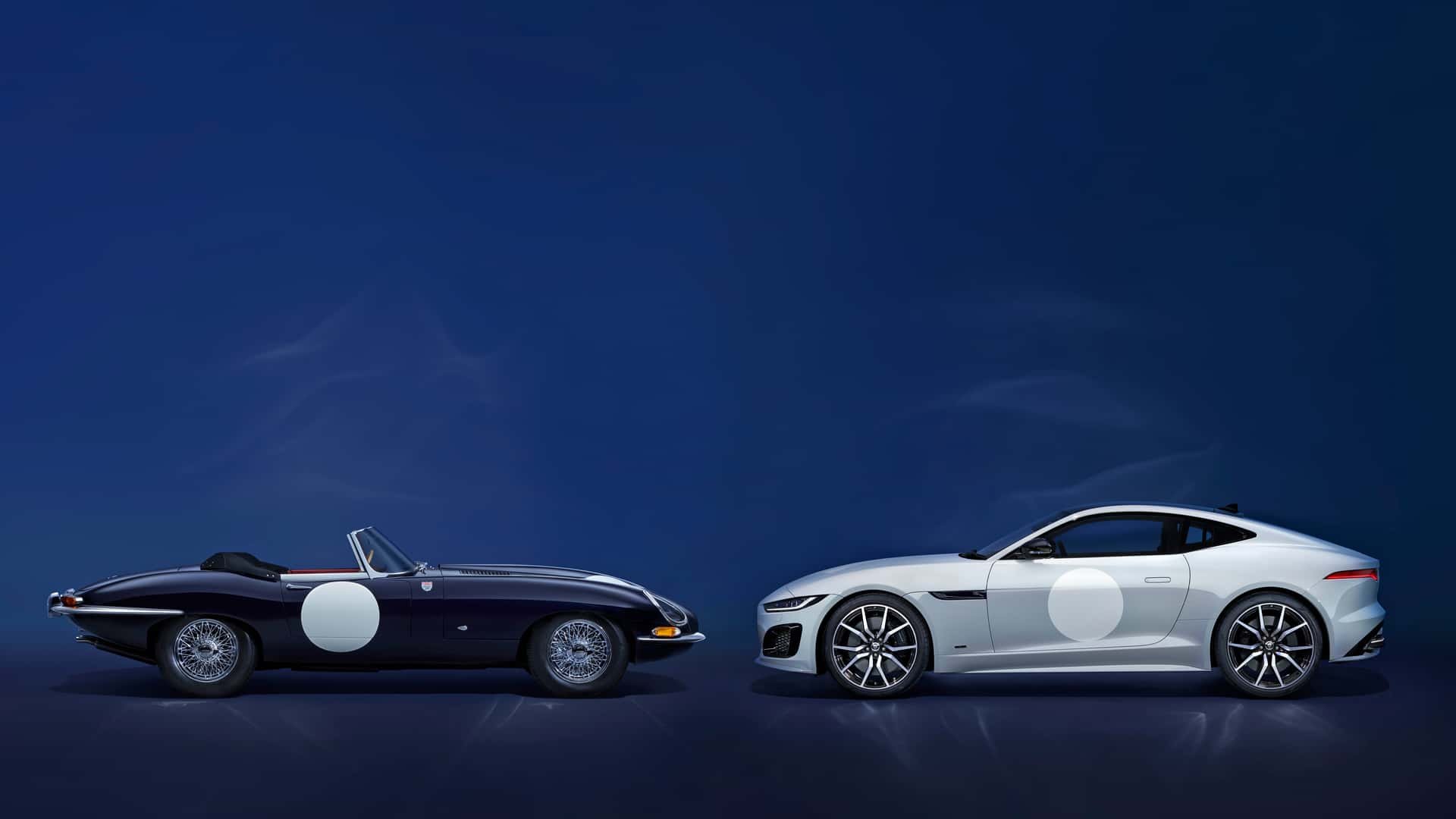
F-TYPE ZP Edition — 2024
The ZP Edition is the final chapter of the F-TYPE story. Jaguar created just 150 examples during the final year of production, making it one of the rarest factory F-TYPEs.
Every ZP Edition uses the 575PS supercharged 5.0-litre V8, producing 700Nm and driving all four wheels. Performance is identical to the R 75, with 0–60mph in as little as 3.5 seconds and an electronically limited 186mph top speed.
What makes the ZP different is its connection to Jaguar's 1960s racing E-TYPEs. Customers could choose Oulton Blue Gloss or Crystal Grey Gloss, both colours previously unavailable on the F-TYPE. Each car received contrasting interior colours, Porcelain White hand-painted racing-style door roundels and special grille surrounds.
Every example also received Gloss Black detailing, 20-inch forged wheels, special ZP Edition branding and a “One of 150” SV Bespoke commissioning plaque.
Jaguar explicitly described the 150 ZP Editions as the last internal-combustion-engined sports cars designed by Jaguar. That makes the ZP Edition more than just another special edition: it is the final production chapter of Jaguar's long-running petrol sports-car lineage.