THE COMPLETE XK MODEL HISTORY
1996–2014
Welcome to our complete history of the XK model, covering the X100 and X150 generations produced between 1996 and 2014.
Explore the sections below for more in-depth information on the various XK models, as well as our features covering Advertisements, Modified XKs, XK Engine Detailing, Race XKs, and Stars in their XKs.
Enjoy exploring the complete XK story!
When the first Jaguar XK8 (project X100) was introduced back in 1996, it brought about brand new standards to the luxury sports car market.
Available as either a coupe or convertible it far exceeded its sales expectations and rapidly became the fastest selling sports car in Jaguars history and in doing so won numerous awards around the world.
In 1998, an even more dramatic XK model was unveiled – the supercharged XKR. With more impressive performance and further improved luxury, the XKR added a new dimension to the XK story.
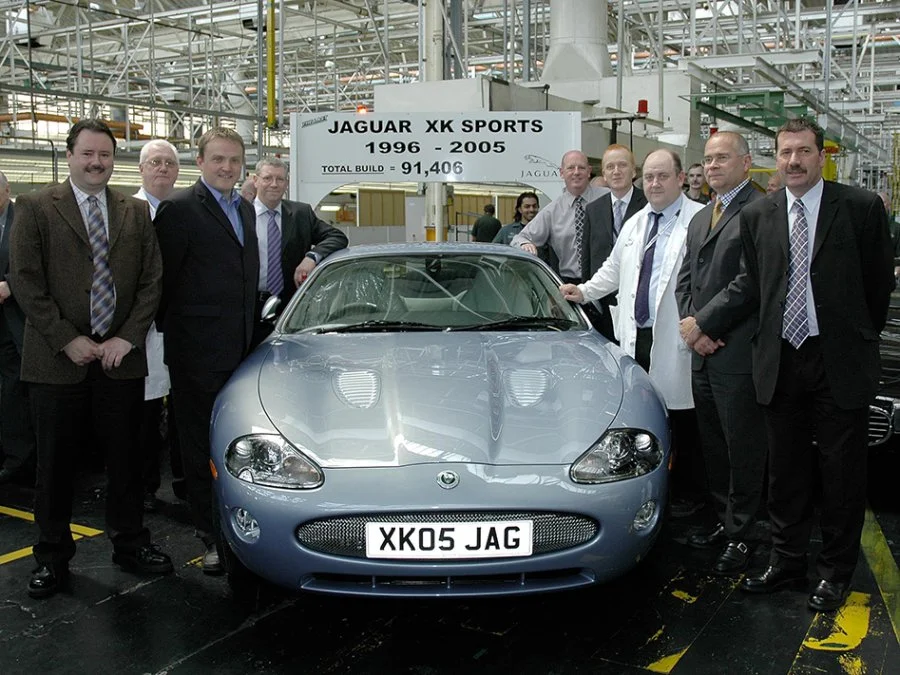
From 2001 onwards Jaguar continued to unveil a number of Limited / Special Editions XKs to their range and by 2006 (when this shape model finally ceased production with the 4.2-S model) they had sold more than 91,406 cars worldwide.
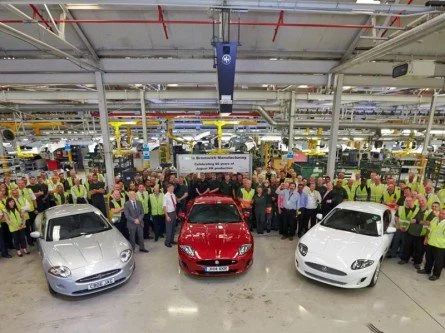
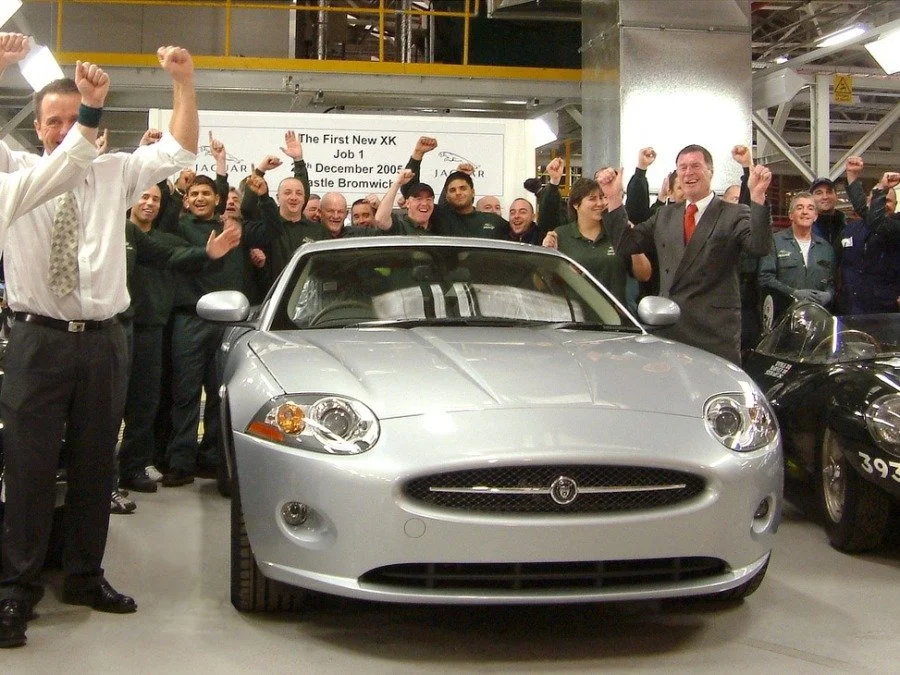
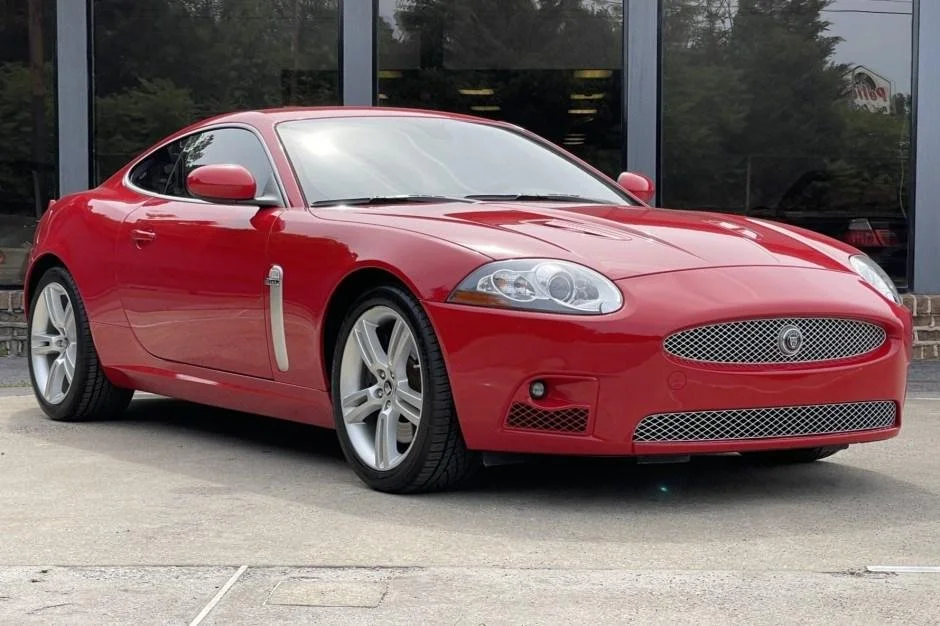
In 2006 a brand new “Next Generation” of XK and XK-Rs (project X150) were launched by Jaguar. This time they completely changed the shape of the model (now in aluminium form) and brought together a new looking performance car that would compete against the likes of its sports car counterparts. The production of the XK sadly ended in July 2014 with the last model finally running off the production line (read more below).
LAST X100 OFF THE PRODUCTION LINE
LAST X100 OFF THE PRODUCTION LINE
THE FINAL FAREWELL - JAGUAR XK (1996-2014)
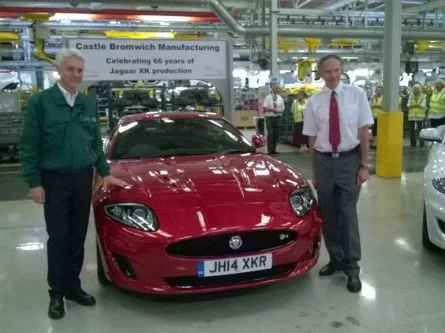
On the 24th July 2014, the very last X150 was built and was handed over to its new custodian - Jaguar Heritage. The penultimate XK was a Polaris White naturally aspirated coupé that will be the last customer car – this was handed over by Castle Bromwich Operations Director Nicolas Guibert to Roger Carroll, Dealer Principal of Rybrook Jaguar in Chester who was receiving the car on behalf of his customer.
The final car was an Italian Racing Red XKR coupé which was presented by Nicolas to Mike Beasley,Jaguar’s former Managing Director and now Vice Chairman of the Jaguar Daimler Heritage Trust. In line with tradition, the car iwas gifted by JLR to the Trust and now forms part of the collection; a special registration number was allocated for this – JH14 XKR.
PART I — THE X100 ERA
1996–2006
The X100 was one of the most important Jaguars of the modern era. Conceived during Ford ownership as a replacement for the ageing XJ-S, it brought Jaguar a new V8 engine, modern electronics and a design that deliberately evoked the company's great sporting GTs without simply copying them.
The first XK8 was announced in March 1996 and went on sale later that year as both coupé and convertible. It became an enormous commercial success and was followed by the supercharged XKR in 1998. Jaguar subsequently produced an extraordinary series of limited editions and performance versions before the final X100 left Browns Lane in May 2005.
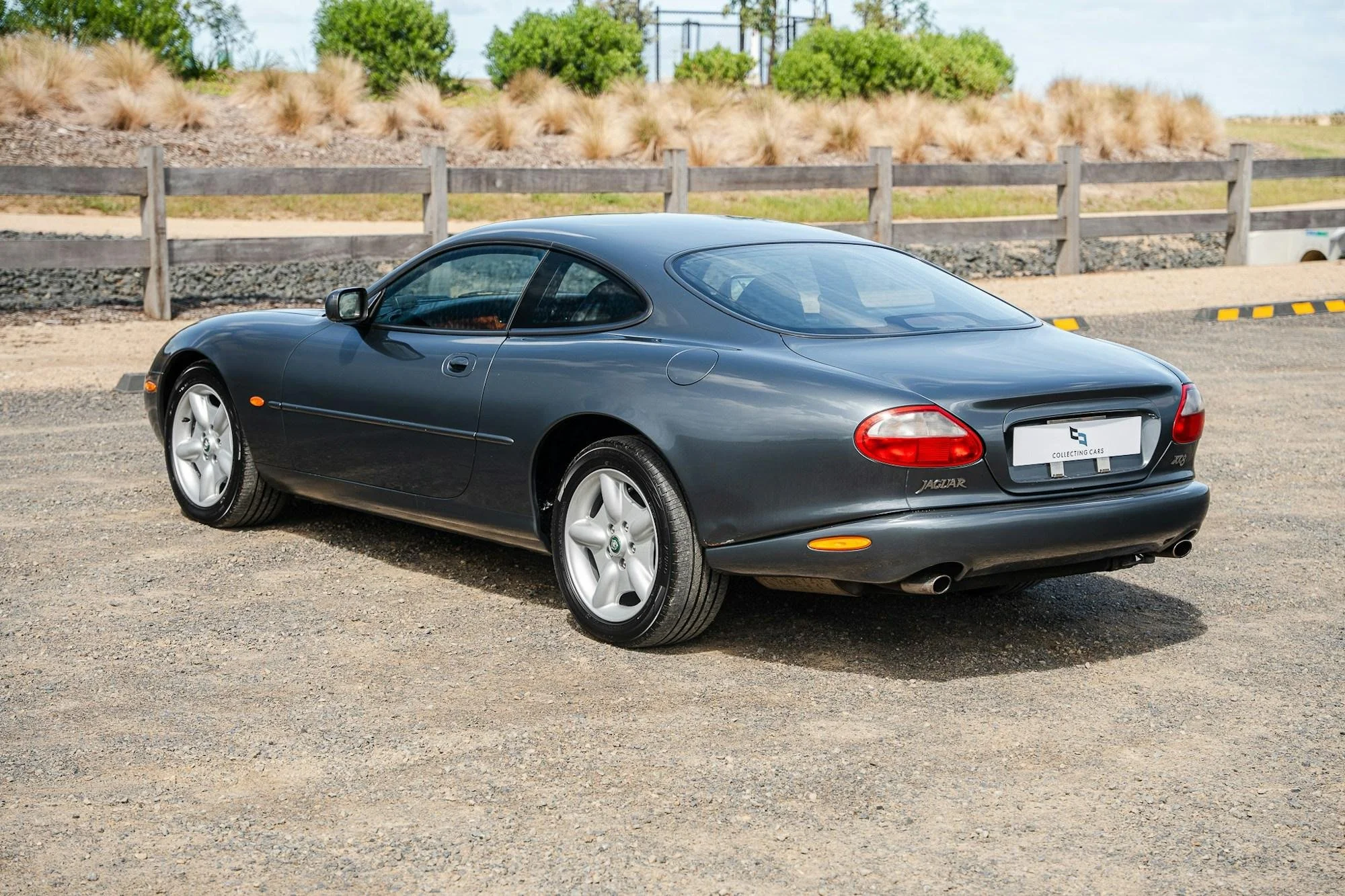
Jaguar XK8 4.0 Coupé (1996–2002)
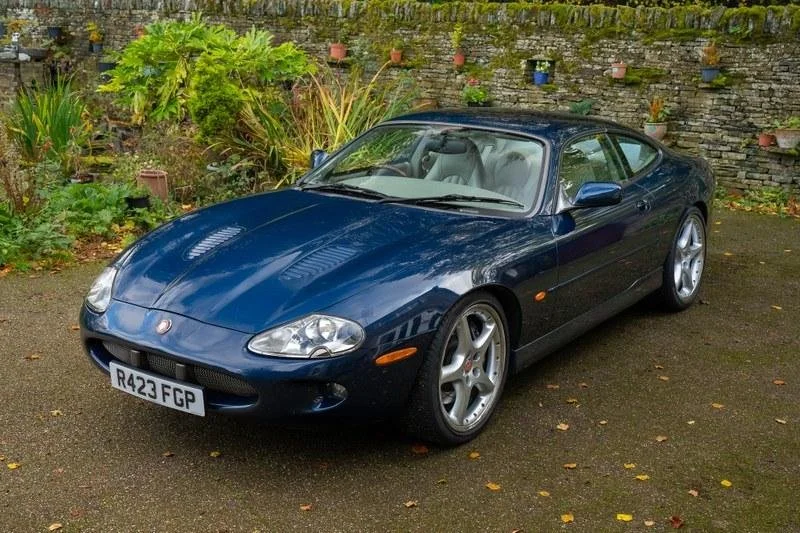
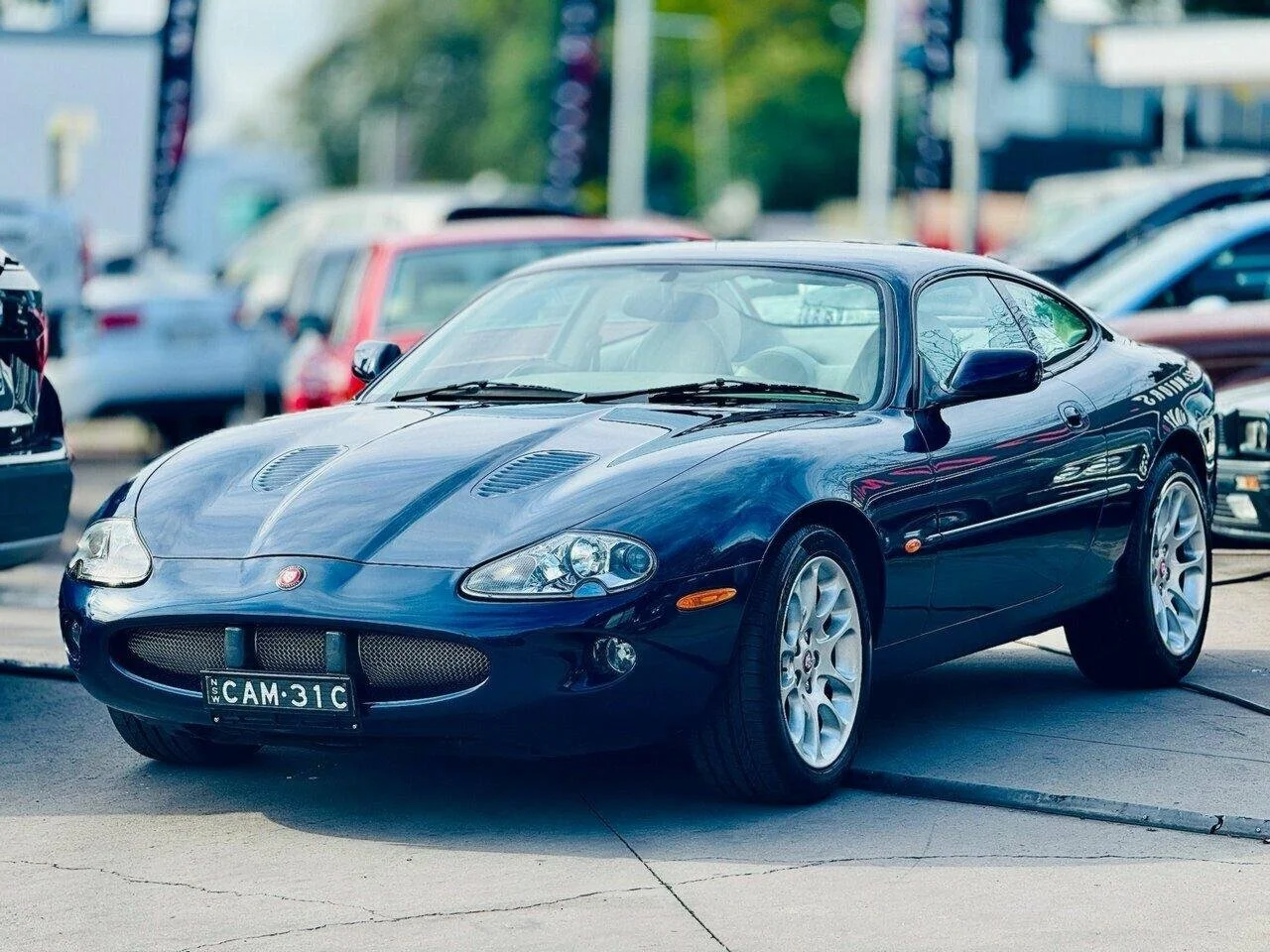
The story of the modern XK begins with the XK8, unveiled by Jaguar at the 1996 Geneva Motor Show. The car was conceived as a replacement for the XJ-S, but Jaguar deliberately moved away from the XJ-S's angular 1970s styling. Designer Geoff Lawson and his team created a rounded, muscular GT whose long bonnet, compact cabin and sweeping rear quarters recalled the spirit of the E-Type without attempting to reproduce it.
Under the bonnet was Jaguar's new 3,996cc AJ-V8, an all-aluminium, four-cam V8 producing around 290bhp and 290lb-ft of torque. It was coupled to a five-speed electronically controlled automatic transmission and drove the rear wheels. Jaguar quoted approximately 6.5 seconds from 0–60mph, with the top speed electronically limited to 155mph.
The XK8 was deliberately more grand tourer than raw sports car. Its cabin combined leather, wood and traditional Jaguar detailing with the electronic sophistication of the Ford-era Jaguar. Buyers could choose between coupé and convertible body styles, making the XK8 equally suitable as a high-speed continental cruiser or an open-air luxury GT.
Its importance to Jaguar cannot be overstated. The XK8 was not merely another new model: it established a completely new design language for Jaguar and introduced the AJ-V8 that would subsequently power an enormous variety of Jaguars.
The car was an immediate commercial success, becoming one of the fastest-selling sports cars Jaguar had ever produced.
Jaguar XK8 4.2 (2002–2006)
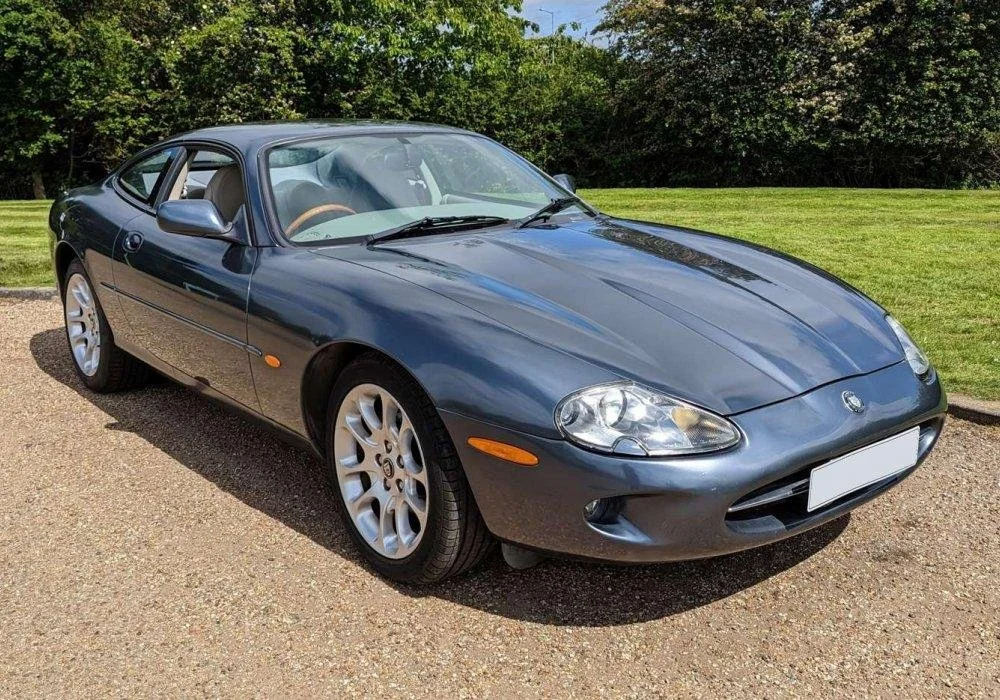
By the beginning of the 2000s, Jaguar had developed the X100 substantially. The most important mechanical change was the introduction of the 4.2-litre AJ-V8, replacing the original 4.0-litre engine.
Displacement increased to 4,196cc and power rose to approximately 300bhp, with torque increasing to around 310lb-ft. The new engine was paired with a six-speed electronically controlled automatic transmission, giving the XK8 smoother acceleration and improved cruising ability.
The 4.2 also benefited from the continual development Jaguar had made to the X100 chassis. By this stage the XK had matured considerably from the original 1996 car. Suspension, brakes, electronics, trim and equipment had all evolved, while Jaguar retained the basic proportions that had made the original XK8 so attractive.
The 4.2 therefore represented the mature form of the naturally aspirated X100. It was less about outright aggression than the XKR and more about effortless, refined performance.
It was also the basis for several of the final special editions, including the 4.2-S and North American Victory Edition.
Jaguar XKR 4.0 (1998–2002)
On 6 May 1998 Jaguar unveiled the car that would transform the XK from a luxury GT into a genuine high-performance machine: the XKR.
The formula was straightforward but extremely effective. Jaguar took the 4.0-litre AJ-V8 and fitted an Eaton supercharger and intercooling system, increasing output to approximately 370bhp and 387lb-ft. The engine remained coupled to an automatic transmission, but the XKR received considerably more aggressive chassis tuning than the XK8.
The result was a car capable of approximately 5.2 seconds to 60mph, with the top speed electronically restricted to 155mph.
Yet Jaguar did not abandon the XK's GT character. The XKR was still beautifully trimmed and perfectly capable of crossing Europe at high speed. What changed was the reserve of power beneath the accelerator.
The XKR also established a formula Jaguar would repeatedly return to: supercharged V8 + rear-wheel drive + luxurious GT bodywork. That combination eventually produced the XKR-S and XKR-S GT more than a decade later.
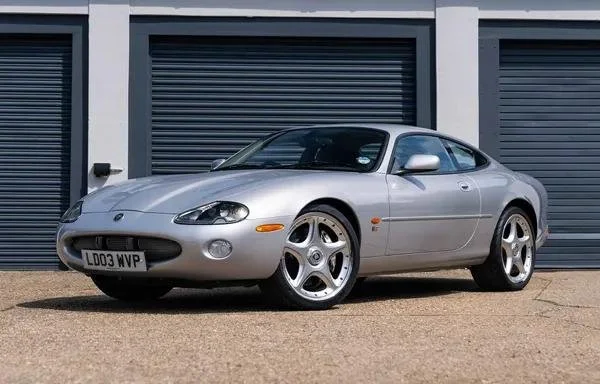
Jaguar XKR Silverstone (2000)
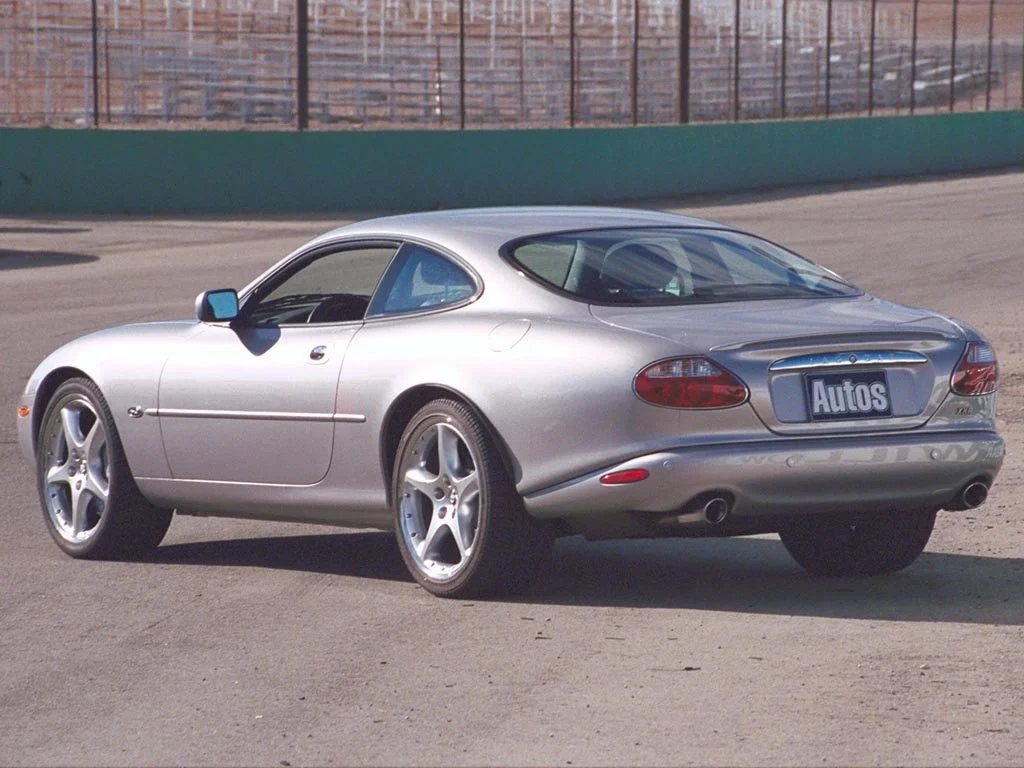
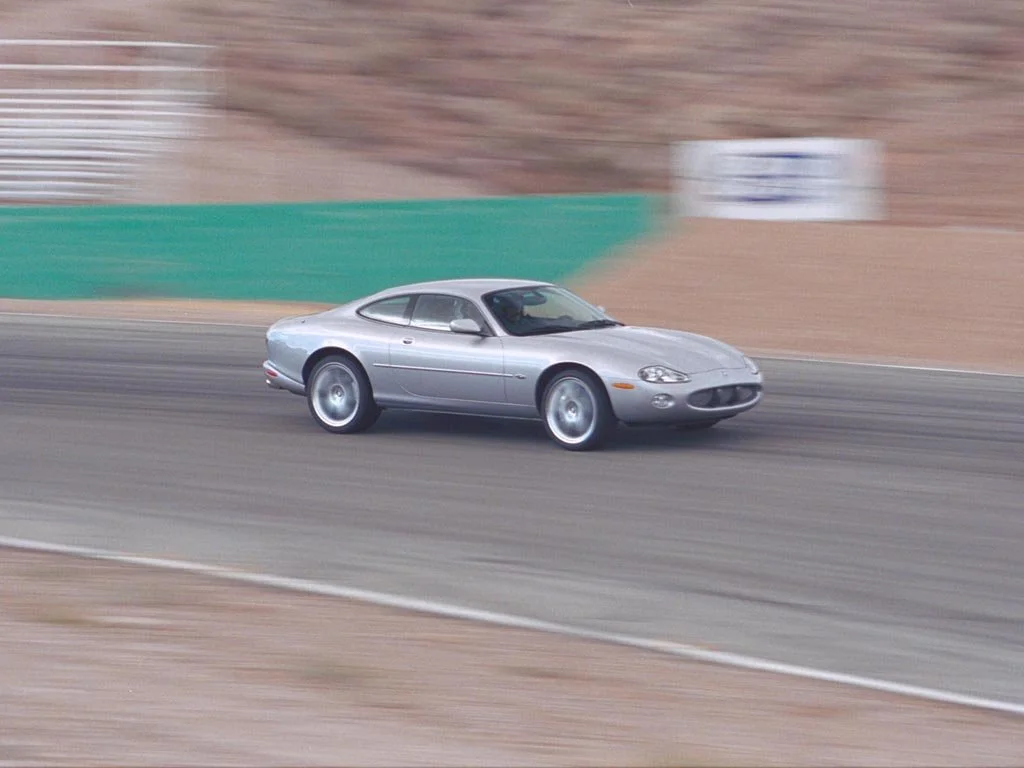
The XKR Silverstone was Jaguar's first major limited-edition XKR and established the pattern of producing highly desirable, low-volume XK derivatives.
The car was introduced around Jaguar's return to Formula One and was named after the famous British racing circuit. Jaguar announced a production run of only 100 cars — 50 coupés and 50 convertibles — and every example was finished in Platinum Silver. The cars reportedly sold out immediately.
Rather than simply applying a badge, Jaguar used the Silverstone to combine the XKR's supercharged performance with an enhanced chassis specification. The cars received upgraded suspension, distinctive wheels, performance brakes and special interior and exterior detailing.
The Silverstone therefore became the template for future XKR special editions: take the already powerful XKR, add the best available Jaguar performance equipment, make the appearance distinctive and restrict production.
Its connection with Silverstone was particularly appropriate given Jaguar's racing history at the circuit and its contemporary return to Formula One.
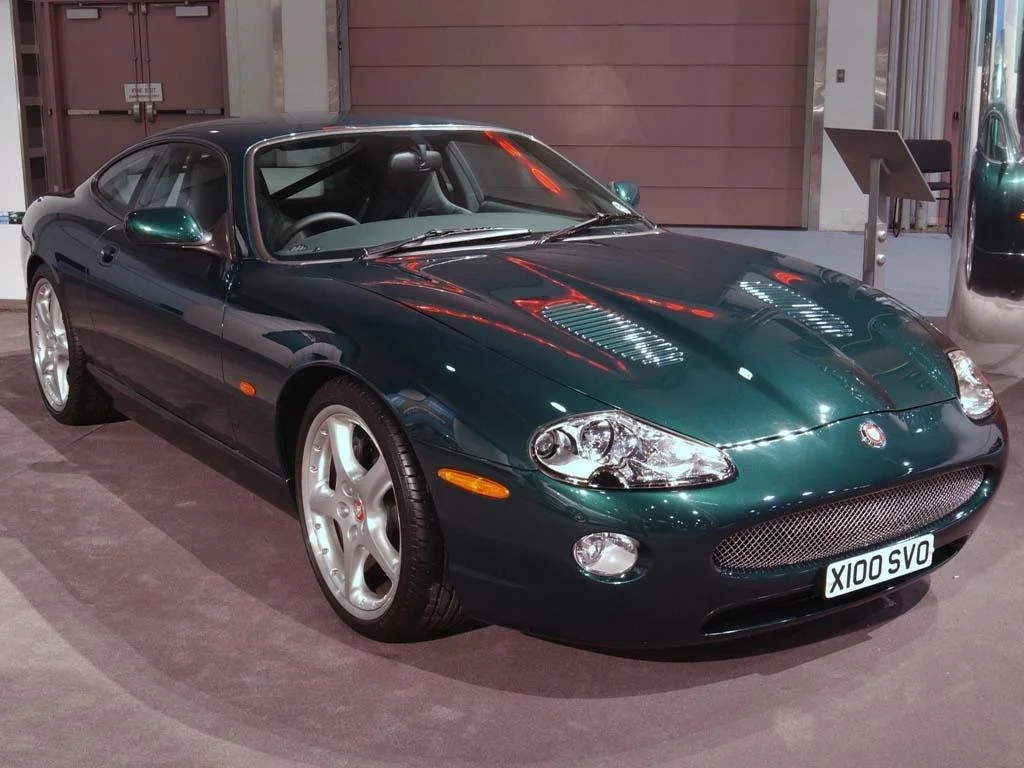
Jaguar XKR SVO / XKR-R (2000 — development programme)
The XKR SVO deserves an entry in an XK encyclopaedia, but it needs to be clearly labelled: this was not a normal series-production model.
Jaguar's Special Vehicle Operations department explored what could be achieved by taking the XKR considerably further. The resulting development cars featured substantially uprated performance, revised suspension, more aggressive bodywork and a more focused interior.
The project demonstrated that Jaguar was capable of creating a far more serious performance XK than the standard XKR. It also foreshadowed later R-performance Jaguars.
SVO experimented with a manual transmission, increased engine output, more serious braking and suspension hardware and a much more focused cabin.
Although it never became a normal showroom production model, the project is historically significant because it showed Jaguar's engineers pushing the XKR towards the territory eventually occupied by later R-S and XKR-S cars.
Jaguar XKR 100 (2001)
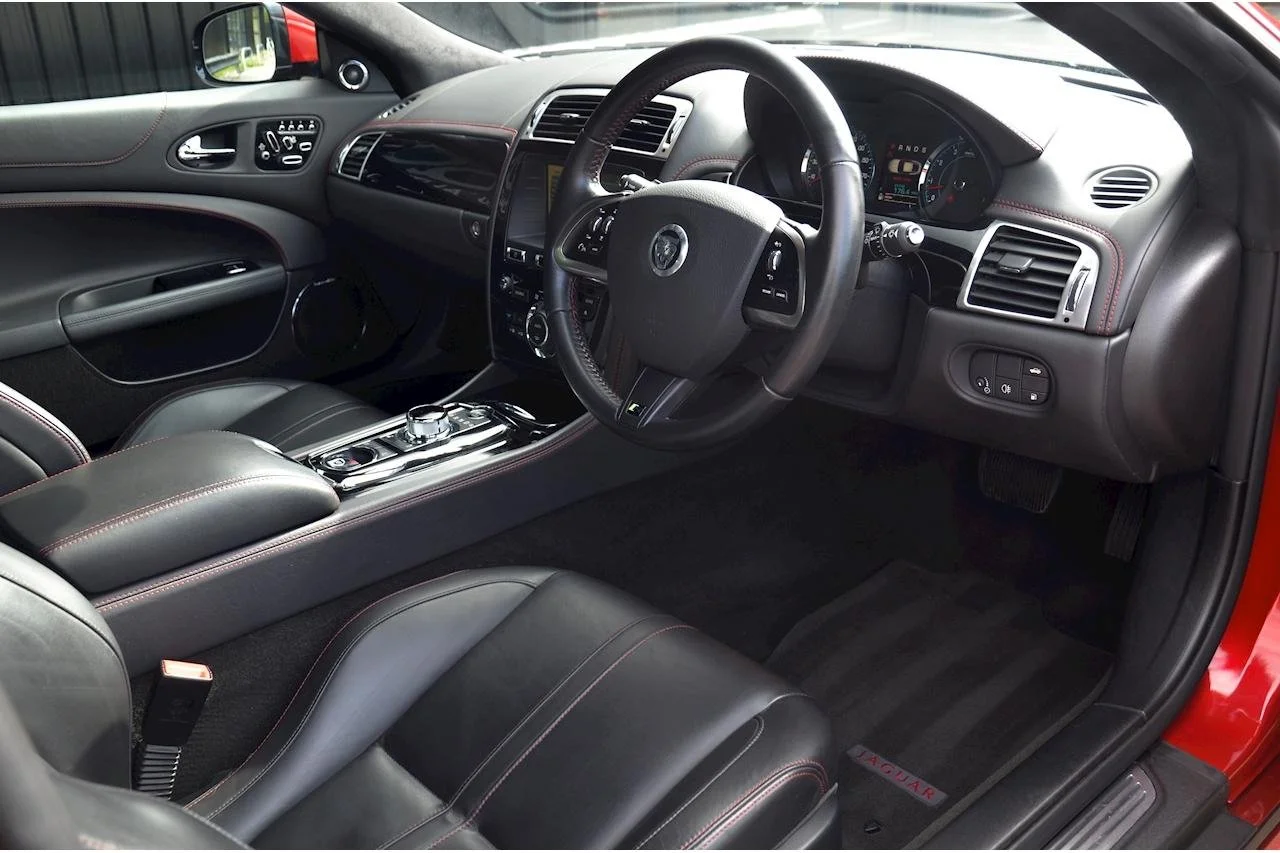
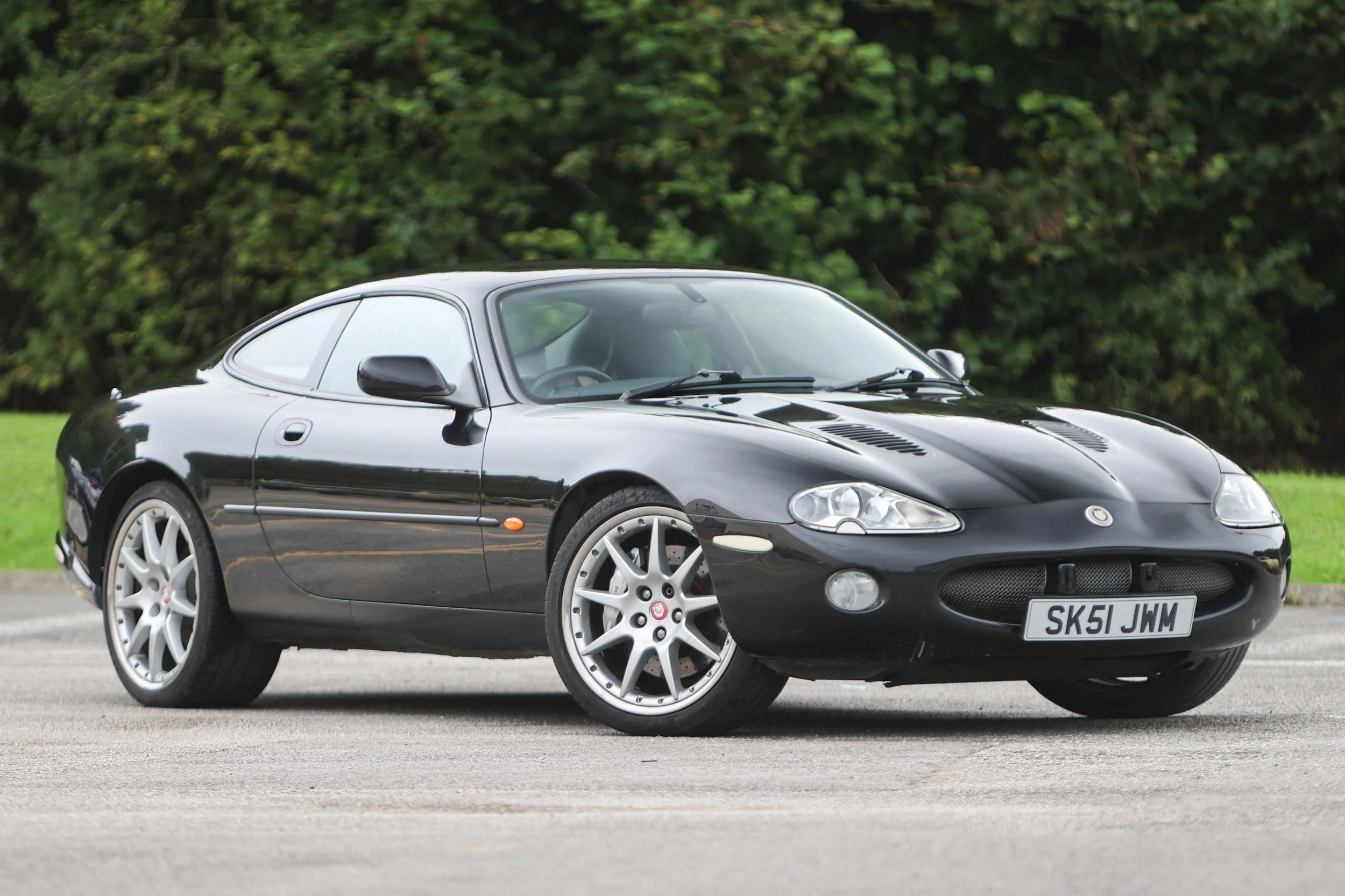
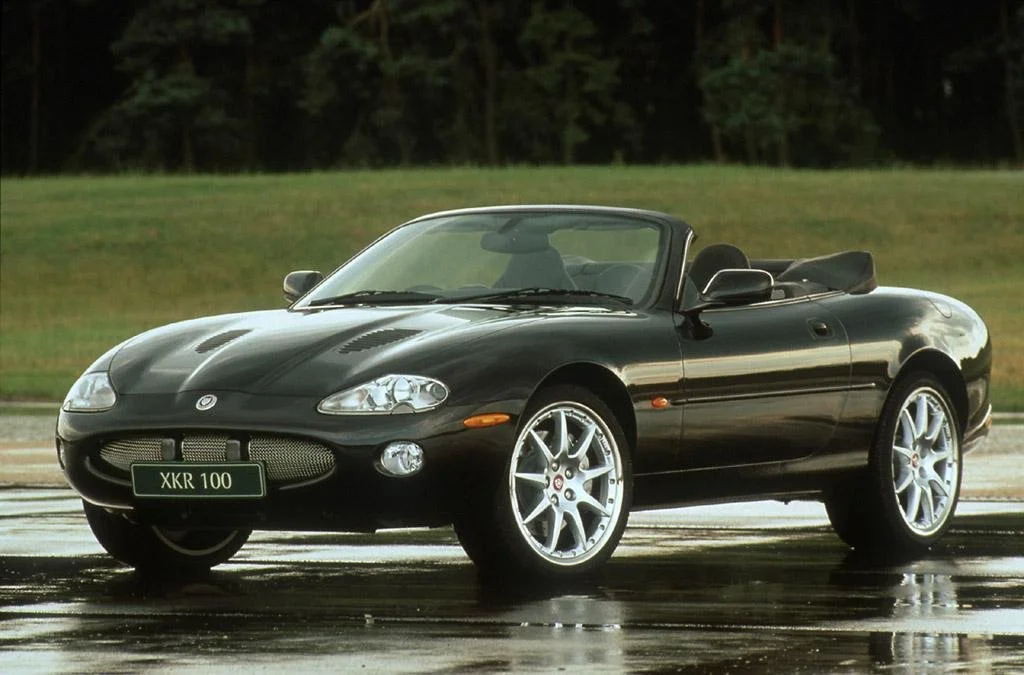
Created to celebrate the centenary of Sir William Lyons, the founder of Jaguar, the XKR 100 was one of the most significant early X100 special editions.
Based upon the supercharged 4.0-litre XKR, it produced 370bhp and 387lb-ft, giving approximately 5.2-second 0–60mph performance. But the real appeal lay in the combination of performance hardware and unique appearance.
The cars were finished in distinctive Anthracite paint and equipped with enormous 20-inch BBS Montreal wheels. Behind them were Brembo brakes, while Jaguar's CATS adaptive suspension was standard.
Inside, the XKR 100 received leather Recaro seats, grey-stained maple veneer, aluminium trim, an R-Performance steering wheel, upgraded audio and navigation equipment.
Only 500 examples were produced worldwide. All were quickly sold, giving the XKR 100 an instant place among the most collectible X100s.
It was an especially appropriate anniversary car because the XK name itself reached back to the XK120 introduced in 1948, connecting the modern supercharged XKR to Jaguar's earliest post-war sporting GTs.
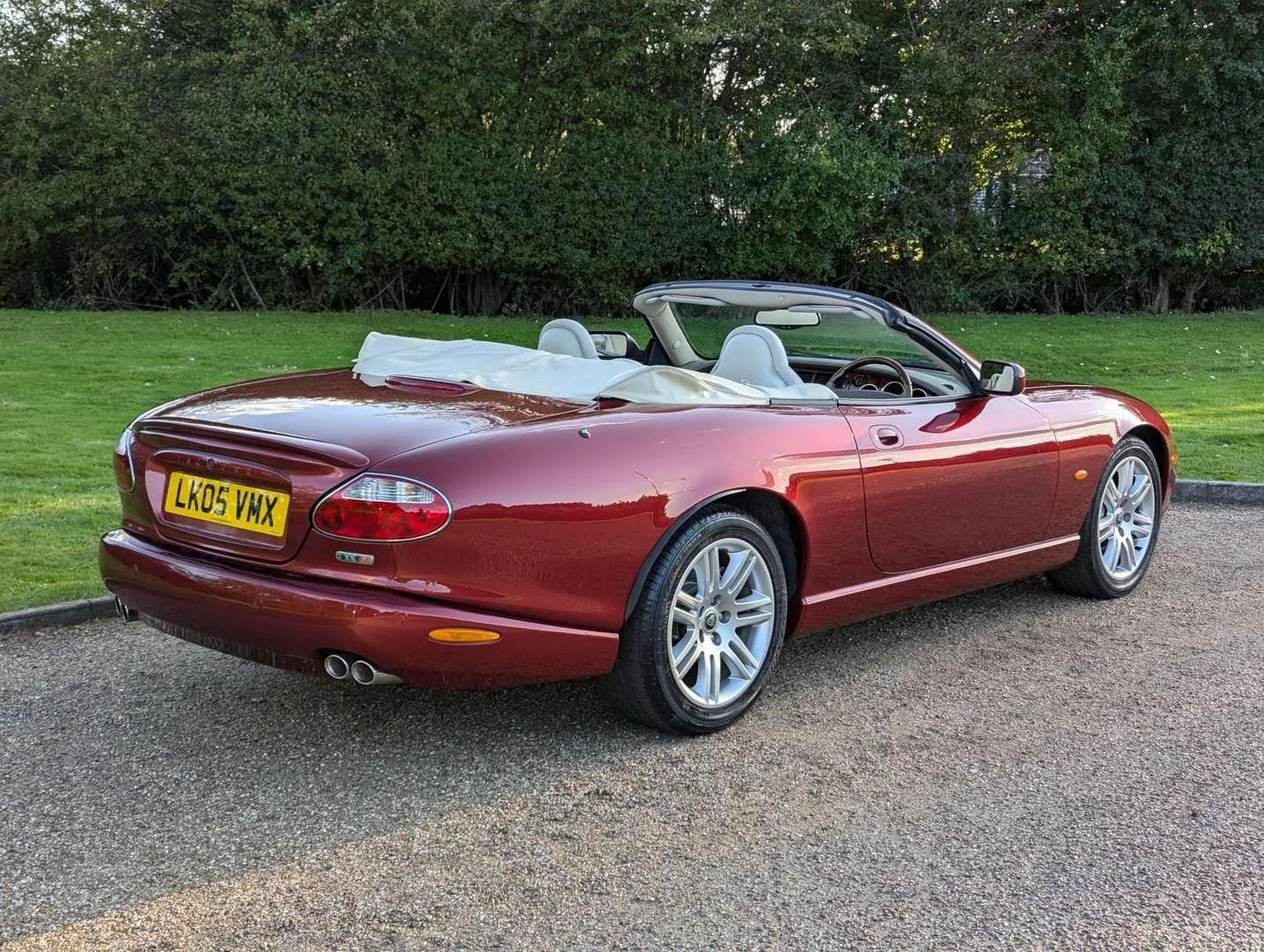
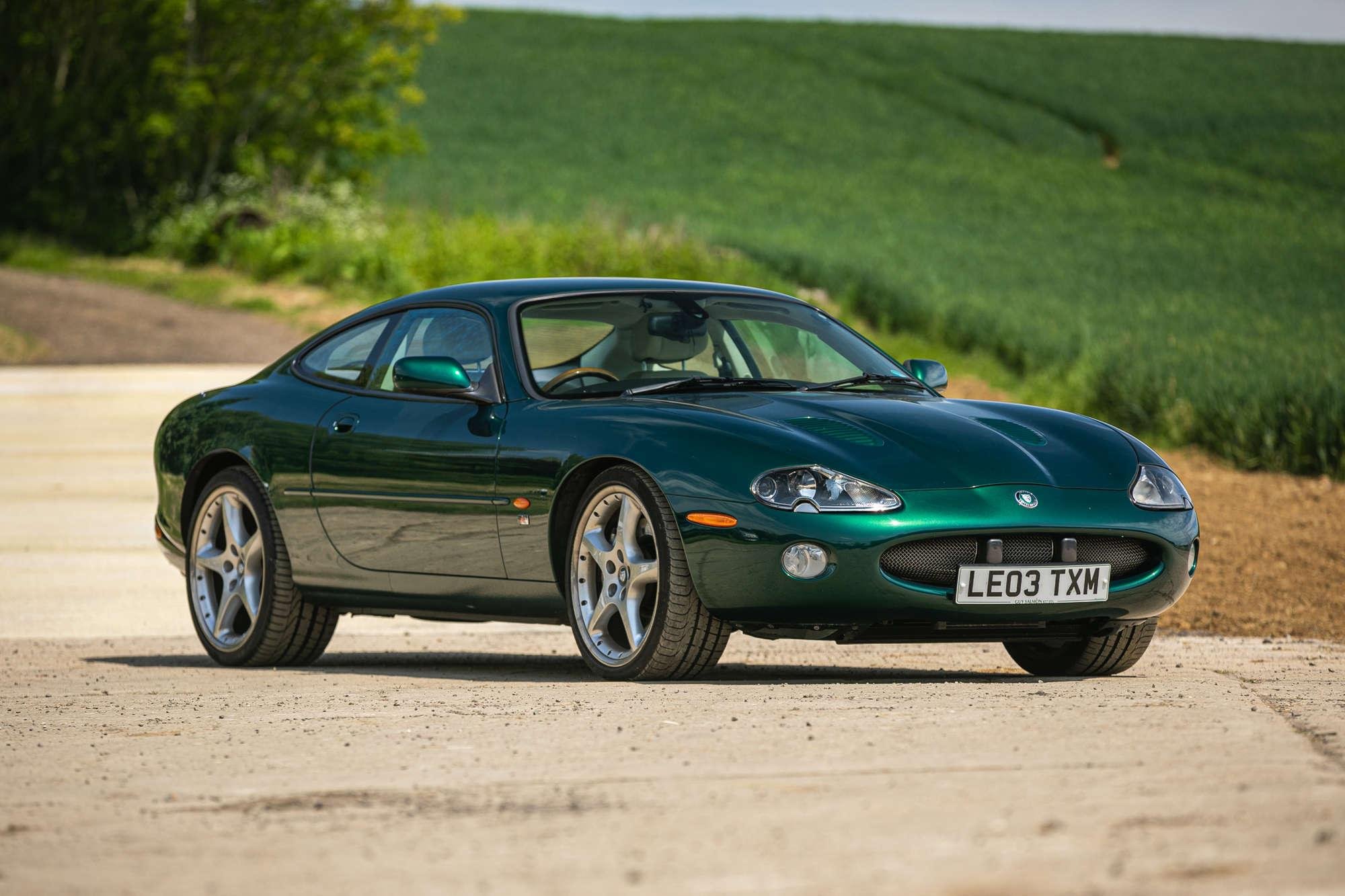
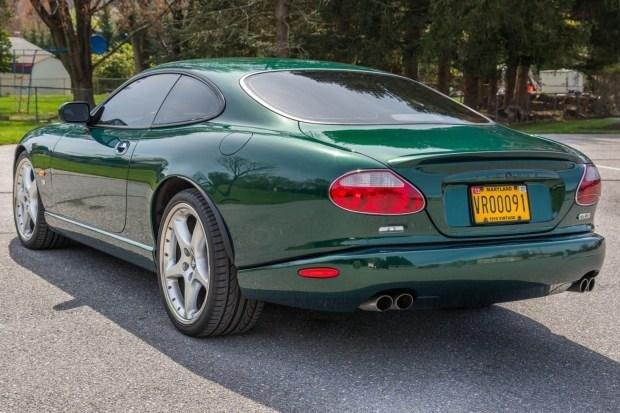
Jaguar XKR 4.2 (2002–2006)
The 4.2-litre XKR brought the larger AJ-V8 into Jaguar's supercharged GT.
Displacement increased to 4,196cc, while power was approximately 400bhp in the later XKR specification. Torque rose to approximately 408lb-ft, and the new six-speed automatic transmission replaced the earlier five-speed unit.
Despite the extra power, Jaguar retained the XKR's 155mph electronic limit and approximately 5.2-second 0–60mph time. The emphasis was not on making the XKR a stripped-down sports car, but on making it an exceptionally fast and sophisticated grand tourer.
The 4.2 XKR became the foundation for almost every important late-X100 special edition.
Jaguar XKR 400 (2003)
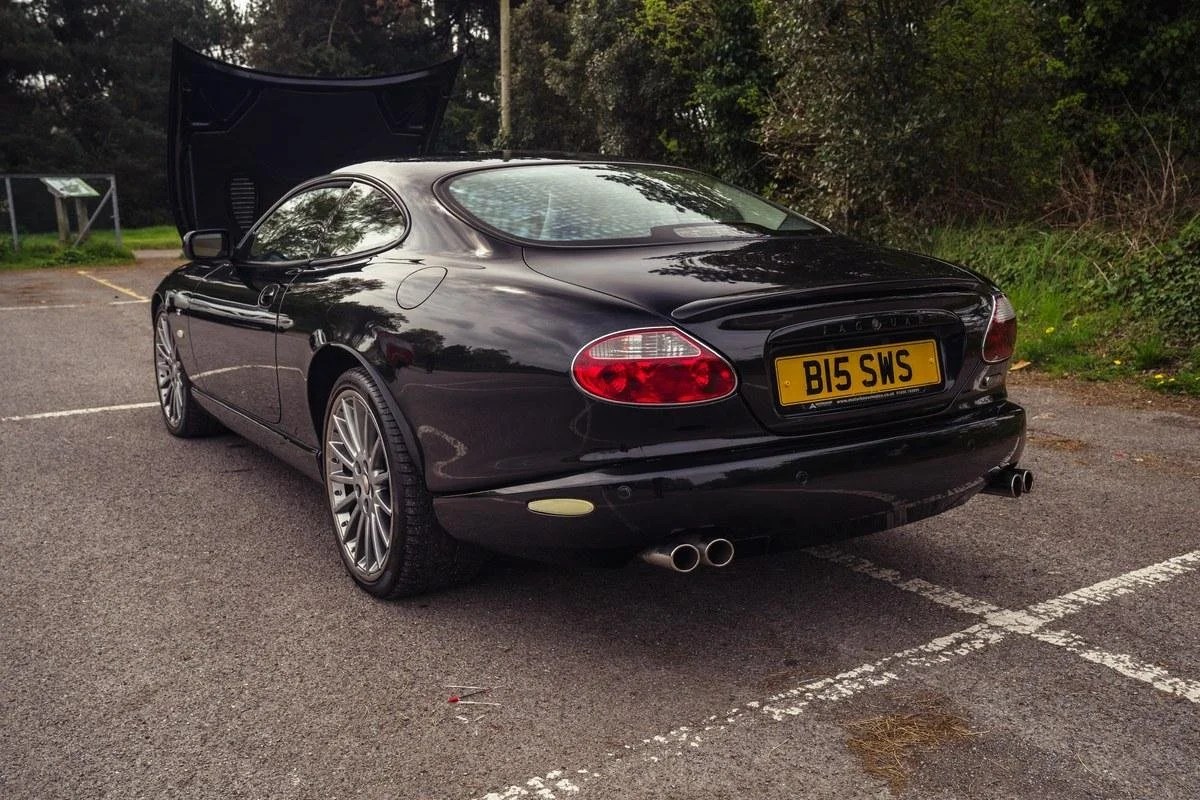
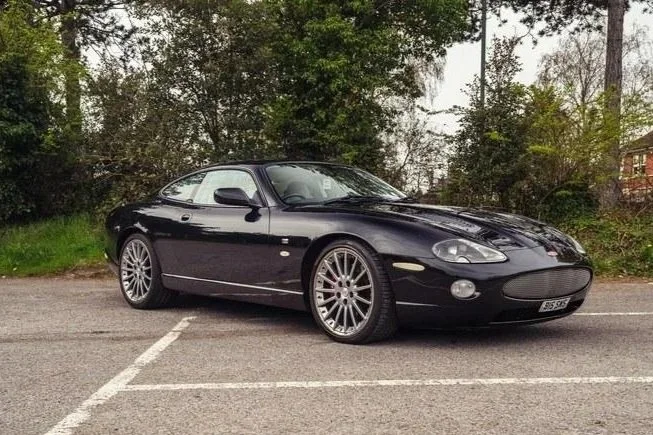
The name tells the story. The XKR 400 was a limited-edition performance version of the 4.2 XKR developed for the UK market.
Jaguar increased output to around 400bhp and added a substantial collection of performance equipment. Huge 20-inch R-Performance BBS Montreal wheels were combined with red Brembo brake calipers and cross-drilled discs.
The interior was given a more sporting character through Warm Charcoal leather and Alcantara, Piano Black veneer, aluminium pedals, an R-Performance steering wheel and other bespoke details.
The car remained an automatic grand tourer, but its visual and mechanical specification made it considerably more purposeful than the standard XKR.
Only 100 examples were built: 60 coupés and 40 convertibles. It was offered exclusively in the UK.
That extremely small production figure makes the XKR 400 one of the rarest factory X100 performance editions.
Jaguar XKR Portfolio (2003–2004)
Where the XKR 400 concentrated on performance, the Portfolio concentrated on luxury.
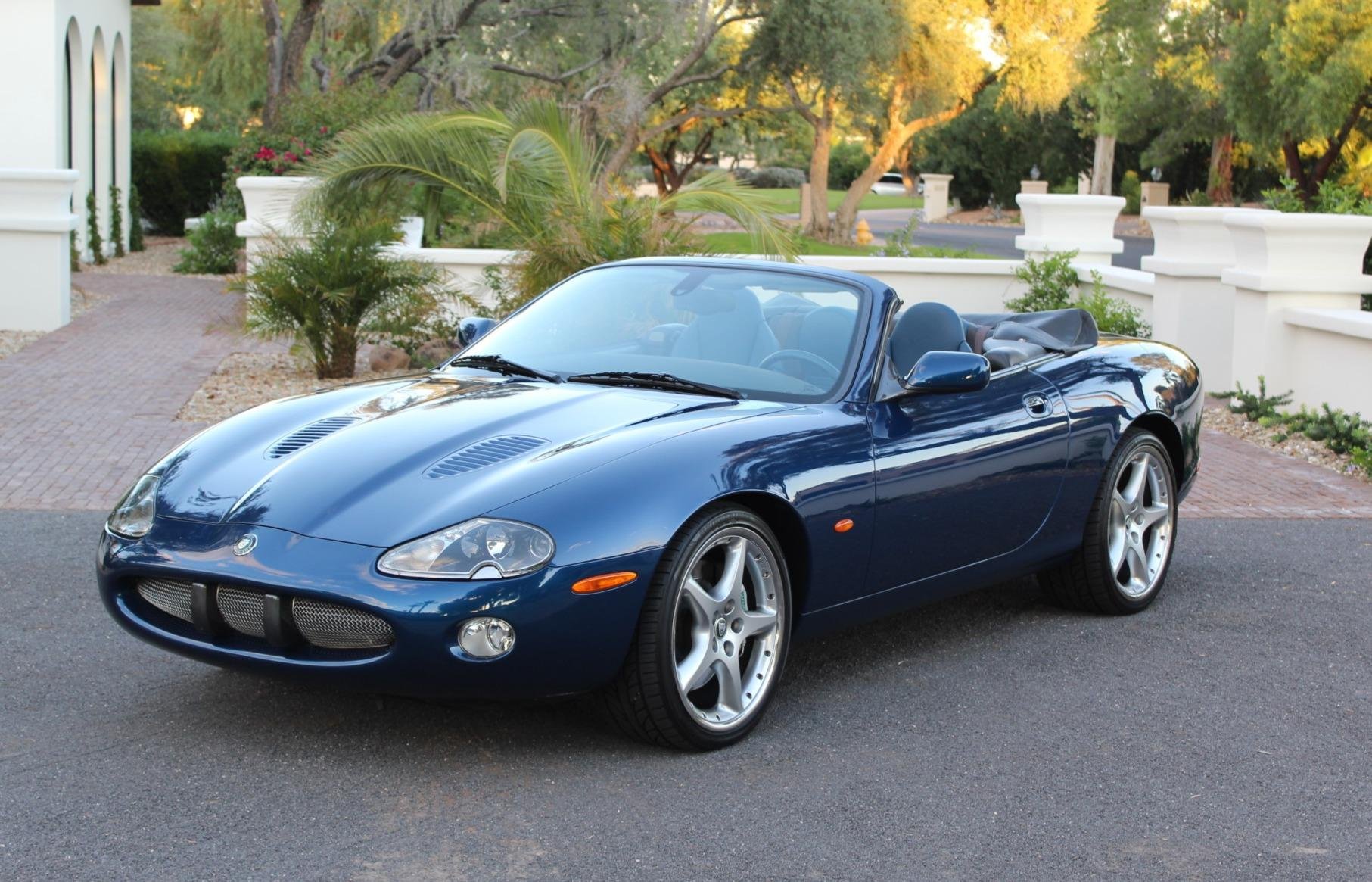
Produced for the North American market, the XKR Portfolio was limited to just 200 examples and was offered in distinctive Jupiter Red and Coronado Blue Metallic finishes.
Underneath remained the 4.2-litre supercharged V8 producing approximately 390bhp, coupled to a six-speed automatic.
The Portfolio's distinguishing features were its interior. Jaguar specified specially trimmed Recaro seats, contrasting leather, bronze-stained Sapele veneer, a leather steering wheel and 20-inch two-piece BBS Detroit wheels wrapped in ultra-low-profile Pirelli P Zero tyres.
It demonstrated the breadth of the XK concept. The same basic car that could be turned into the aggressively specified XKR 400 could instead become a highly luxurious limited-edition GT.
Jaguar XKR Carbon Fibre (2004)
The XKR Carbon Fibre was another low-volume special edition intended to make the XKR feel more exclusive without fundamentally changing its mechanical character.
Carbon-fibre interior trim replaced some of the more traditional Jaguar decorative materials, while performance equipment included large alloy wheels, upgraded brakes and Recaro seating.
The car demonstrated Jaguar's increasing willingness to introduce motorsport-inspired materials and styling into the luxury XK cabin.
Unlike the later XKR-S GT, however, this was still very much a luxury grand tourer rather than a track car.
Jaguar XK Victory Edition (2005–2006)
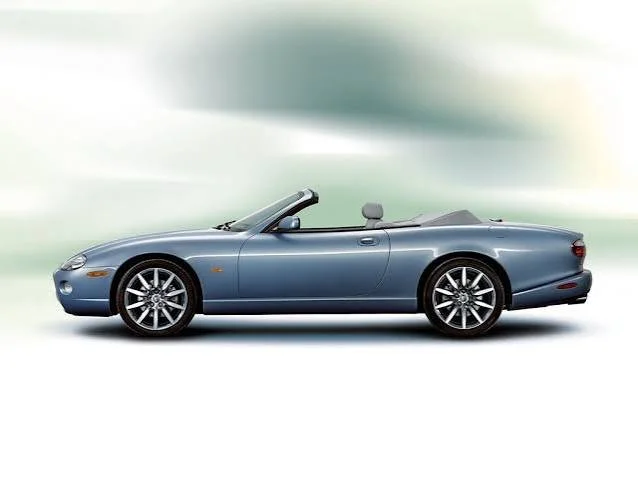
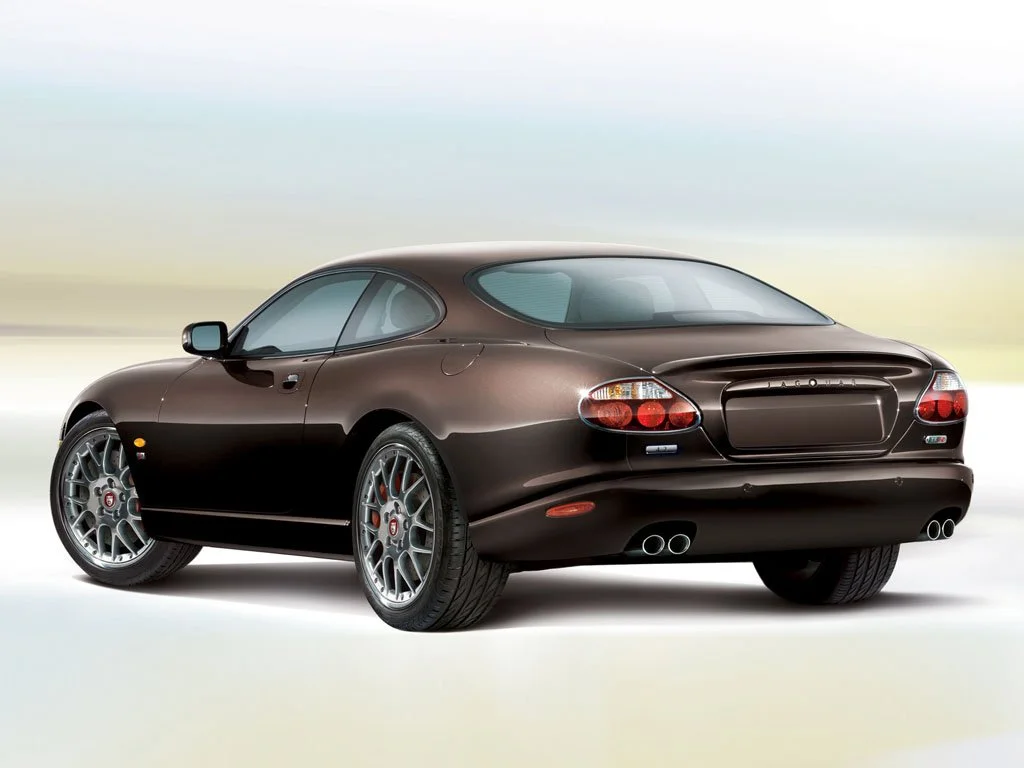
The Victory Edition is one of the most historically interesting X100s because it directly connected the road-going XK with Jaguar's American racing programme.
Jaguar's racing XKR had become a familiar sight in the Trans-Am Series, with the 650bhp competition car securing multiple Manufacturer's Championship victories. For 2004, Paul Gentilozzi's Jaguar R Performance XKR contributed to his 29th career Trans-Am victory, matching Mark Donohue's record at the time.
Jaguar consequently created a special road-car edition celebrating that racing success.
There were four Victory models: XK8 Convertible / XK8 Coupé / XKR Convertible / XKR Coupé
The naturally aspirated XK8 retained the 4.2-litre V8, while the supercharged XKR used the 4.2-litre engine producing approximately 390bhp.
Only 1,050 Victory Edition cars were made for the United States.
Four special colours were offered — Black Copper Metallic, Frost Blue Metallic, Bay Blue Metallic and Satin Silver Metallic — alongside special interiors and veneer choices.
The XKR versions received a Carbon Fibre interior package, while XK8 versions received Elm wood veneer. Additional equipment included Bluetooth connectivity, special wheels, Brembo brakes on the XKR and chequered-flag detailing.
It was therefore both a marketing exercise and a genuine celebration of Jaguar's American racing success.
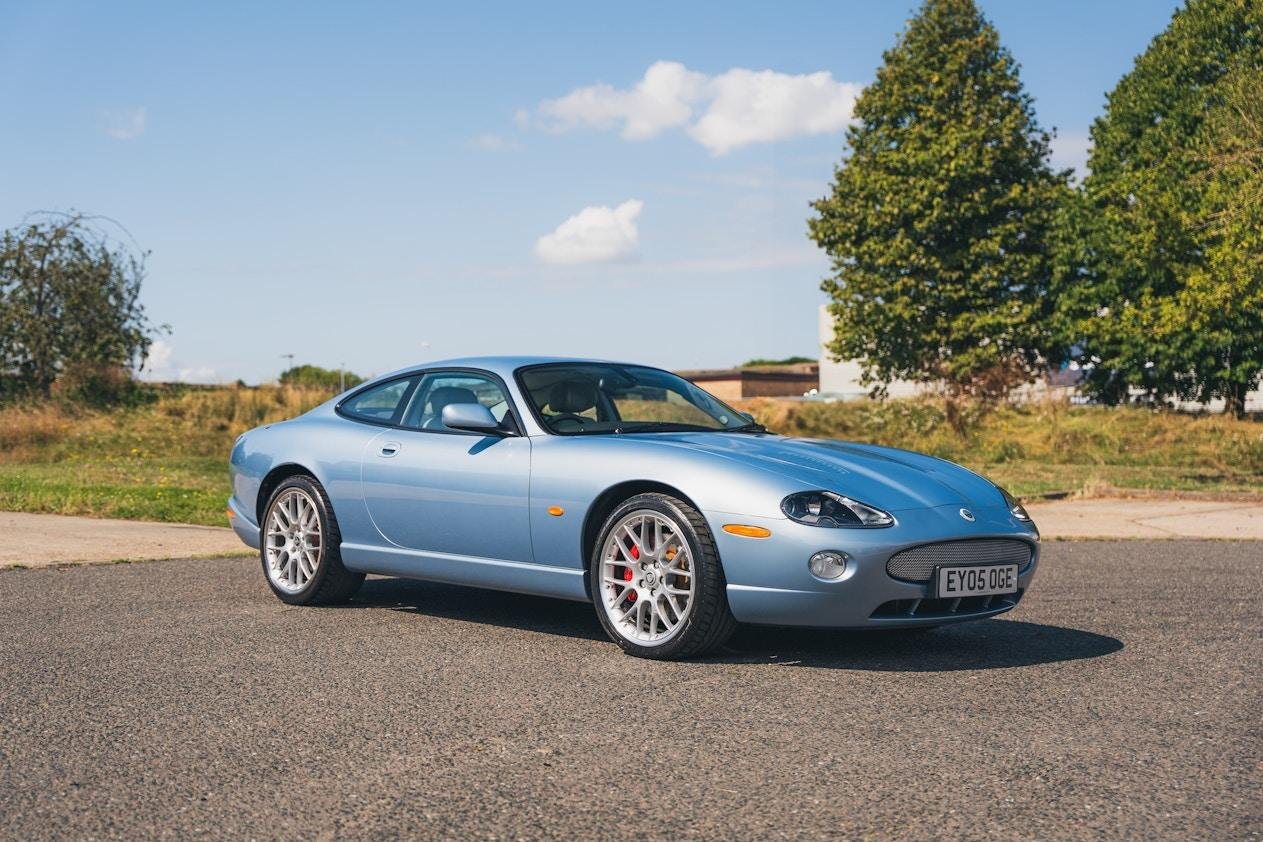
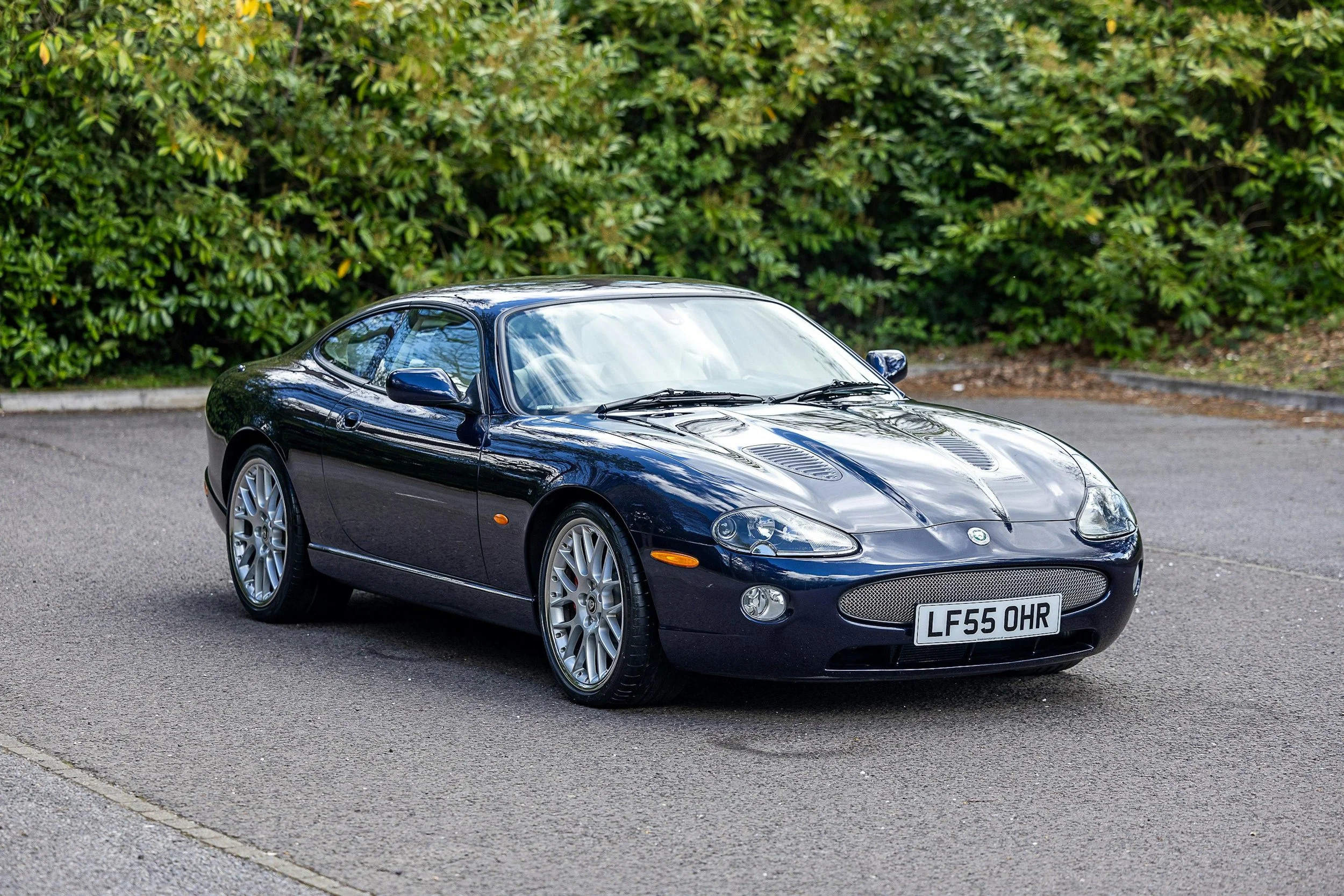
Jaguar XK/XKR 4.2-S (2005–2006)
The 4.2-S represented the final evolution of the original X100 design.
Unveiled at the 2005 Geneva Motor Show, it was available as both coupé and convertible with either the naturally aspirated XK8 engine or supercharged XKR engine.
Jaguar offered four special exterior colours: Copper Black Metallic / Frost Blue Metallic / Bay Blue Metallic / Satin Silver Metallic
The XK8 received 19-inch Atlas wheels and Elm interior trim, while the XKR gained Carbon Fibre trim and distinctive 20-inch BBS Perseus wheels.
The XKR 4.2-S also received cross-drilled Brembo discs and red brake calipers.
Darkened rear lights, chequered-flag badges, special tread plates and leather-edged mats reinforced the connection with Jaguar's racing heritage.
Most importantly, this was the last major XK based upon the original 1996 X100 design.
Jaguar XKR Stratstone 4.2-S (2006)
One of the rarest production X100s, the Stratstone 4.2-S was created to mark the end of production at Jaguar's historic Browns Lane factory.
Only 30 examples were produced.
The car used the 4.2 supercharged V8 and combined its performance with an unusually comprehensive specification of sporting equipment. It was intended as a final farewell to the original XK shape.
Special wheels, sports suspension, upgraded bodywork, distinctive grilles and special interior details separated it from an ordinary XKR.
Its significance therefore extends beyond its specification: it represents the closing chapter of the X100 production story.
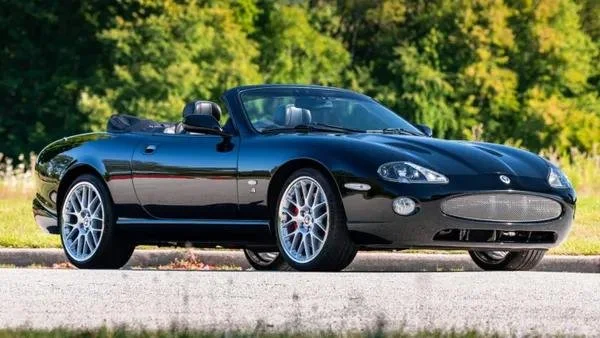
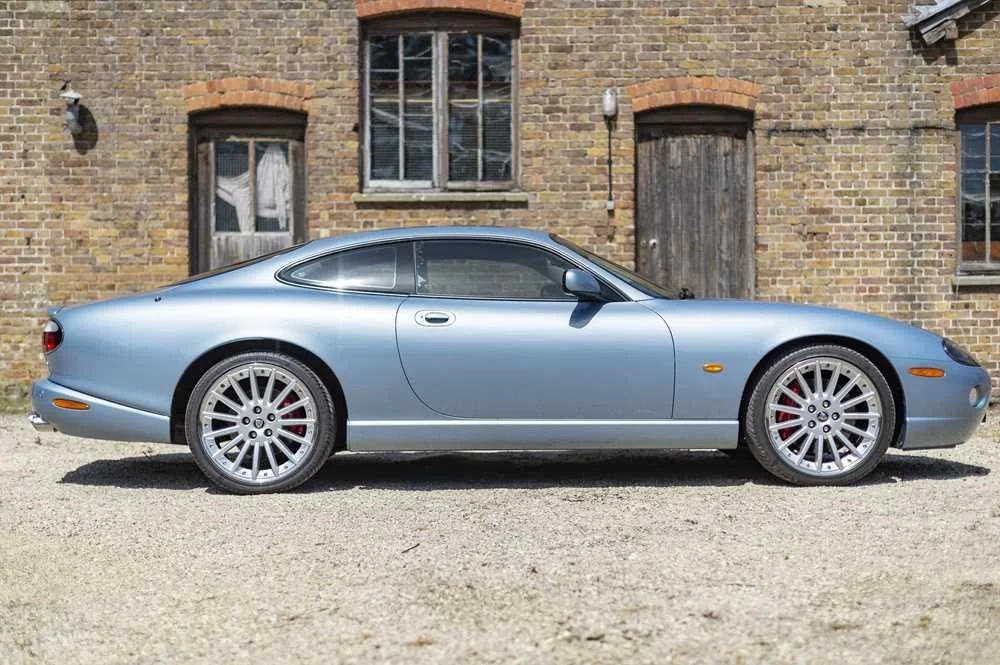
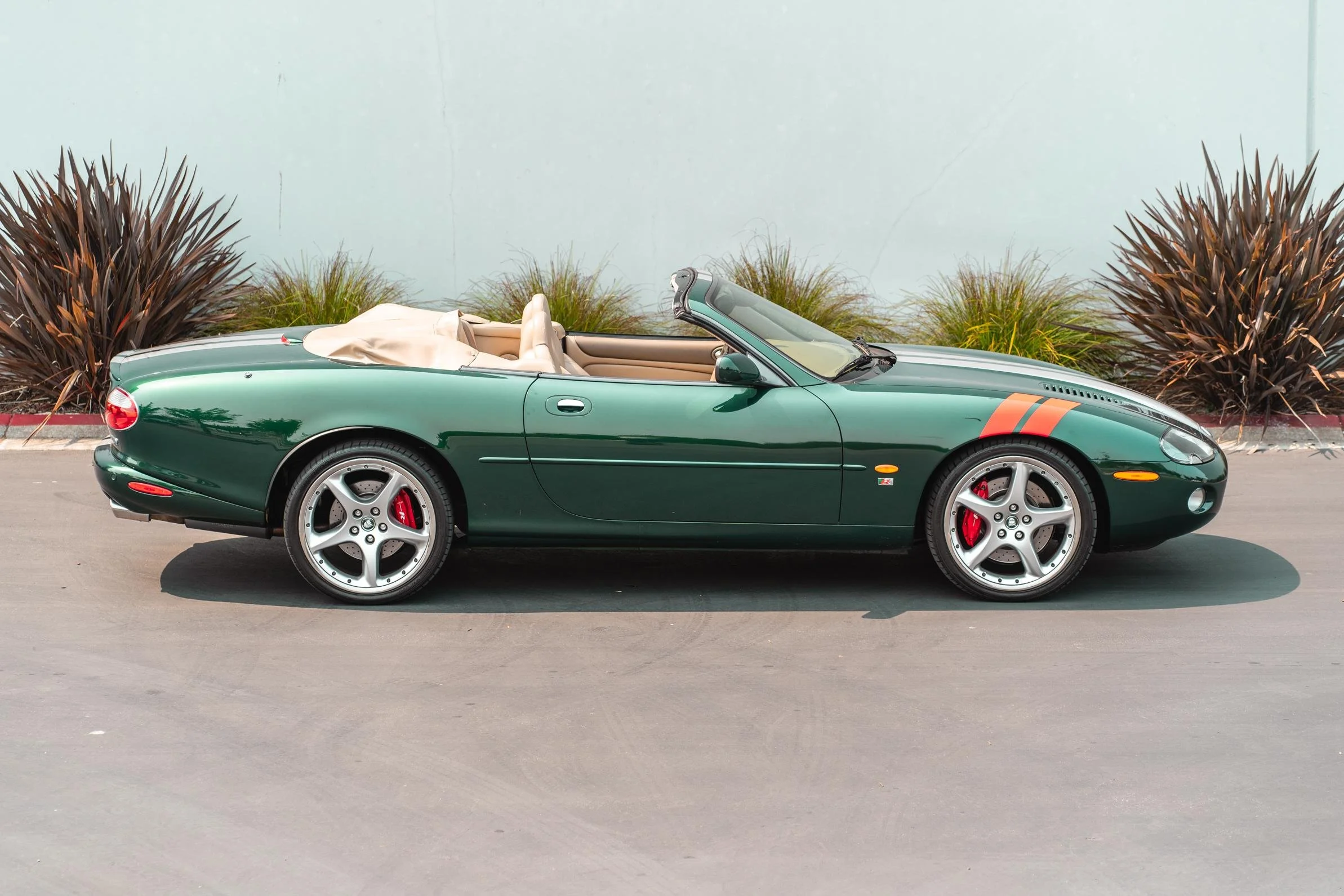
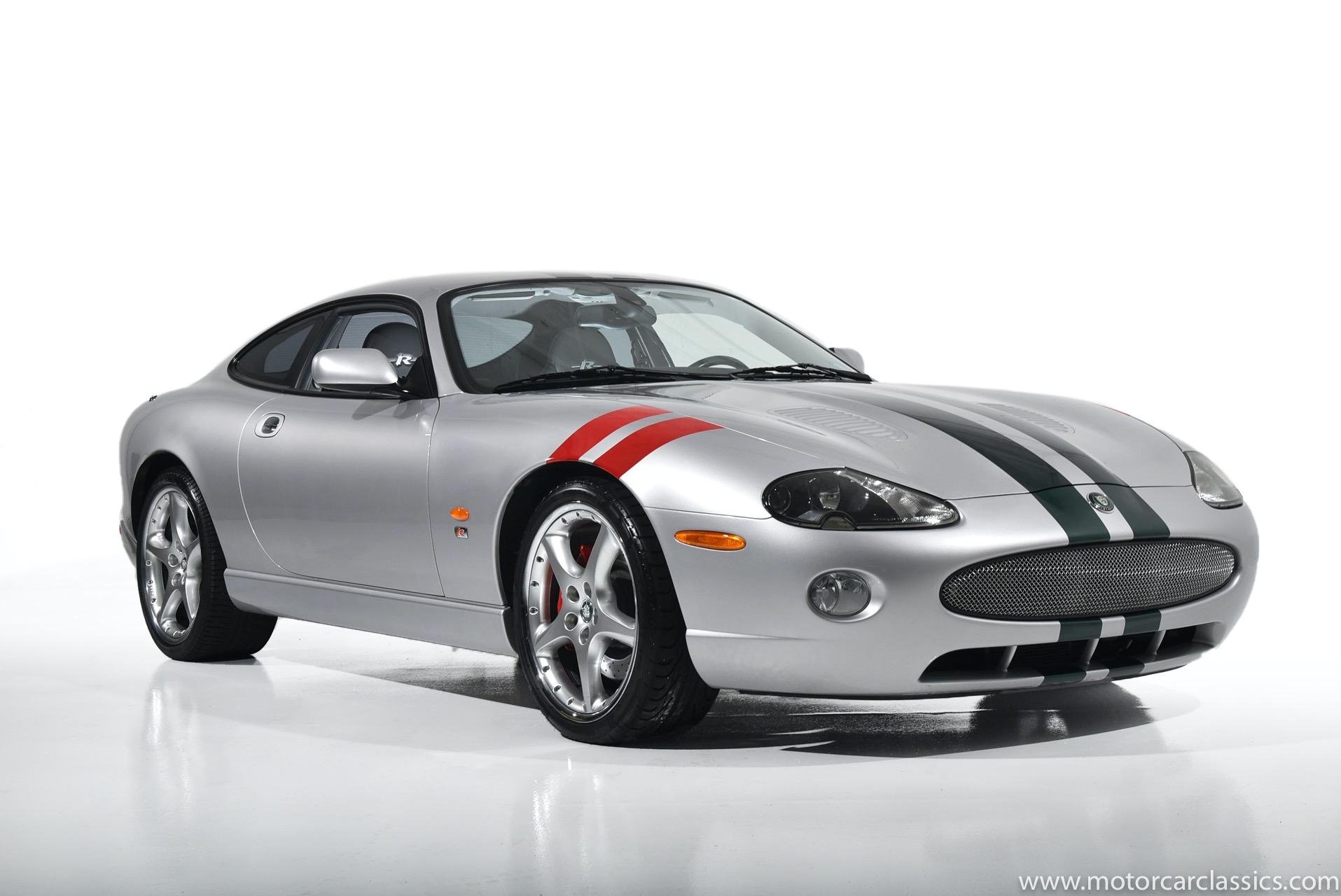
Jaguar XKR Stirling Moss (2005–2006)
If the Stratstone was the final production chapter, the Stirling Moss XKR was the eccentric, ultra-low-volume celebration of Jaguar's racing heritage.
Only five cars were produced.
The cars were based upon the XKR but received substantial performance modifications, racing-inspired styling and a much more individual specification. Power was increased to approximately 467bhp, while the cars received Recaro seats, upgraded suspension, Brembo brakes, BBS wheels and performance exhaust equipment.
The association with Sir Stirling Moss gave the car its name and its racing character.
With only five examples, the Stirling Moss is one of the rarest modern Jaguars to carry the XK name.
PART II — THE X150 ERA
2006–2014
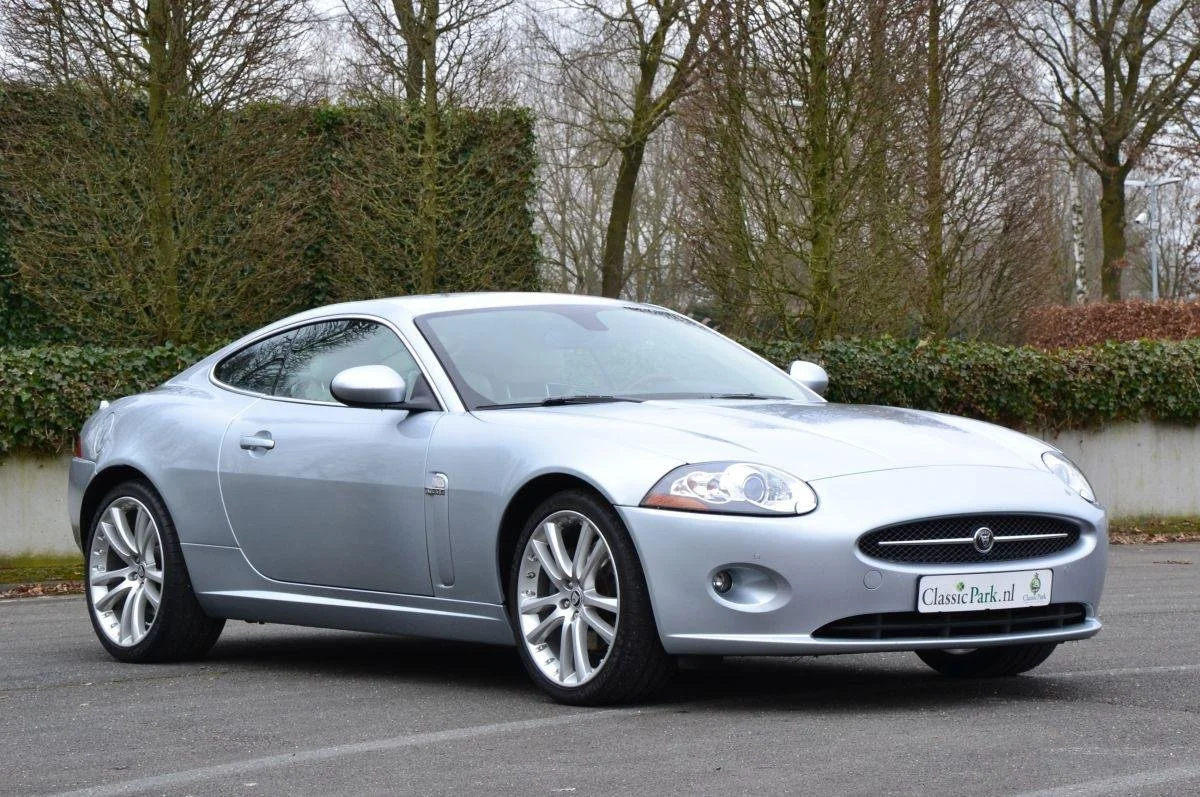
The X150 represented a much more radical change than the transition from 4.0 to 4.2 might suggest.
Jaguar abandoned the X100's heavily steel-based architecture in favour of an aluminium body structure using bonded and riveted construction. The design was by Ian Callum and gave the XK a cleaner, sharper appearance while retaining the basic long-bonnet/short-cabin GT philosophy.
The new XK was unveiled in 2005 and entered production in 2006.
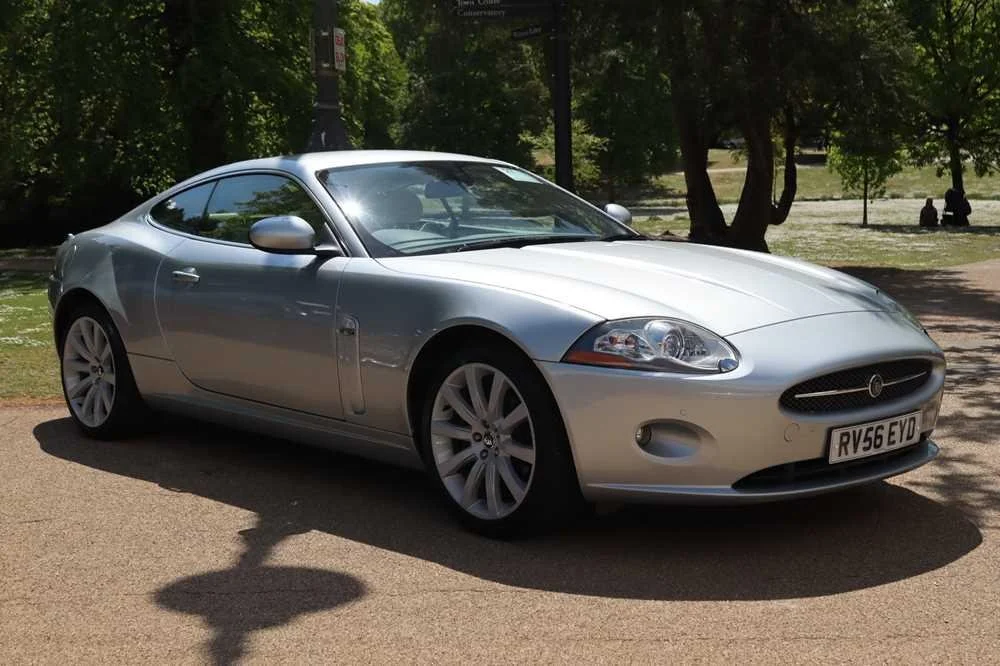
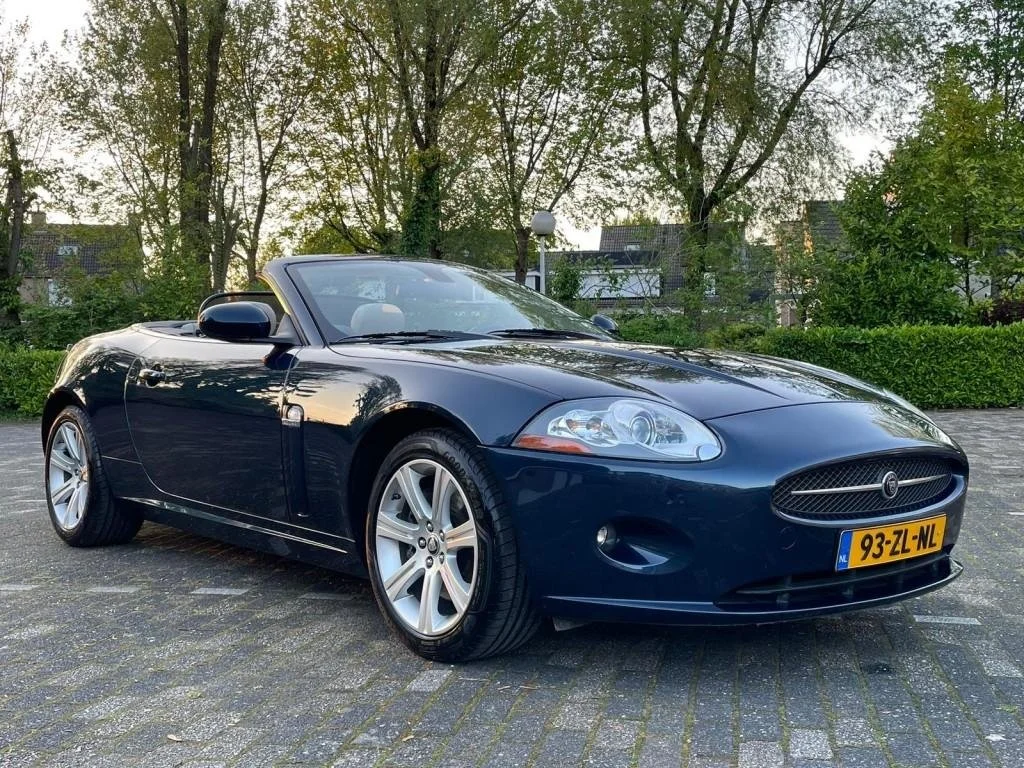
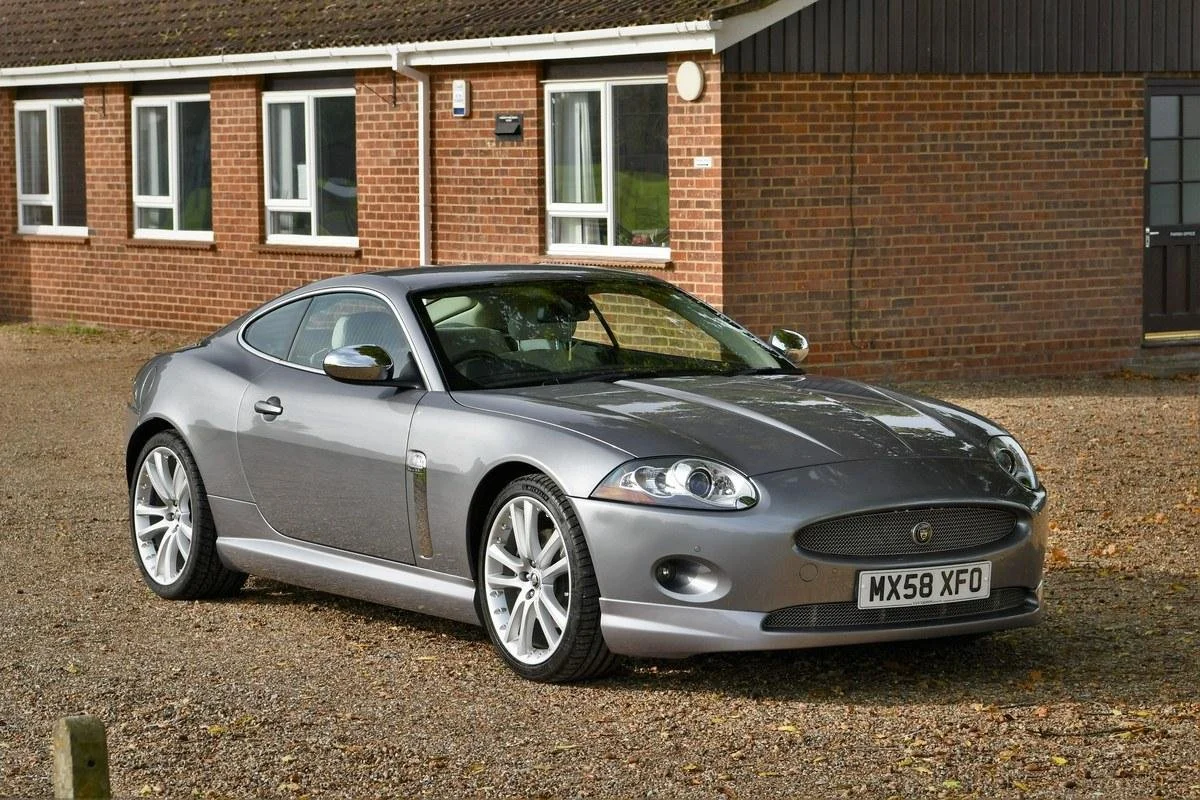
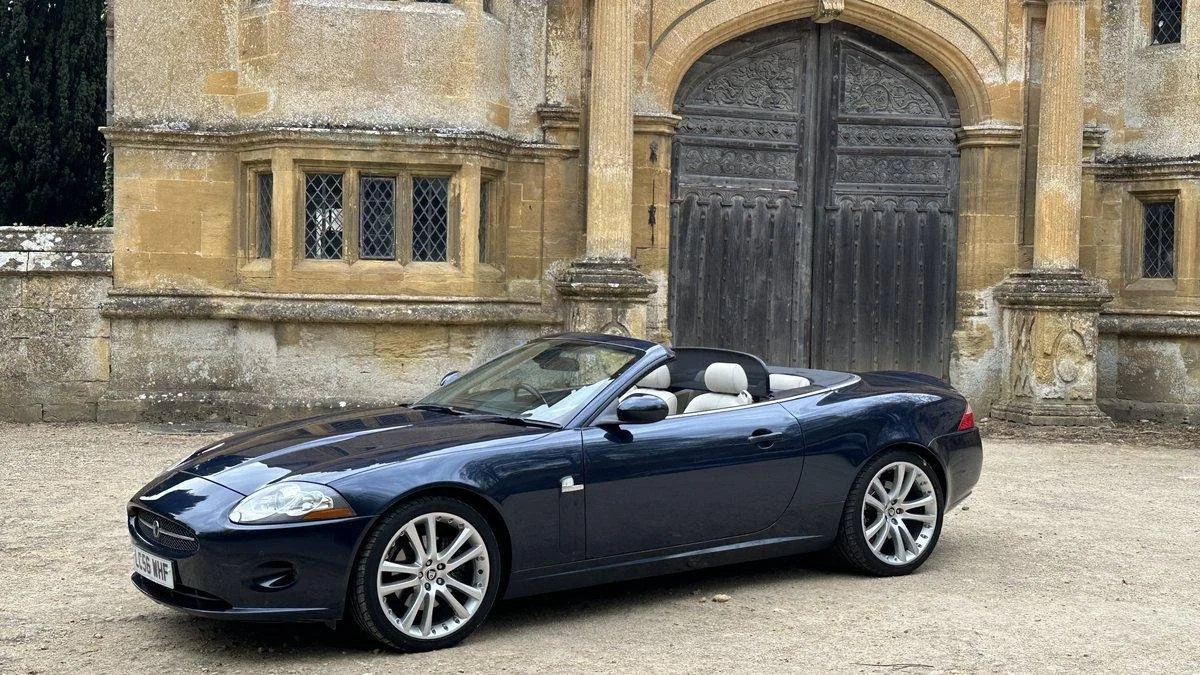
Jaguar XK 4.2 X150 (2006–2009)
The first X150 arrived with a naturally aspirated 4.2-litre V8 producing approximately 300bhp.
Although the engine was familiar, almost everything surrounding it was new. The aluminium architecture made the new XK significantly different from the X100, while the styling brought Jaguar's sporting GT into the 21st century.
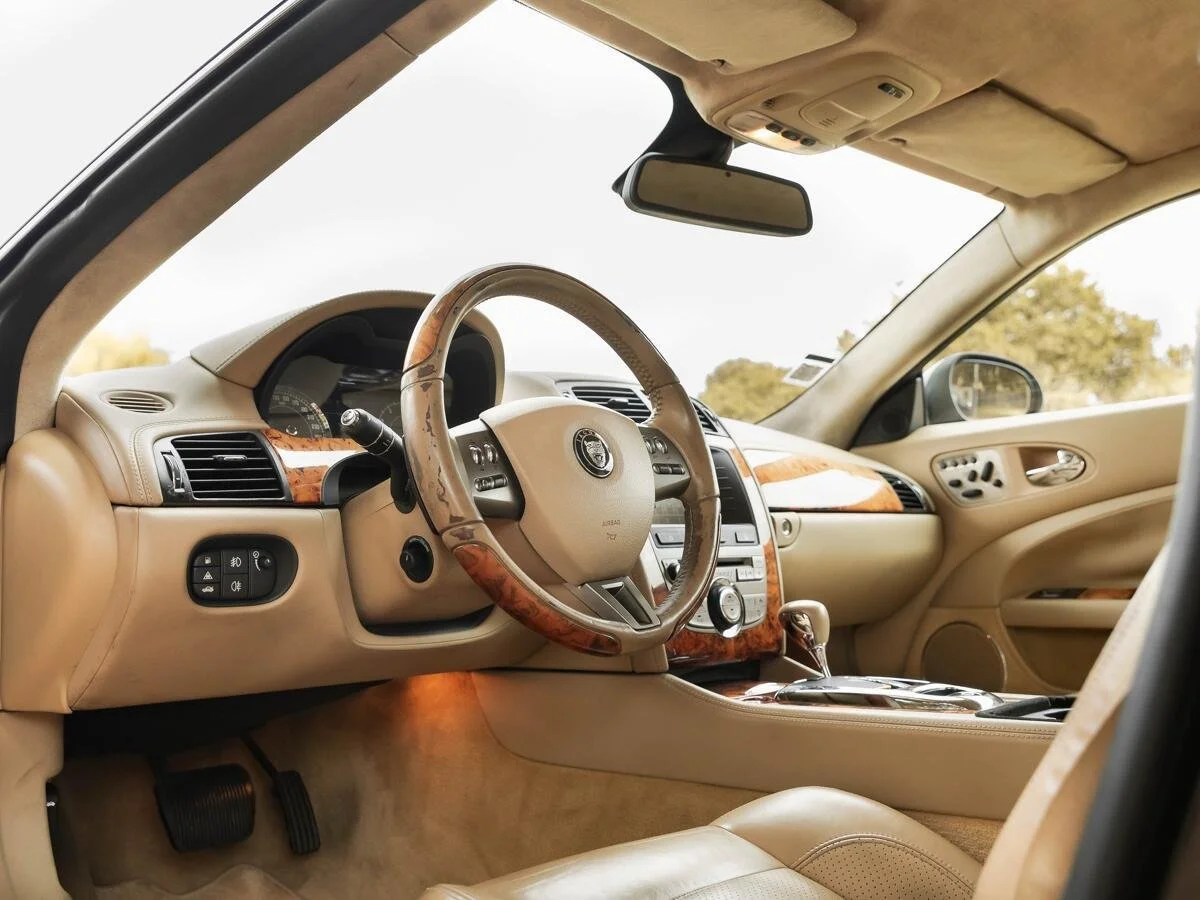
The nose became more aggressive, the cabin more contemporary and the interior more driver-focused. The traditional Jaguar mixture of leather and luxury remained, but the wood-heavy atmosphere of the X100 was reduced in favour of a cleaner, more modern environment.
The X150 was available as both coupé and convertible and immediately established the basic form that would survive until 2014.
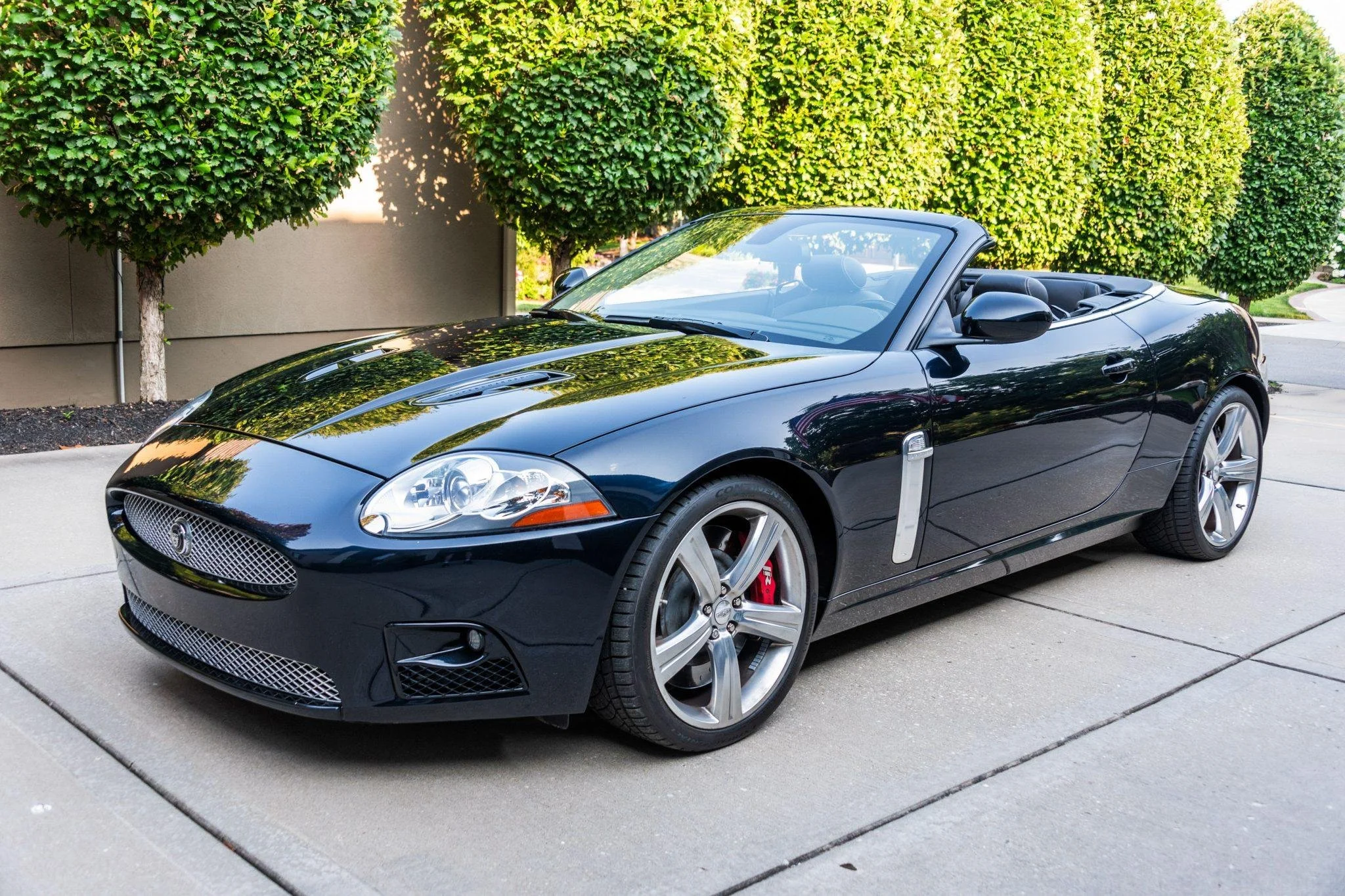
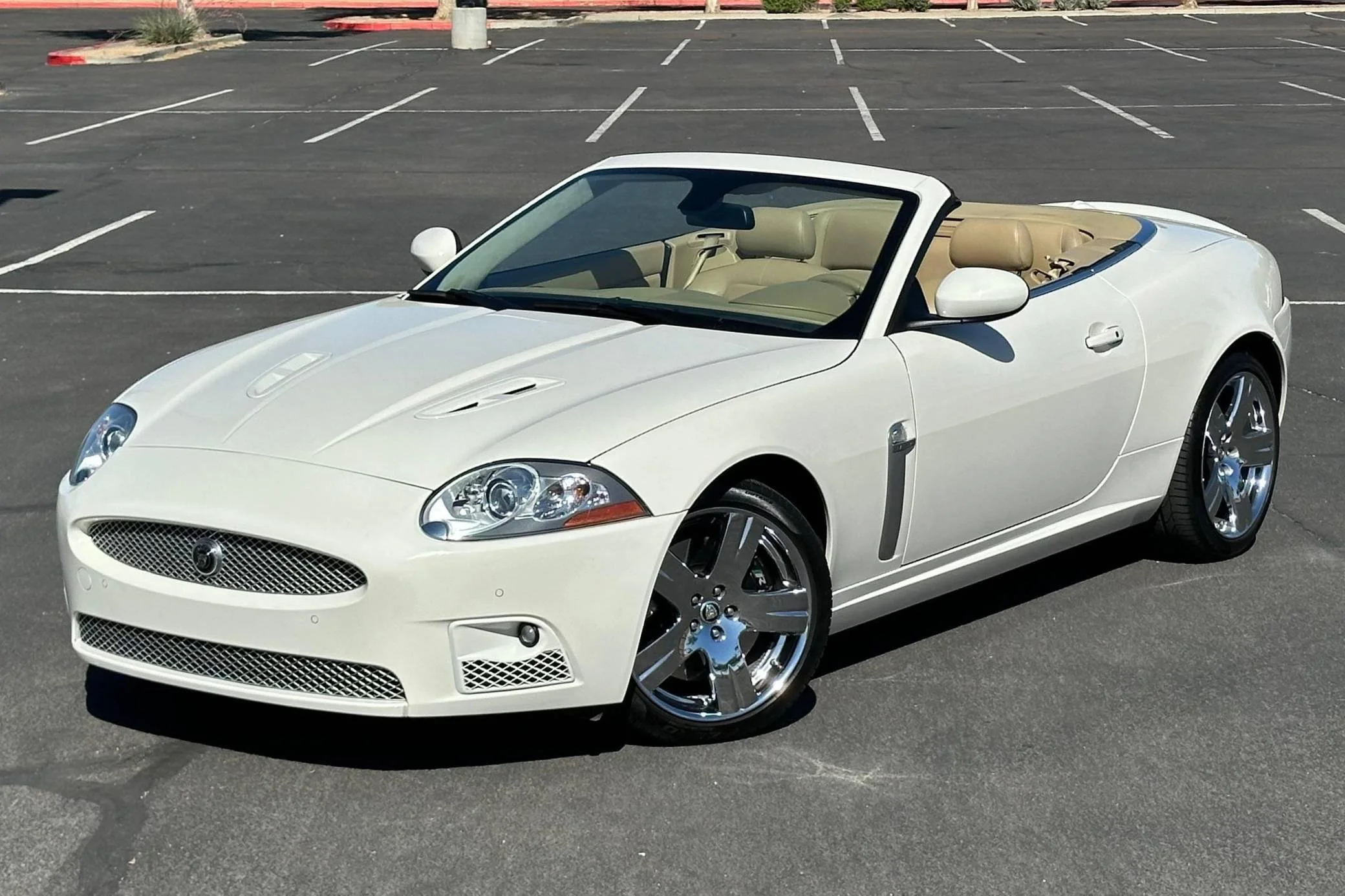
Jaguar XKR 4.2 X150 (2006–2009)
The performance version of the new X150 was the XKR 4.2.
Its supercharged 4.2-litre V8 produced approximately 420bhp, with around 560Nm of torque, giving the car sub-five-second 0–60mph performance and a 155mph electronically limited maximum speed.
The new aluminium chassis gave the XKR a considerably more sophisticated foundation than the old X100. The car remained an automatic GT, but steering, suspension and braking were all developed to cope with its significantly increased performance.
It also looked more aggressive, with larger wheels, deeper bodywork and a more prominent grille.
Jaguar XK60 (2008)
The XK60 celebrated 60 years of the XK name.
That meant looking all the way back to the XK120 of 1948, the car that established Jaguar as one of Britain's premier manufacturers of high-performance sports cars.
The XK60 was based upon the X150 and concentrated on appearance and equipment rather than a major mechanical transformation.
Special features included 20-inch Senta wheels, distinctive grille and exterior details, special badging and interior enhancements.
It was a celebration of the XK lineage rather than an attempt to create a track-focused car.
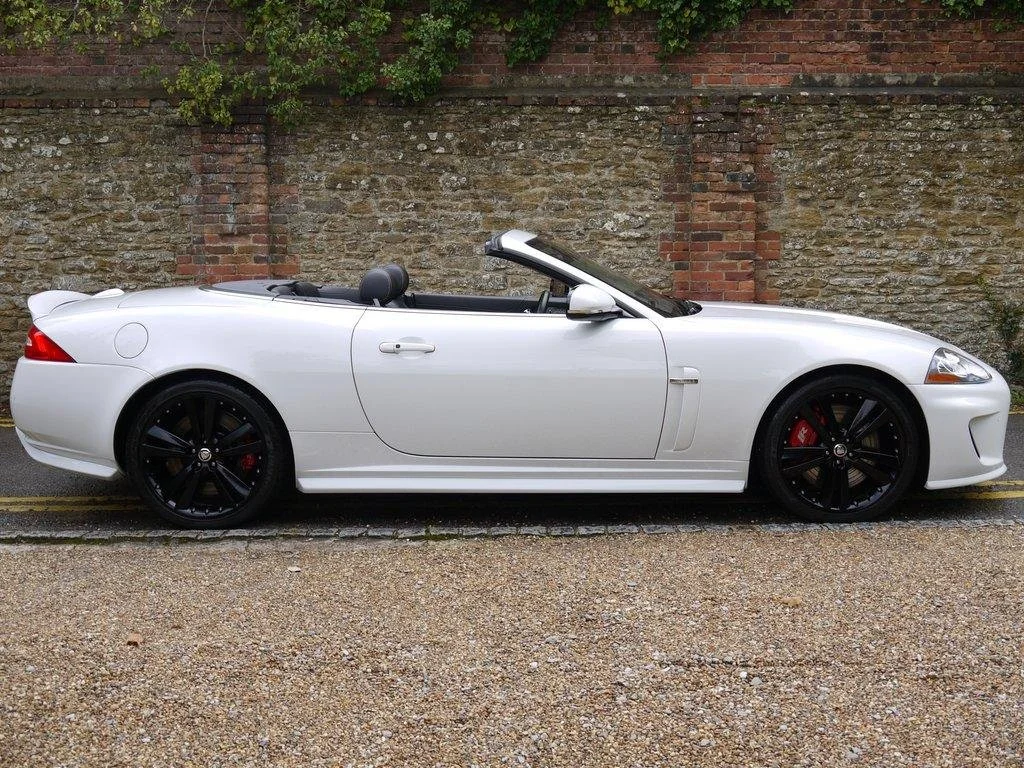
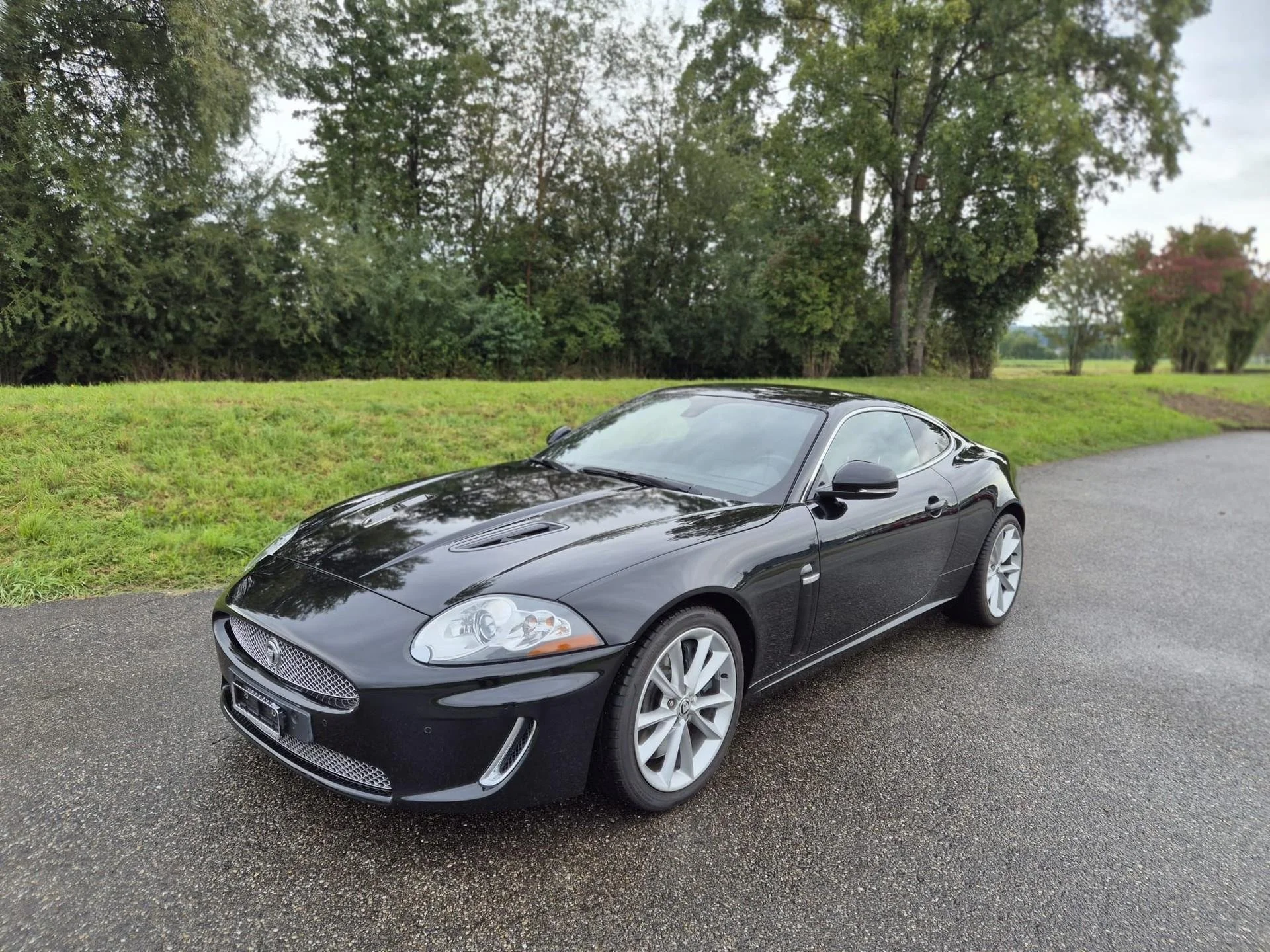
Jaguar XK 5.0 (2009–2014)
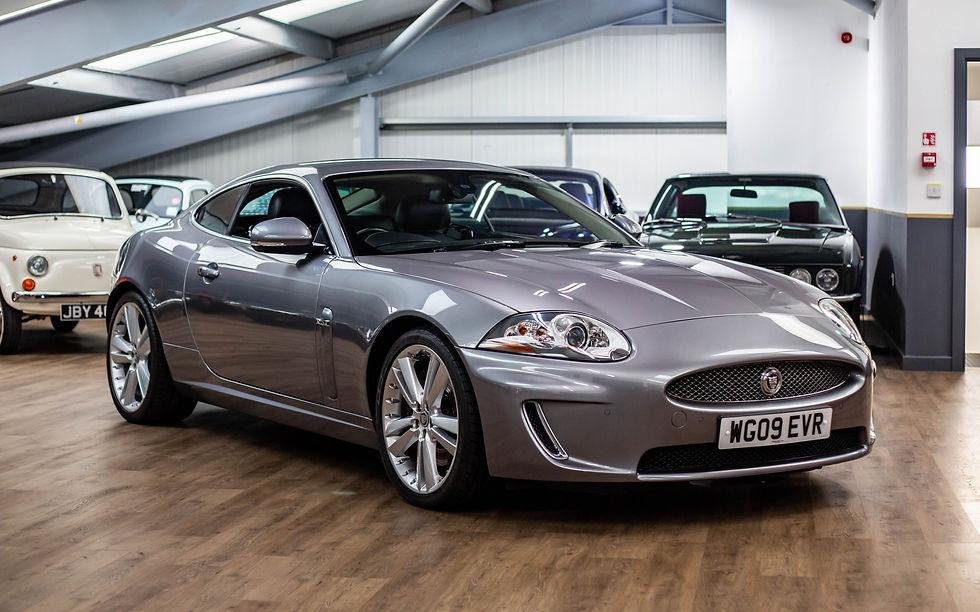
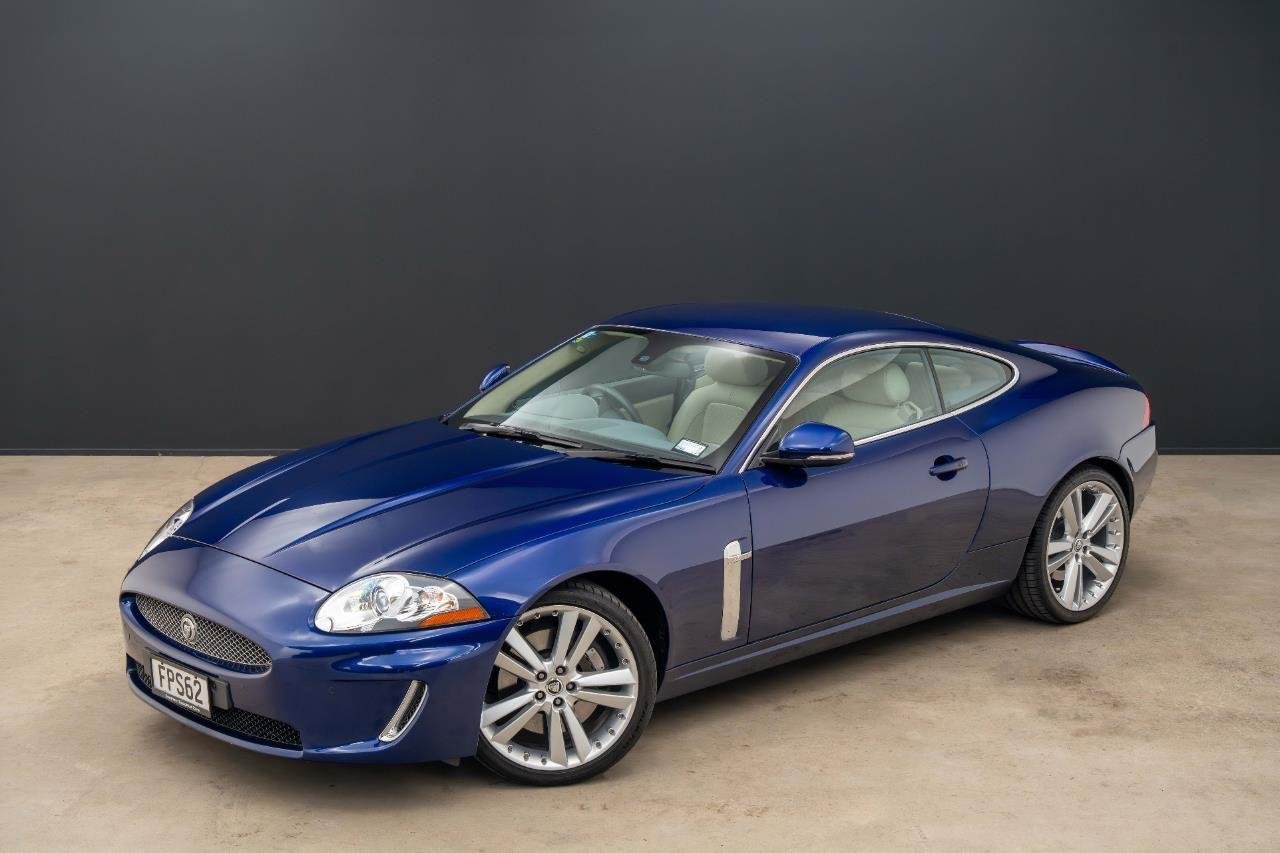
For 2009 Jaguar transformed the X150 with the arrival of the new 5.0-litre AJ133 V8.
The naturally aspirated engine produced 385bhp and 380lb-ft, with direct fuel injection and variable cam timing.
The new engine made the XK considerably stronger throughout the rev range while retaining the smoothness expected of a Jaguar V8.
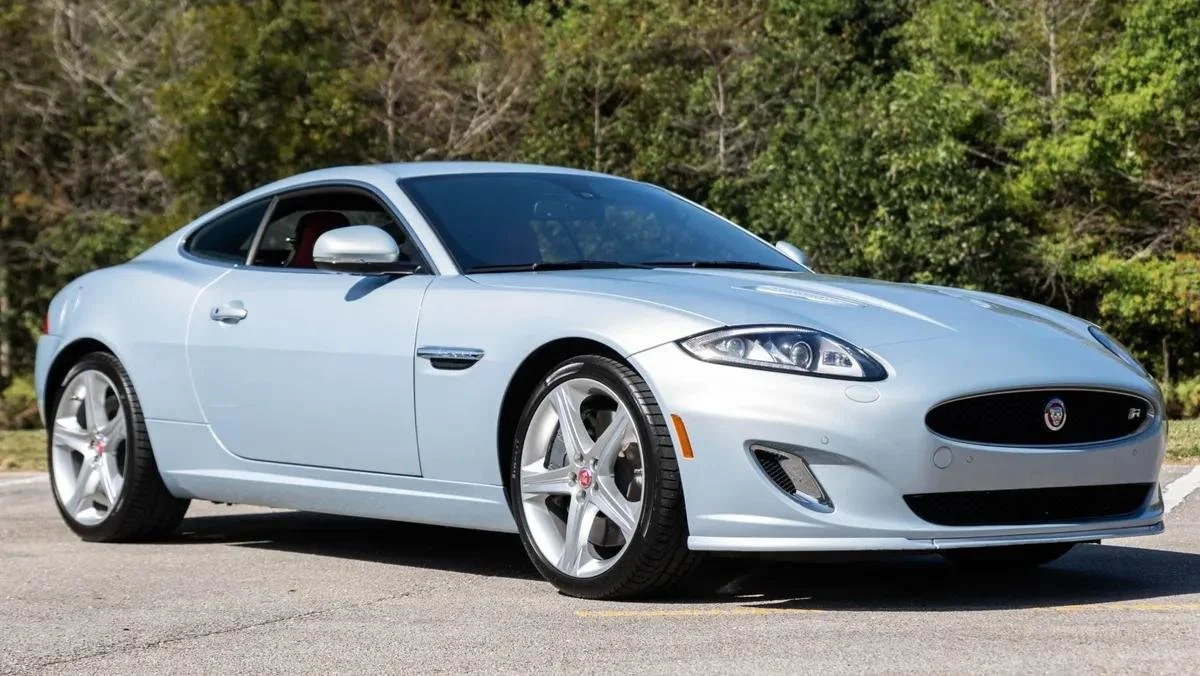
At the same time, Jaguar gave the X150 a substantial facelift. The front end became more aggressive, the grille and lighting were redesigned and the car gained a more contemporary appearance.
This is arguably the X150 in its most mature grand-touring form: powerful enough to be genuinely fast, but still oriented towards effortless long-distance travel.
Jaguar XKR 5.0 (2009–2014)
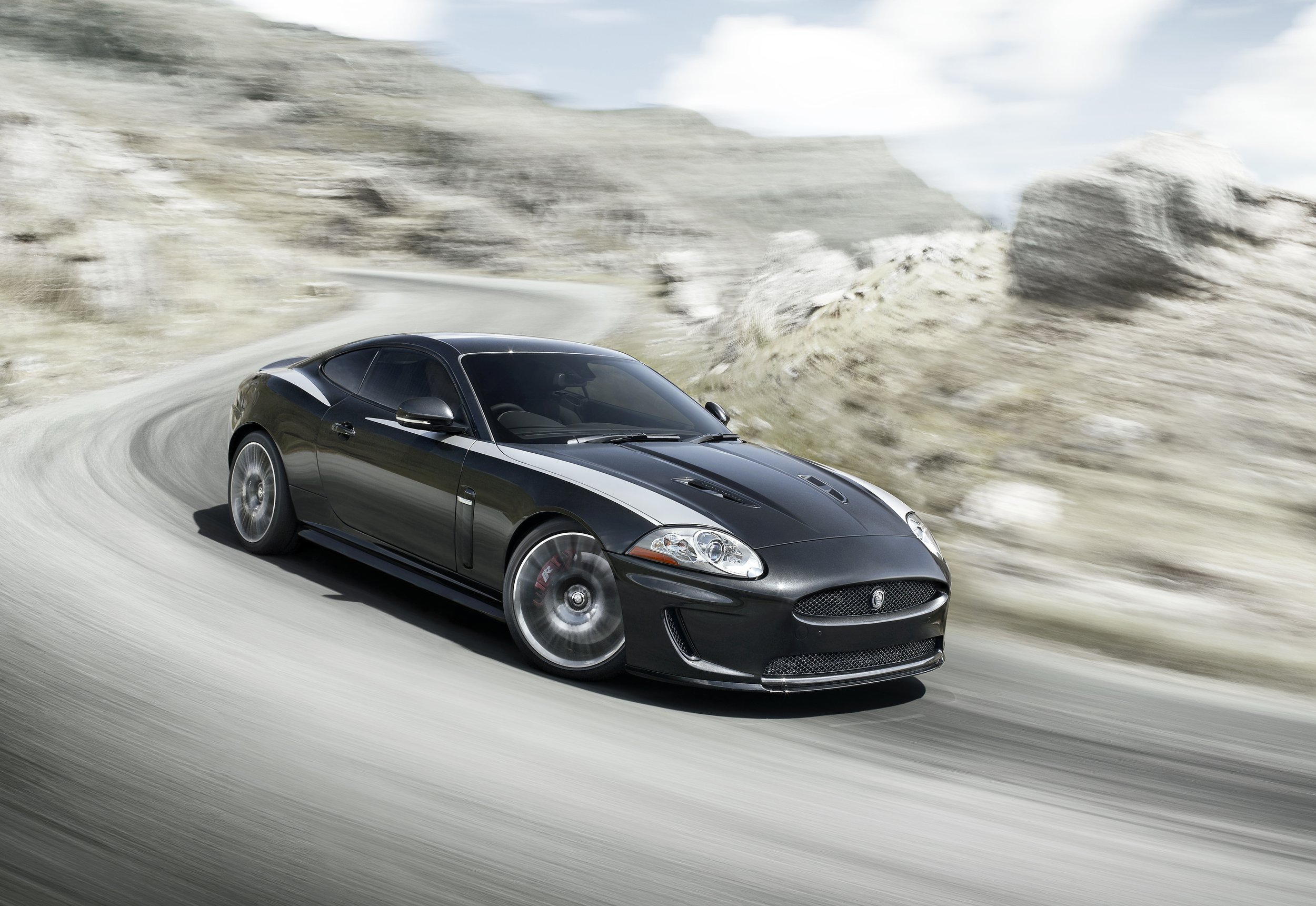
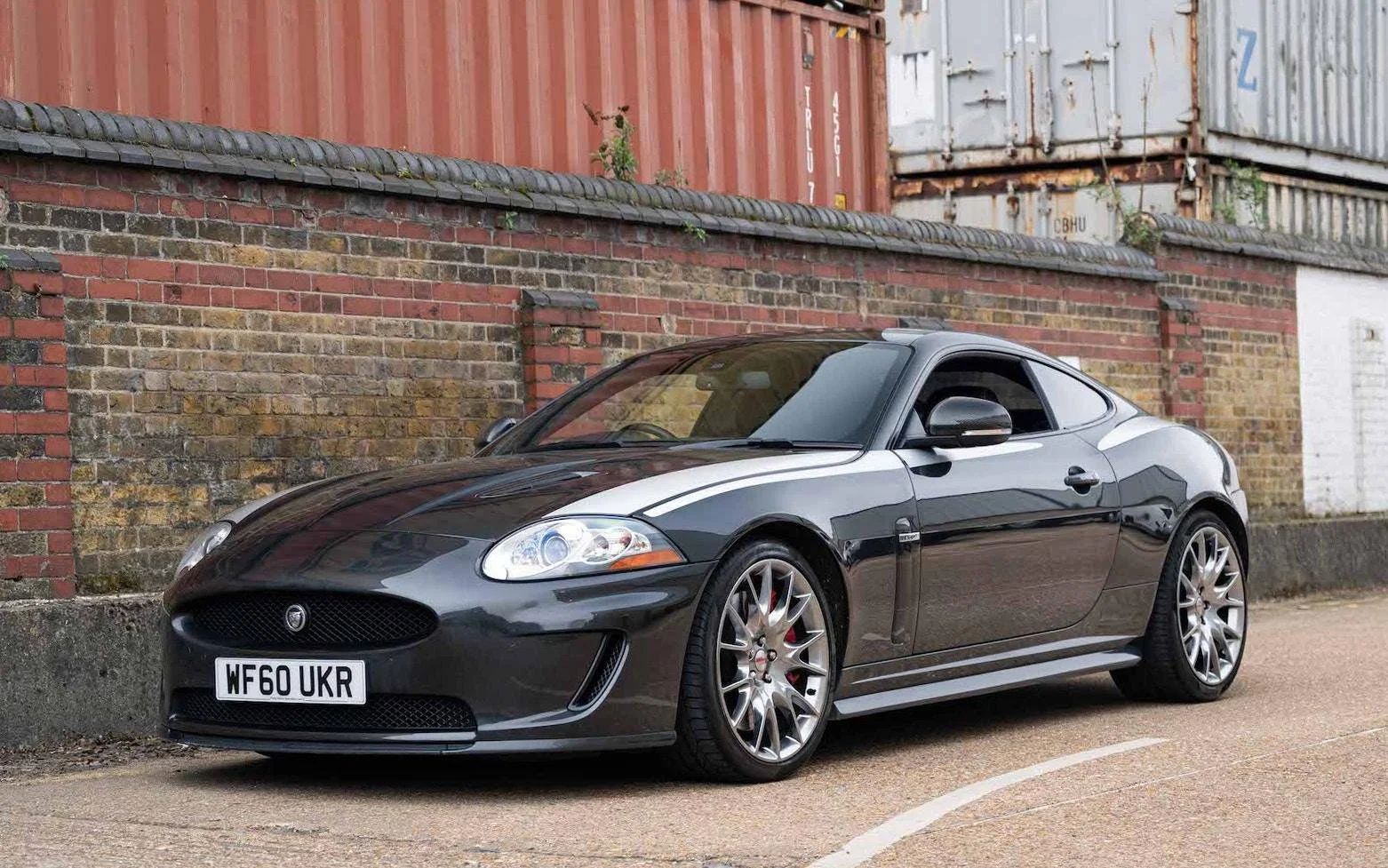
The supercharged version of the new 5.0-litre V8 transformed the XKR.
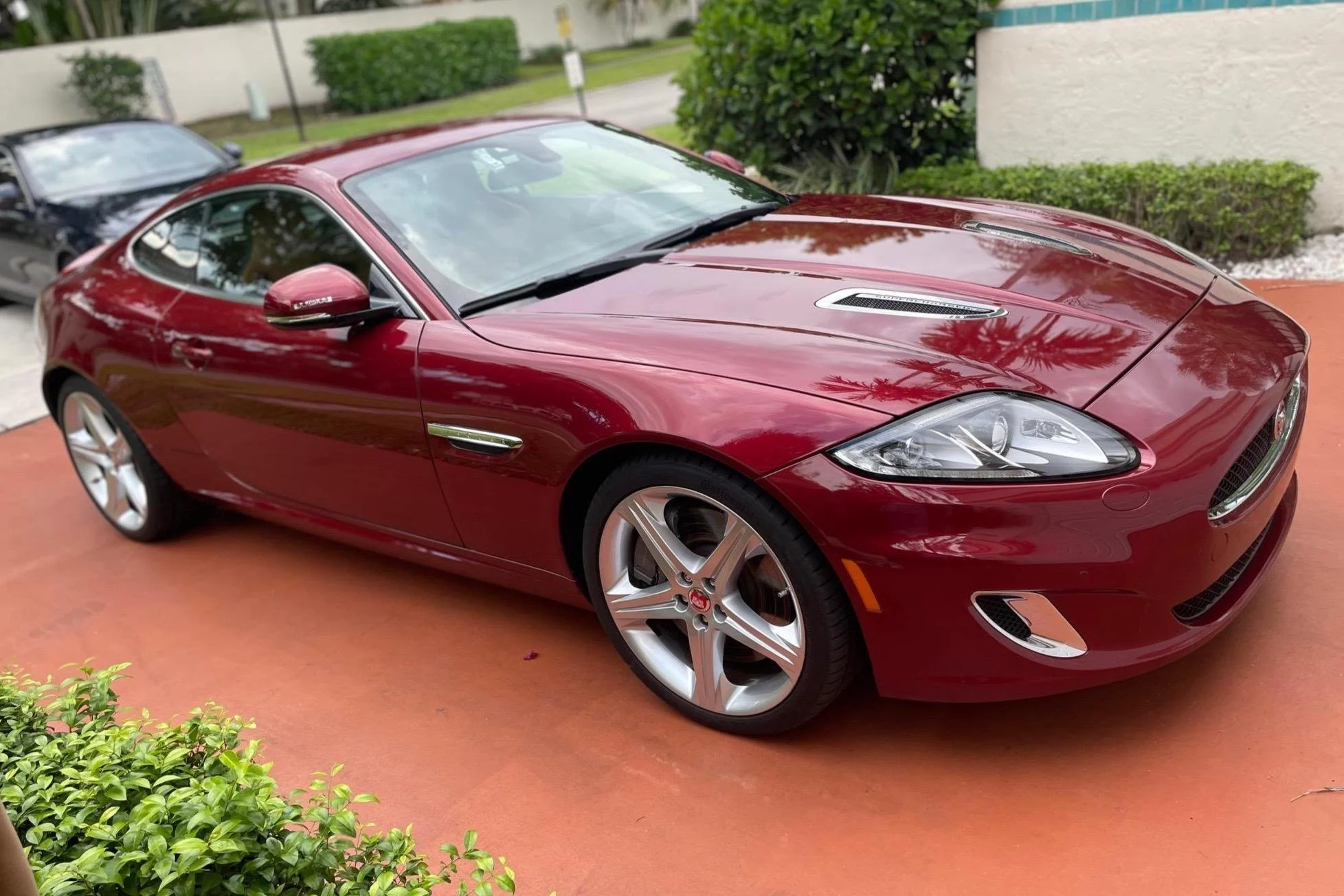
The engine used an Eaton twin-vortex supercharger and dual intercoolers, producing 510bhp and 461lb-ft in the standard XKR. Jaguar paired it with a six-speed electronic automatic transmission with steering-wheel paddles and Sport mode.
Performance was formidable: 510bhp / 461lb-ft / Approximately 4.6 seconds 0–60mph / 155mph electronically limited
The XKR also introduced a more sophisticated electronic chassis, including Adaptive Dynamics and Active Differential Control.
With the optional Speed Pack, the top-speed limiter could be raised to approximately 174mph.
The 5.0 XKR therefore became one of Jaguar's definitive modern GTs: brutally powerful when demanded, but capable of covering enormous distances in silence and comfort.
Jaguar XKR75 (2010)
The XKR75 celebrated Jaguar's 75th anniversary.
It was not merely an appearance package. Jaguar increased output from the standard XKR's 510bhp to 530PS, while torque rose to approximately 655Nm.
The car received revised springs and dampers, a lowered ride height, retuned Adaptive Dynamics and additional aerodynamic development.
Performance was approximately: 530PS / 655Nm / 0–60mph: 4.4 seconds / Top speed: 174mph
The special edition was finished in Stratus Grey, with 20-inch Vortex forged wheels and distinctive interior and exterior details.
Only 75 examples were produced, making the XKR75 the X150 equivalent of the rarest X100 anniversary cars.
Jaguar XKR-S (2011–2014)
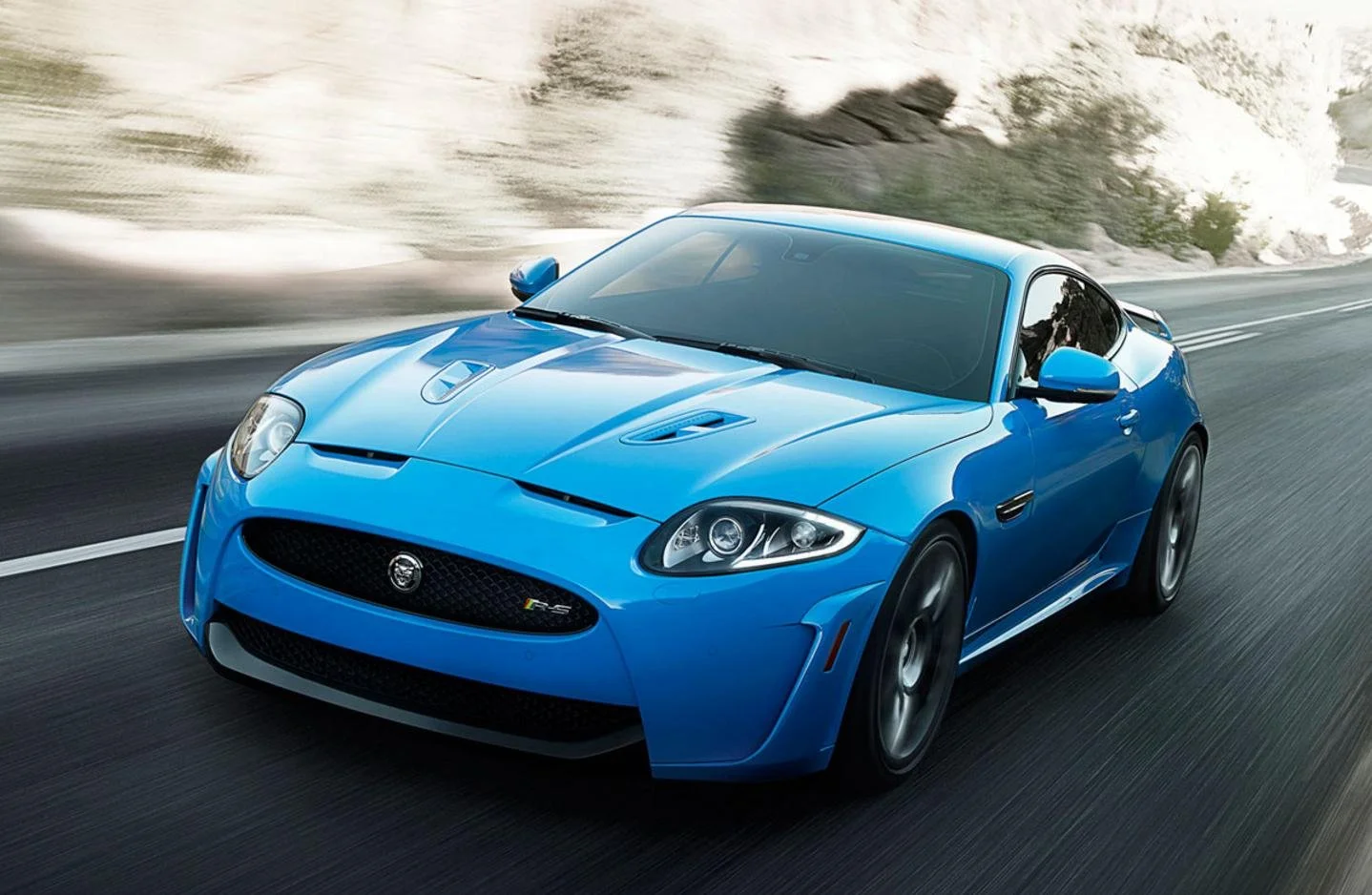
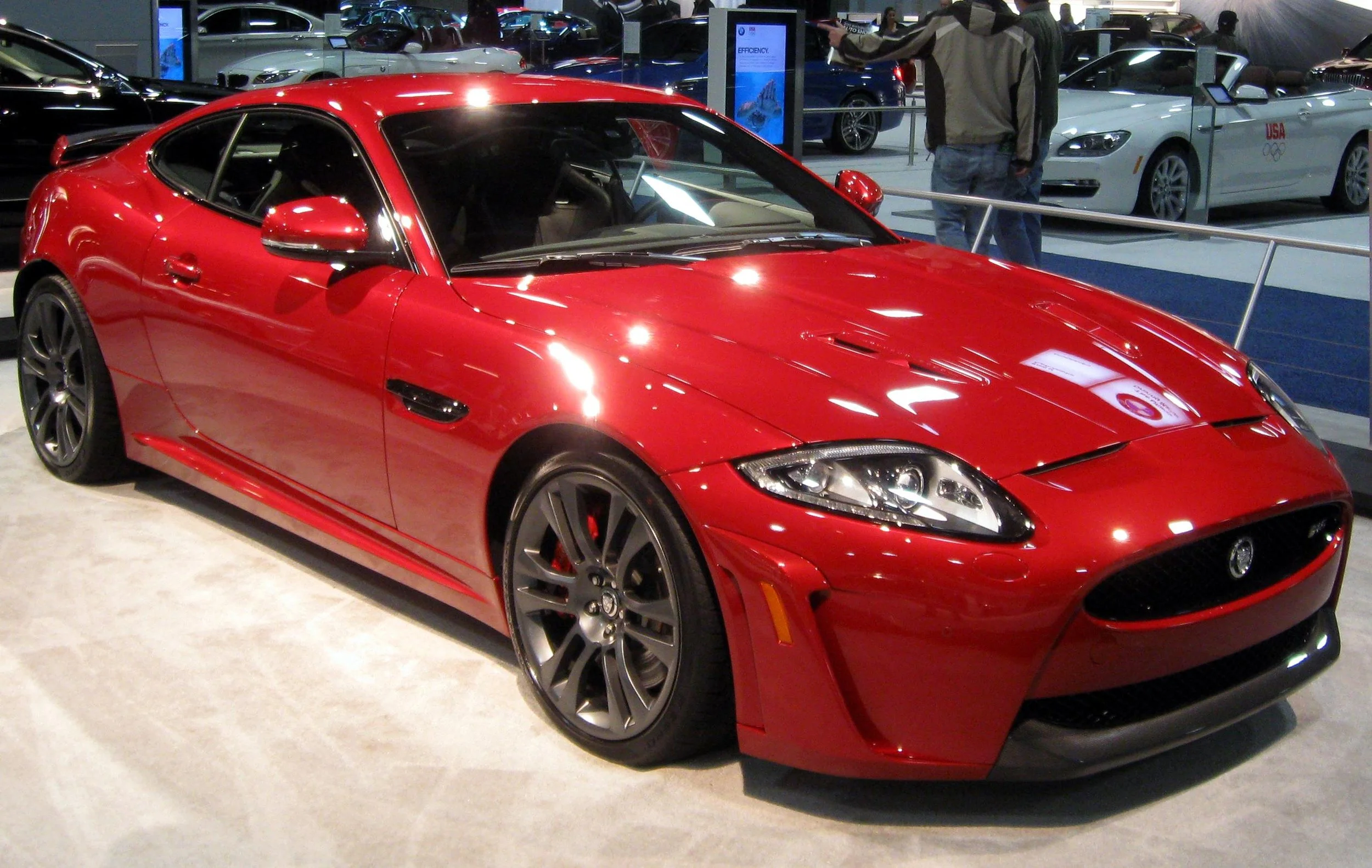
This was the car that changed the character of the X150 forever.
The XKR-S took the 5.0-litre supercharged V8 and increased output to 550PS and 680Nm. Jaguar quoted 4.2 seconds to 60mph and a maximum speed of approximately 186mph / 300km/h.
But the engine was only part of the story.
Jaguar substantially revised the suspension, steering, braking and aerodynamics. The car received larger forged wheels, more aggressive bumpers, side skirts, a prominent rear diffuser and extensive aerodynamic work.
The XKR-S therefore stopped being merely a very fast luxury GT and became a genuine high-performance sports car.
The suspension was significantly stiffer, the steering sharper and the exhaust considerably more dramatic.
It was also one of the clearest demonstrations that Jaguar's R Performance division could produce a car capable of challenging the very best European GTs.
Jaguar XKR-S Convertible (2011–2014)
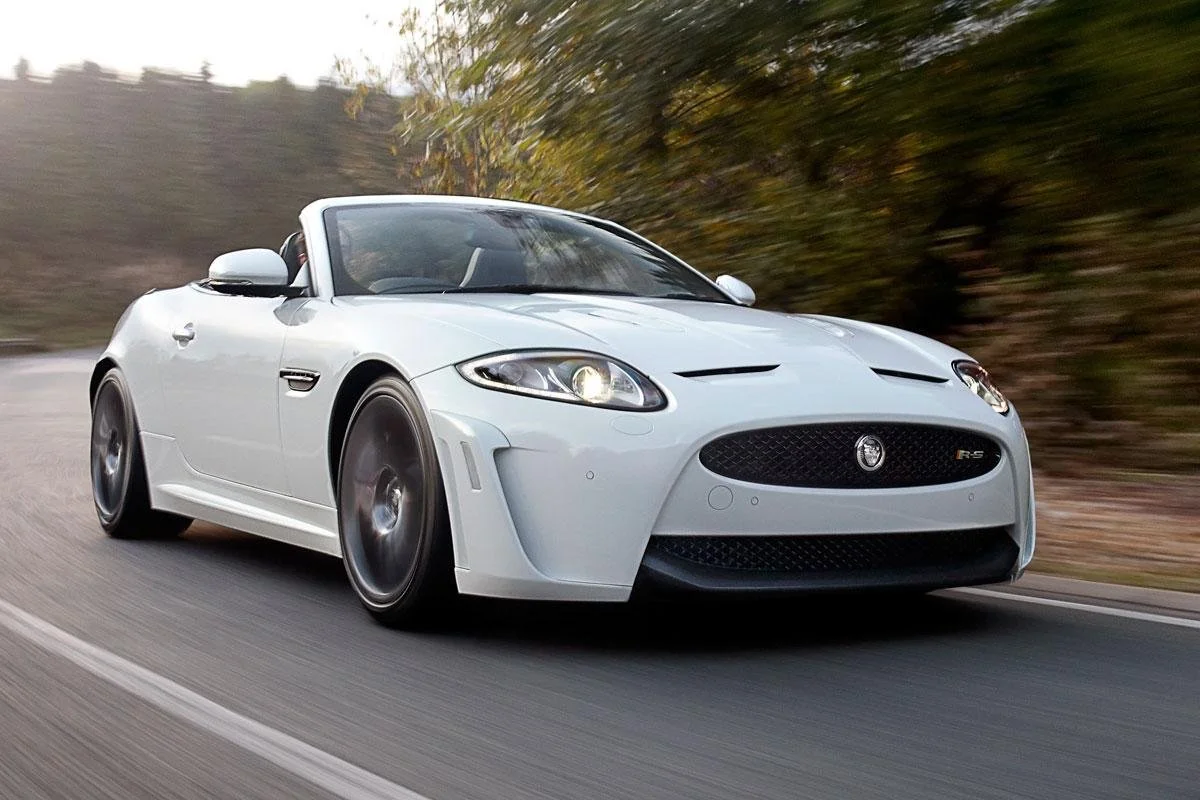
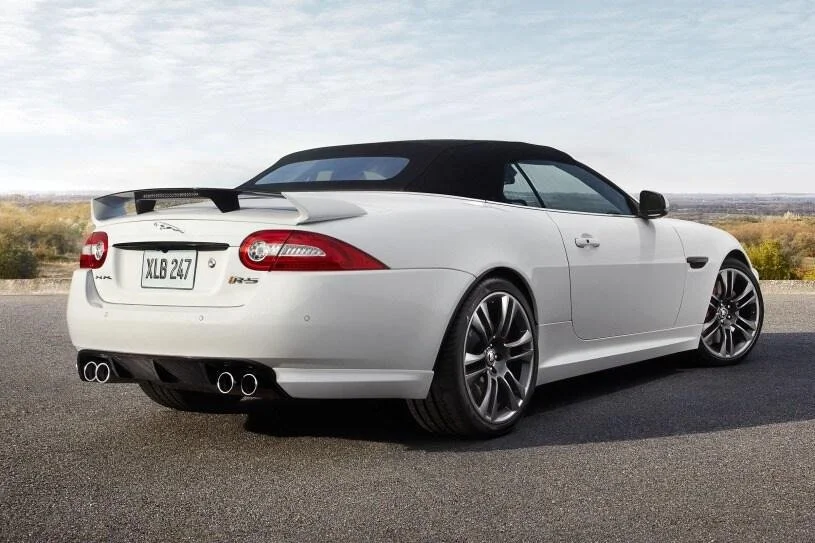
The XKR-S philosophy was subsequently transferred to the convertible.
The result was an extraordinary open-top GT with the same 550PS, 680Nm supercharged 5.0-litre V8 as the coupé.
It retained the aggressive suspension, steering, braking and aerodynamic philosophy of the XKR-S while replacing the fixed roof with Jaguar's electrically operated convertible arrangement.
The achievement was impressive because Jaguar did not simply create a softer convertible version. The XKR-S Convertible retained the serious performance credentials of its coupé sibling.
It became one of the fastest and most dramatic open Jaguars of the period.
Jaguar XK Artisan SE (2012)
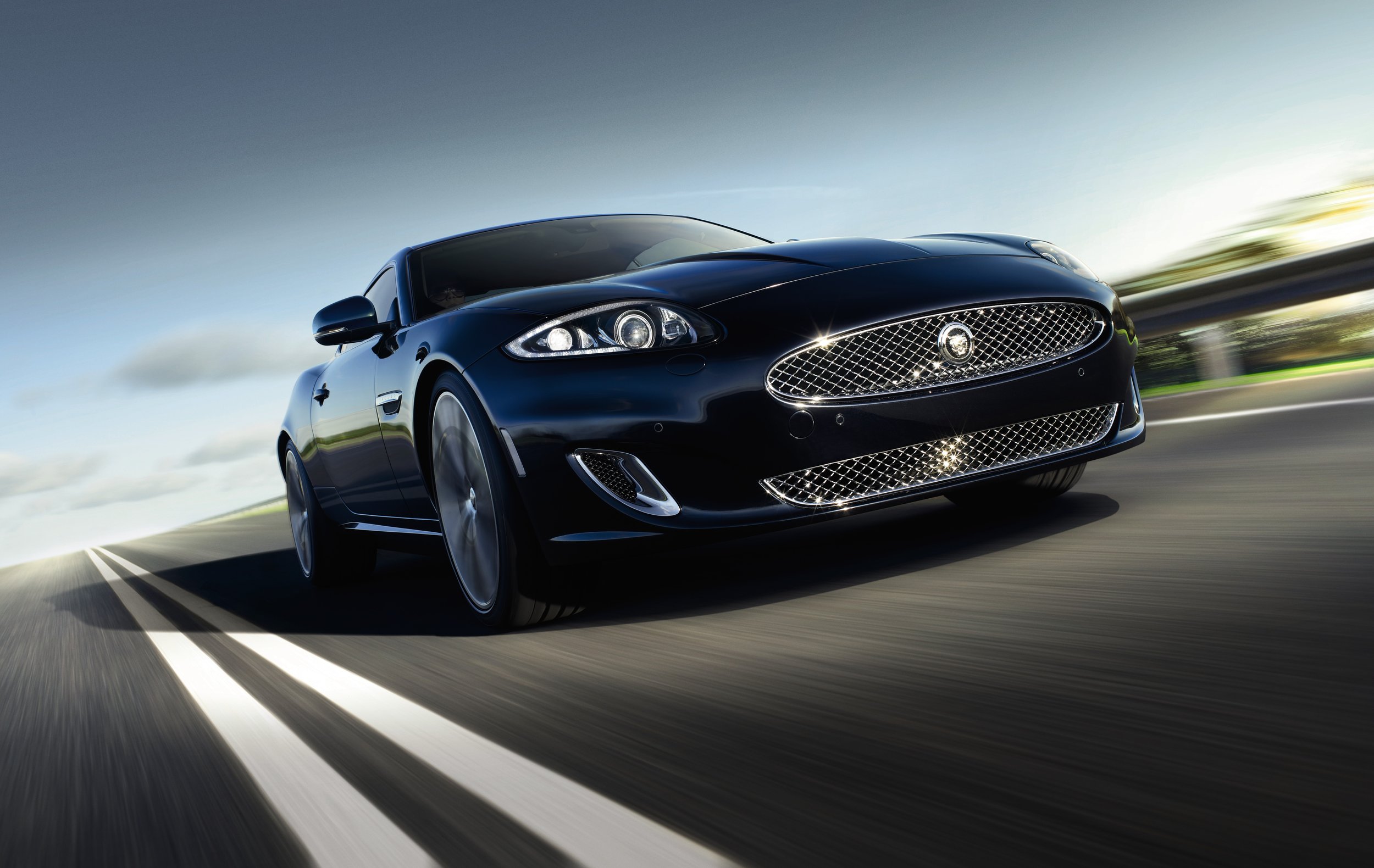
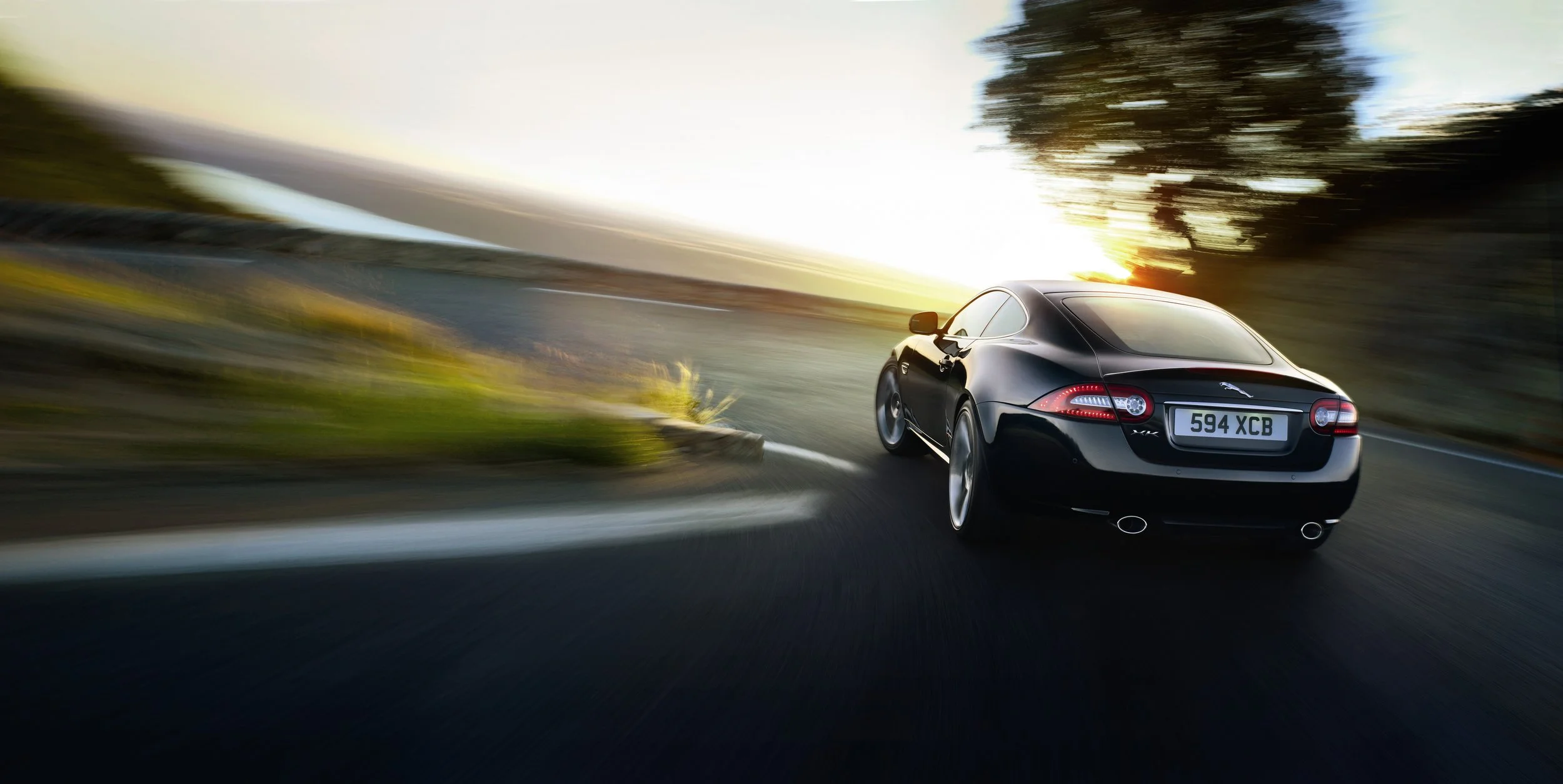
The Artisan SE moved the XK in the opposite direction to the XKR-S.
Instead of concentrating on outright speed, Jaguar used the special edition to demonstrate the luxurious side of the X150.
The interior received particularly elaborate materials, including special leather combinations, Poltrona Frau leather headlining and distinctive wood or aluminium finishes.
The equipment list was extensive, with premium audio, electrically adjustable heated seats, heated steering wheel and other luxury features.
The Artisan SE therefore represented the traditional Jaguar philosophy of the XK: performance is important, but so is craftsmanship and comfort.
Jaguar XKR-S GT (2013–2014)
And now we reach the ultimate production XK.
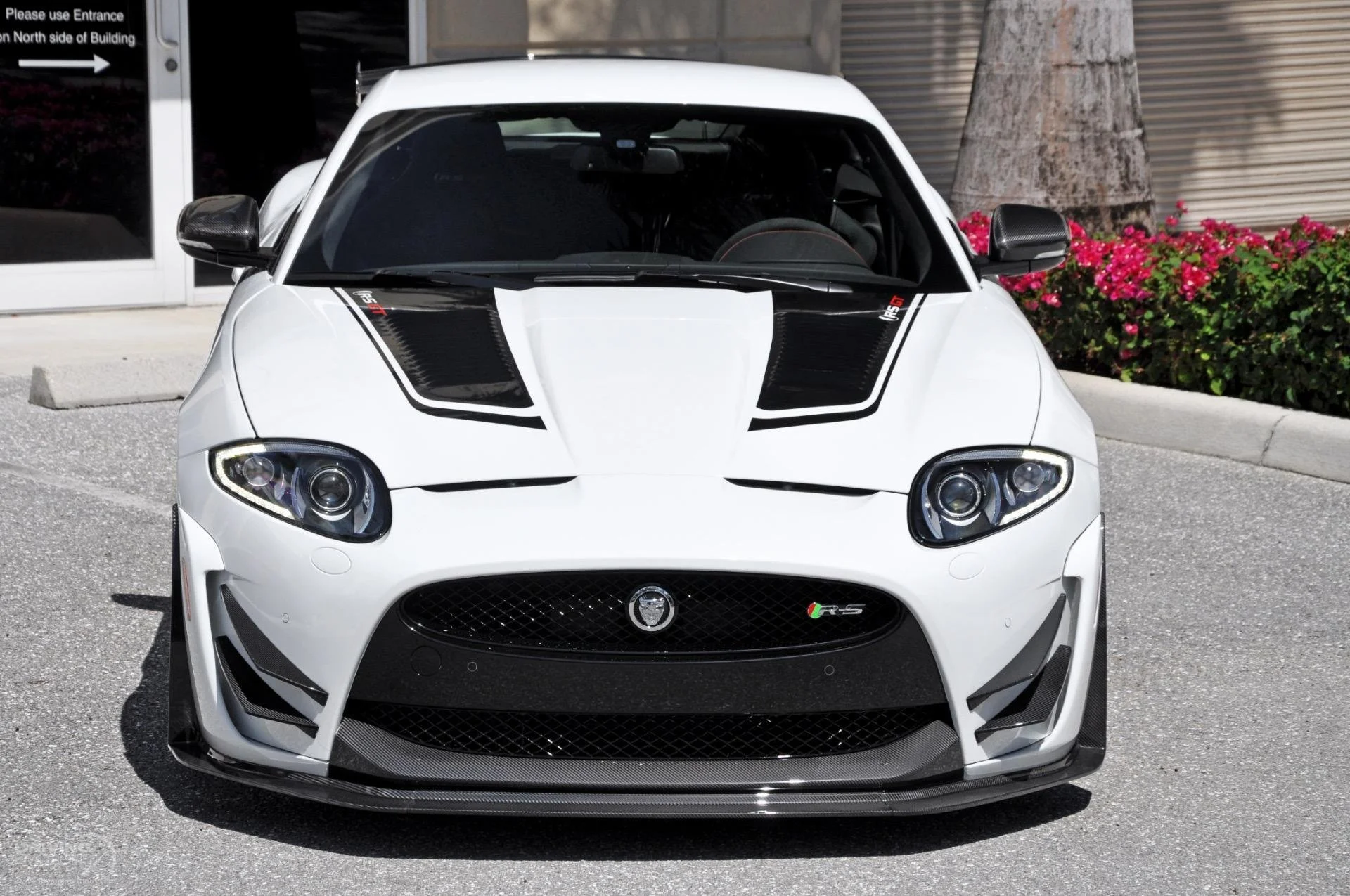
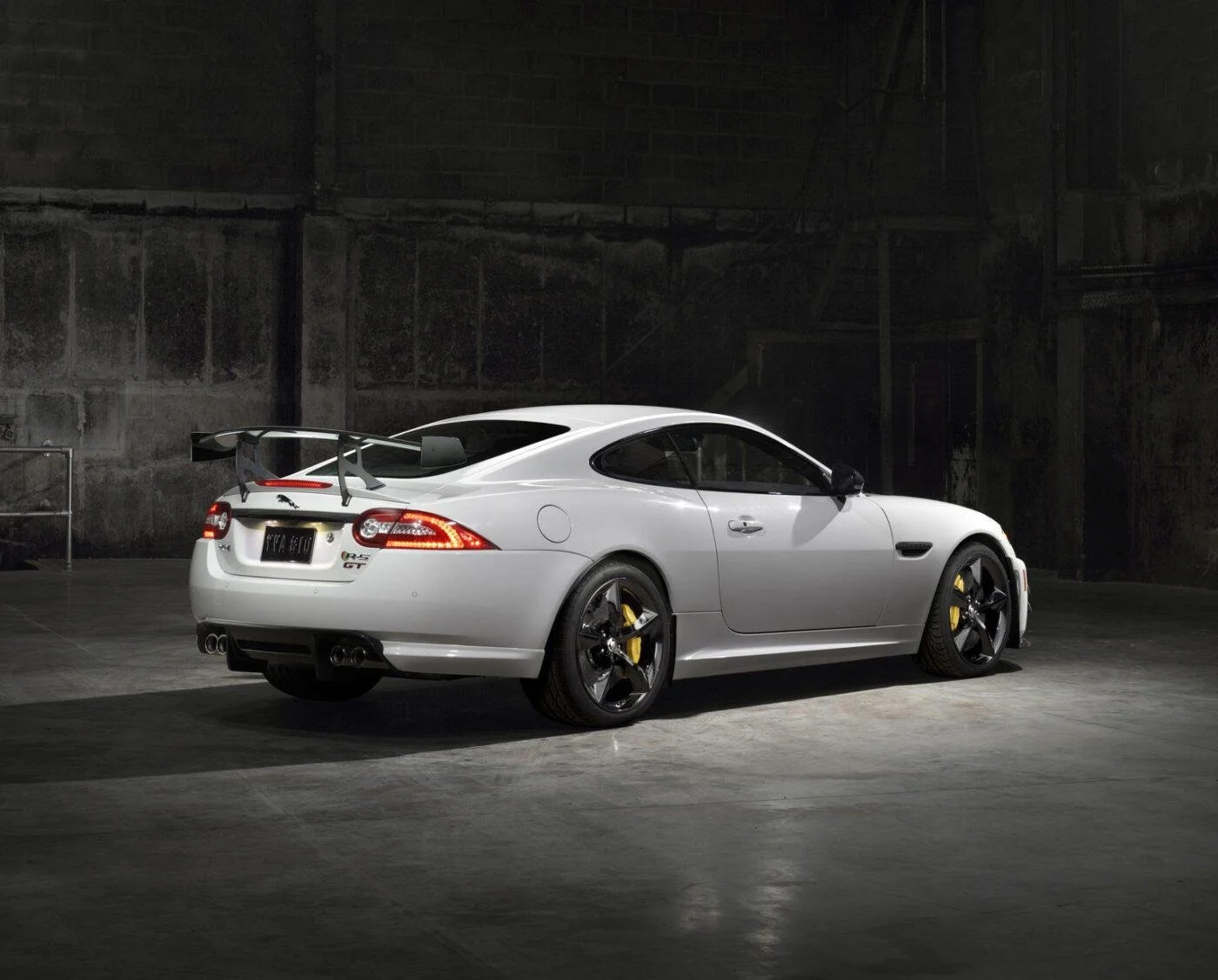
The XKR-S GT was developed as an extreme, track-focused evolution of the XKR-S. The engine remained the 5.0-litre supercharged V8 producing 550PS and 680Nm, but Jaguar completely transformed the car's aerodynamic and chassis characteristics.
Performance figures included: 550PS / 680Nm / 0–60mph: approximately 3.9 seconds / Top speed: approximately 186mph / 300km/h
The front end was dominated by an enormous carbon-fibre splitter and aerodynamic dive planes. At the rear was a huge fixed carbon-fibre wing, while the underside incorporated a large diffuser.
The car also received significantly revised suspension, steering and braking systems, including high-performance braking hardware.
Jaguar developed the car specifically with track use in mind and reported a 7:40 Nürburgring Nordschleife lap during development.
The XKR-S GT was produced in extremely limited numbers. The initial North American allocation was just 30 cars, with a further small number subsequently allocated elsewhere.
It is arguably the car that most clearly demonstrated how far the XK platform could be pushed.
Where the original XK8 was designed to glide across Europe in leather-lined comfort, the XKR-S GT looked as though it had escaped directly from a circuit.
Final Jaguar XK / XKR (2014)
By 2014 the XK had become a remarkably broad family.
The final range included:
Jaguar's 2014 technical data confirms the 385bhp XK, 510bhp XKR and 550bhp XKR-S/XKR-S GT, all using the 5.0-litre AJ133 V8 architecture.
The contrast with 1996 is remarkable.
The original XK8 had 290bhp.
The final XKR-S GT had 550PS.
Yet the basic mission had remained surprisingly consistent: build an elegant Jaguar GT capable of combining luxury, long-distance ability and serious performance.

The Final XK — JH14 XKR (24 July 2014)
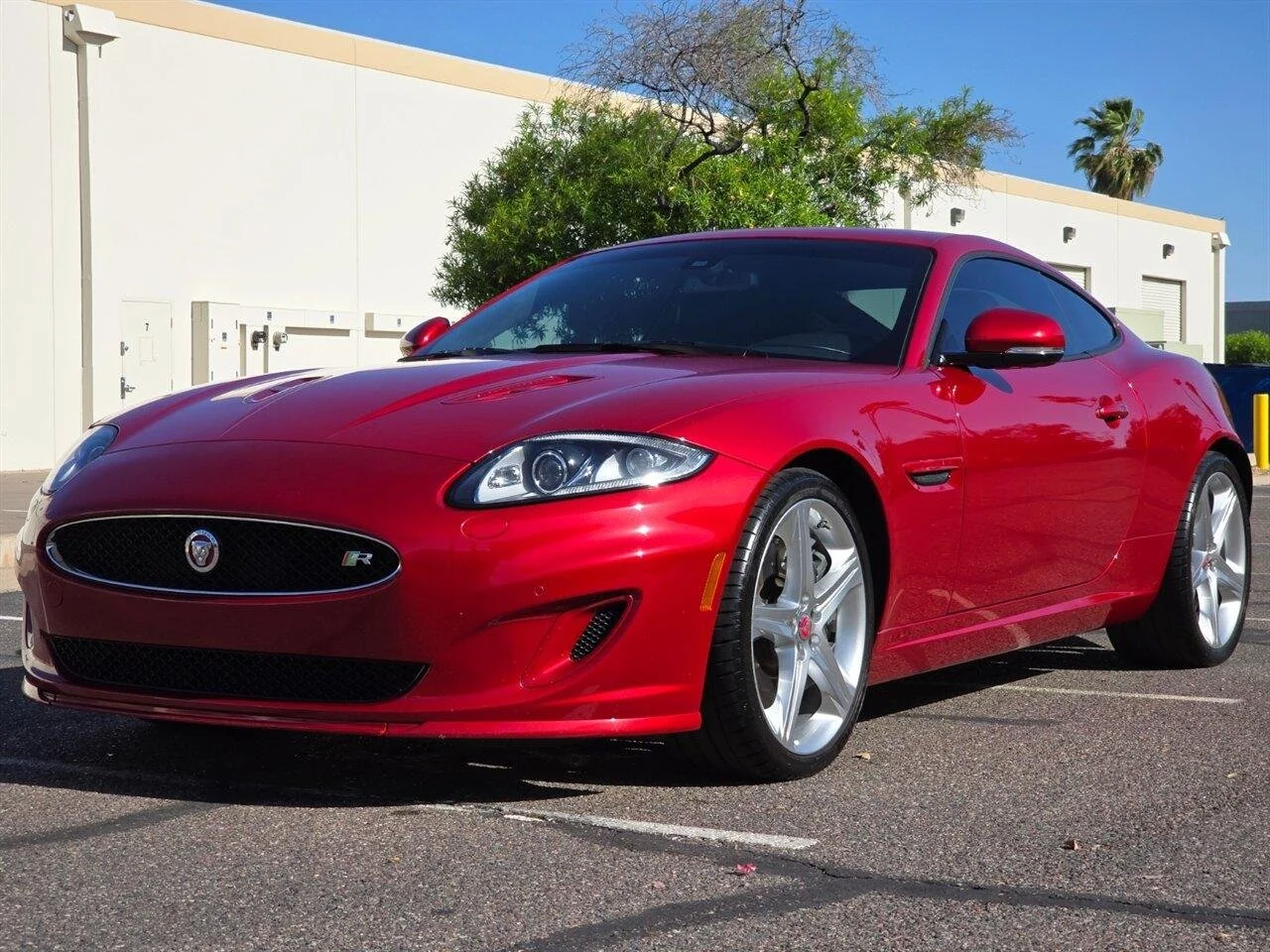
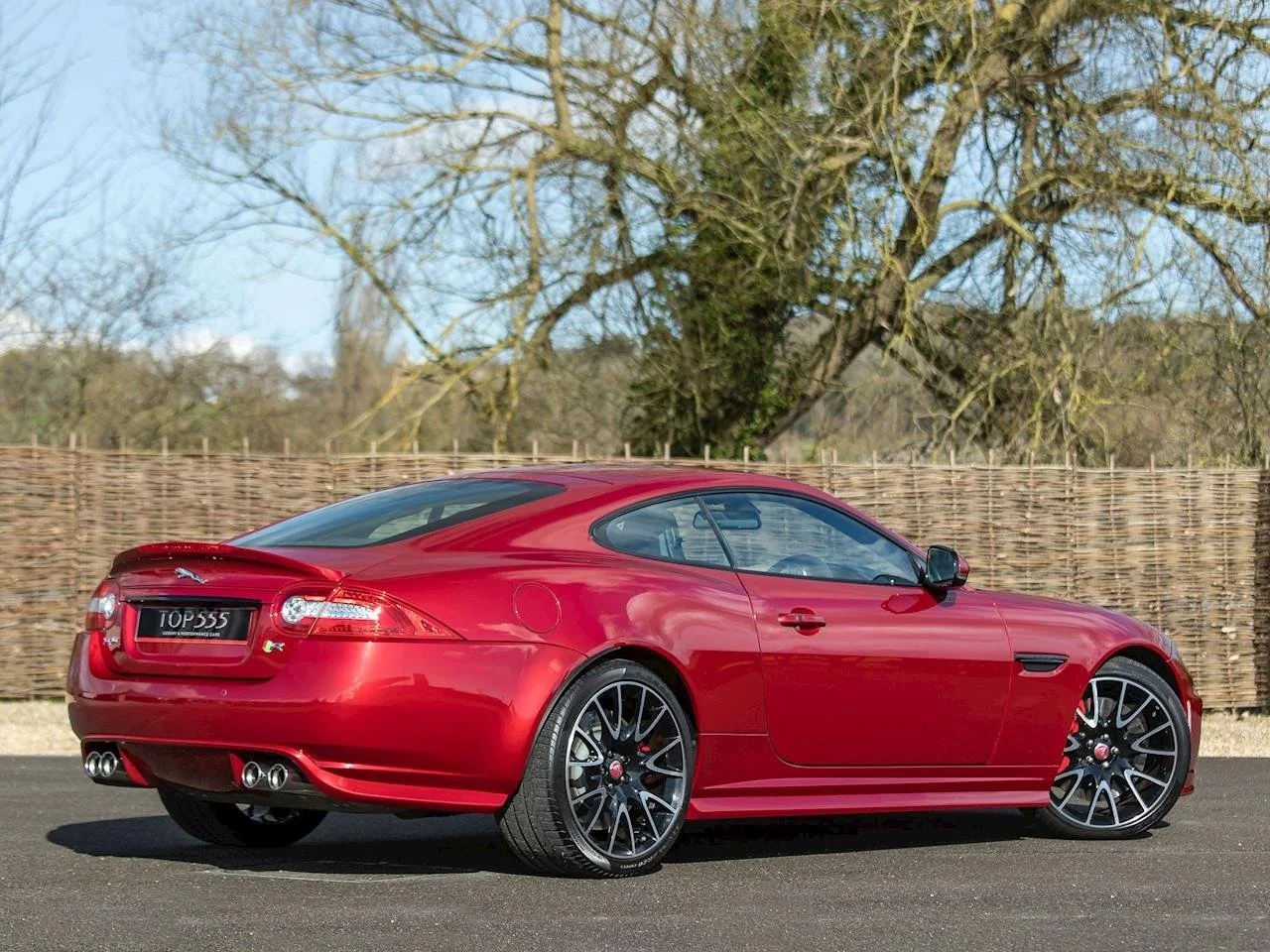
The final chapter of the XK story came on Thursday 24 July 2014, when the final X150 left Jaguar's Castle Bromwich production line.
It was an Italian Racing Red XKR Coupé, registered JH14 XKR, and was presented to the Jaguar Daimler Heritage Trust for preservation.
The final car was particularly well specified. It had:
Italian Racing Red paint
Warm Charcoal interior
Red stitching
Dynamic Black Pack
Gloss-black grilles and air intakes
20-inch Vortex alloy wheels
174mph speed limiter
Carbon-fibre engine cover
Adaptive Front Lighting
The penultimate XK was a Polaris White naturally aspirated coupé and became the final customer car, while the Italian Racing Red XKR was retained for the Jaguar heritage collection.
The significance of JH14 XKR goes far beyond being the last chassis number. It marked the end of an 18-year production story that had begun with the XK8 in 1996.
THE XK THAT NEVER BECAME A PRODUCTION CAR
An encyclopaedia should also record the important cars that didn't make it into normal production.
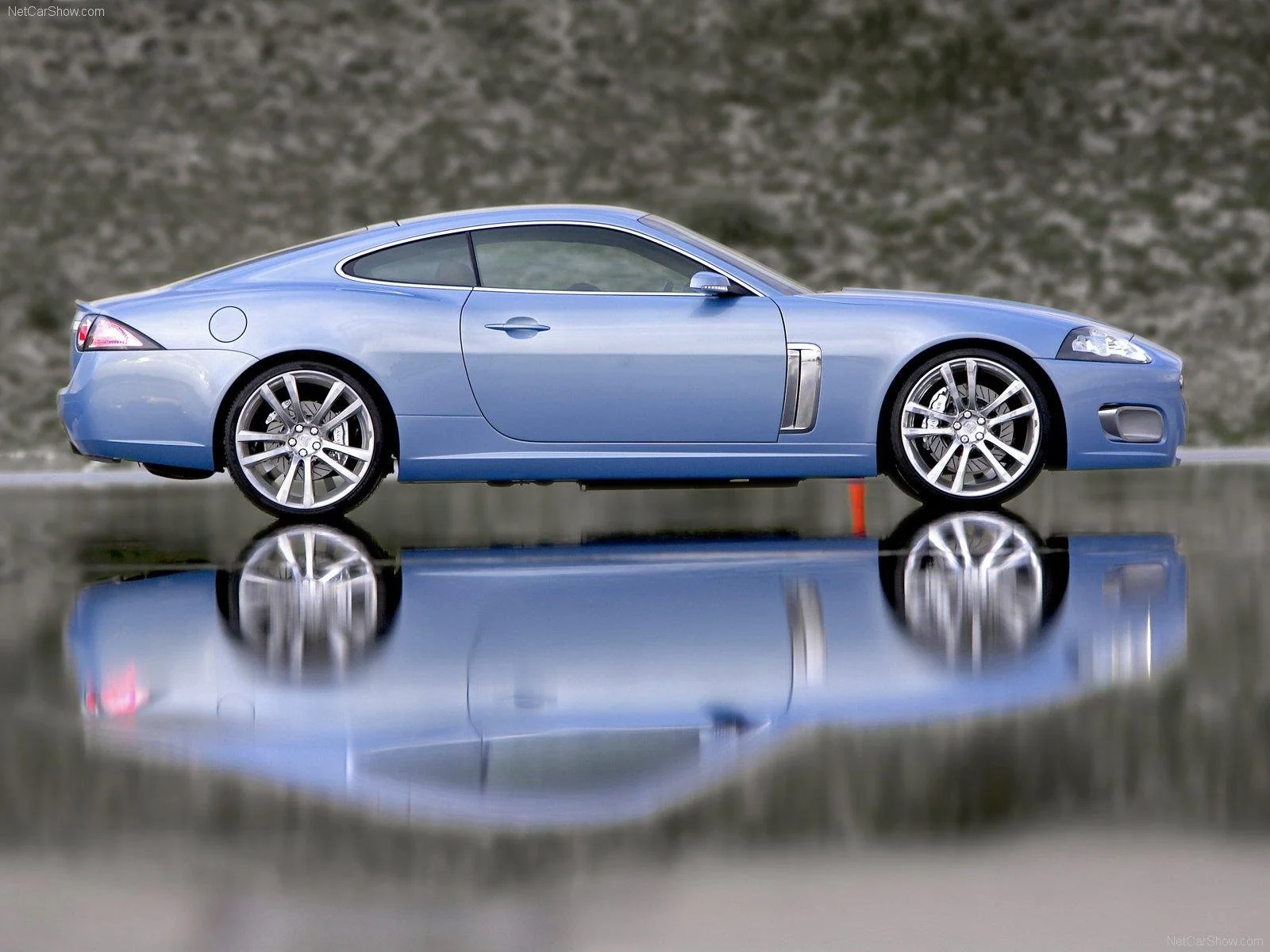
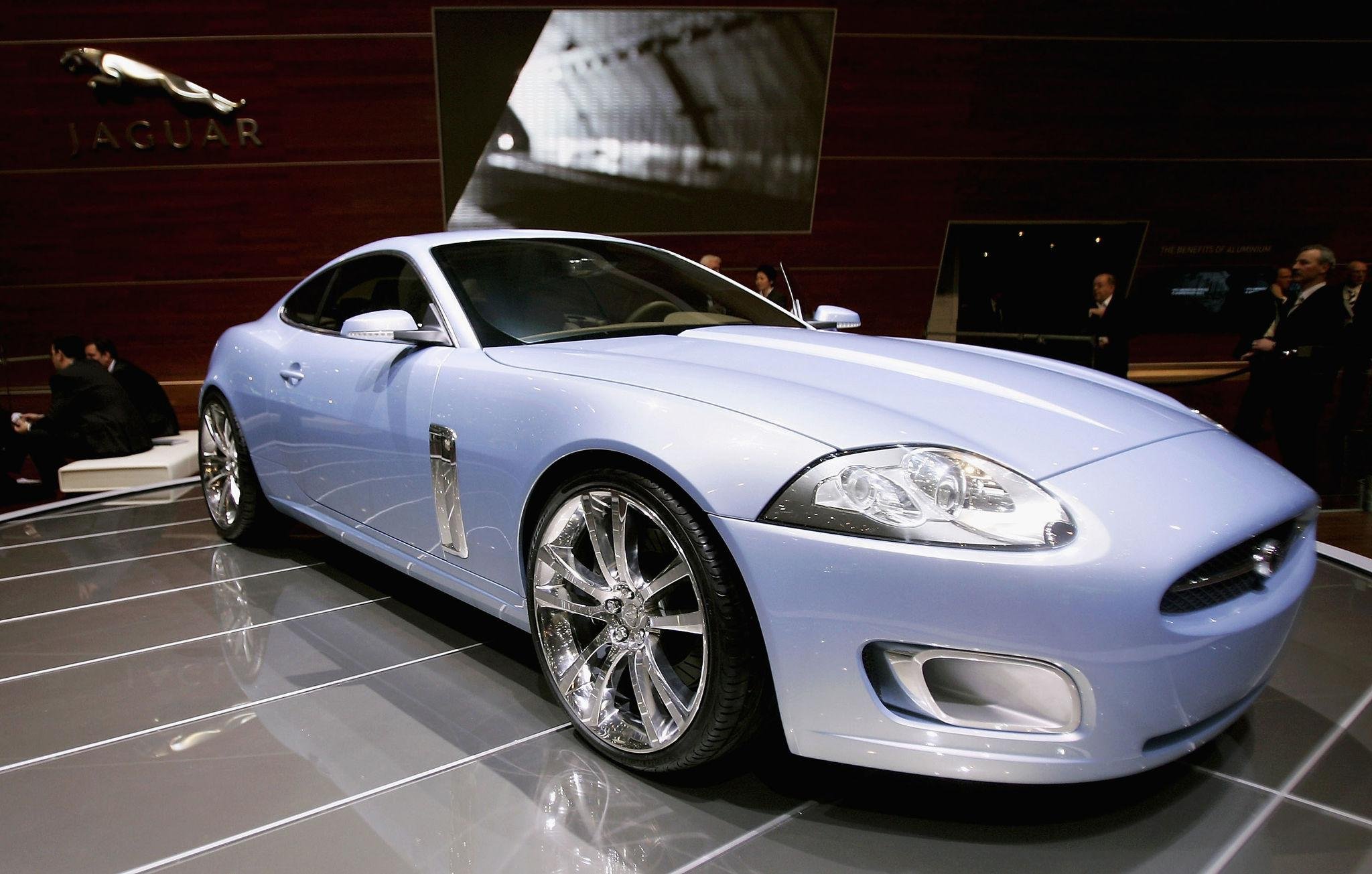
Advanced Lightweight Coupé
The Advanced Lightweight Coupé was an important design and engineering exercise associated with the X150 programme. It demonstrated Jaguar's interest in combining the new aluminium architecture with a more aggressive sporting body.
Jaguar XKR-R / SVO concepts
The SVO/XKR-R work explored the possibility of a considerably more extreme XKR. These cars are important because they demonstrated the performance potential of the XK well before Jaguar eventually created the production XKR-S.
The XK was gone. But the 1996–2014 XK story was complete.